
Bring Home the European Sound this October!
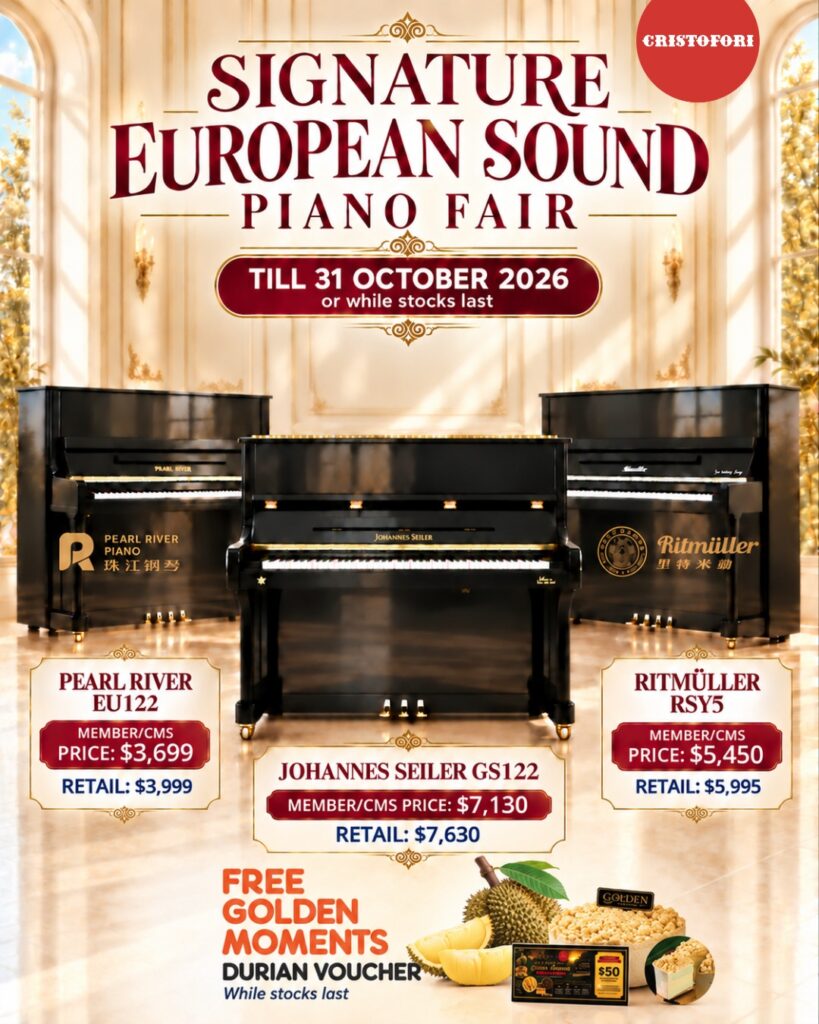
There’s a particular warmth to a European-style piano: a rich tone, a singing treble, and a touch that rewards every hour you spend at the keys. Until 30 October 2026, the Signature European Sound Piano Fair brings three of our favourite upright pianos together at special member prices, with gifts and packages to make your musical journey even sweeter. The Fair Pianos Johannes Seiler GS122 Founded in 1849 in Liegnitz, Germany, Johannes Seiler brings over 170 years of German piano heritage to the GS122, built on an original Seiler scale design. Ritmüller RSY5 With roots in Göttingen, Germany, going back to 1795, the Ritmüller RSY5 is known for a warm, singing tone. Pearl River EU122 Made by the world’s largest piano maker, the EU122 is our bestselling choice for beginners, exam students (Grade 1–8) and families. Member prices apply to anyone who has purchased a piano from Cristofori before, and to current Cristofori Music School students. All prices include GST. Gifts & Packages 🎁 Free Golden Moments Durian Voucher Receive a complimentary Golden Moments durian voucher with the purchase of any of the three fair pianos above. While stocks last. 🎵 Add the Cristofori A.I. Port With any piano purchase, you can add the Cristofori A.I. Port for $436 (inclusive of GST). It turns your acoustic upright into a smart learning system and comes with a 1-year CRISTOFORI e-Book subscription. Read more about the A.I. Port. See, Play and Feel the Difference The best way to choose a piano is to play it! Walk in to any of our showrooms to try the pianos and speak to our team. No appointment is needed: Cristofori Headquarters (Bedok Piano Megastore) Blk 3014 Bedok Industrial Park E, #02-2150, Singapore 489980 | 8766 0618 Cristofori Music Experiential Center & School of Fine Arts @ Funan 107 North Bridge Road, #04-10, Singapore [postal code] | 8766 0619 Cristofori Music Academy (Serangoon Towner) Block 150 Towner Road, #02-02, Singapore 320150 | 8766 0113 Bechstein Music World 7 Shenton Way, #02-01 Singapore Conference Hall, Singapore 068810 | 8766 0638 Cristofori Music School Bishan Junction 8 (Cristofori Music Paradise) 9 Bishan Place, #04-02D Junction 8, Singapore 579837 | 8766 0645 Cristofori Academy of Fine Arts (Petrof Piano Center) 7 Holland Village Way, #02-17/18 One Holland Village, Singapore 275748 | 8766 0615 All outlets offer the same special fair prices and packages. Fair prices and gifts are available from 1–30 October 2026 and are subject to stock availability.
The Future of Music Practice: Exploring RSL Music Exam E-books
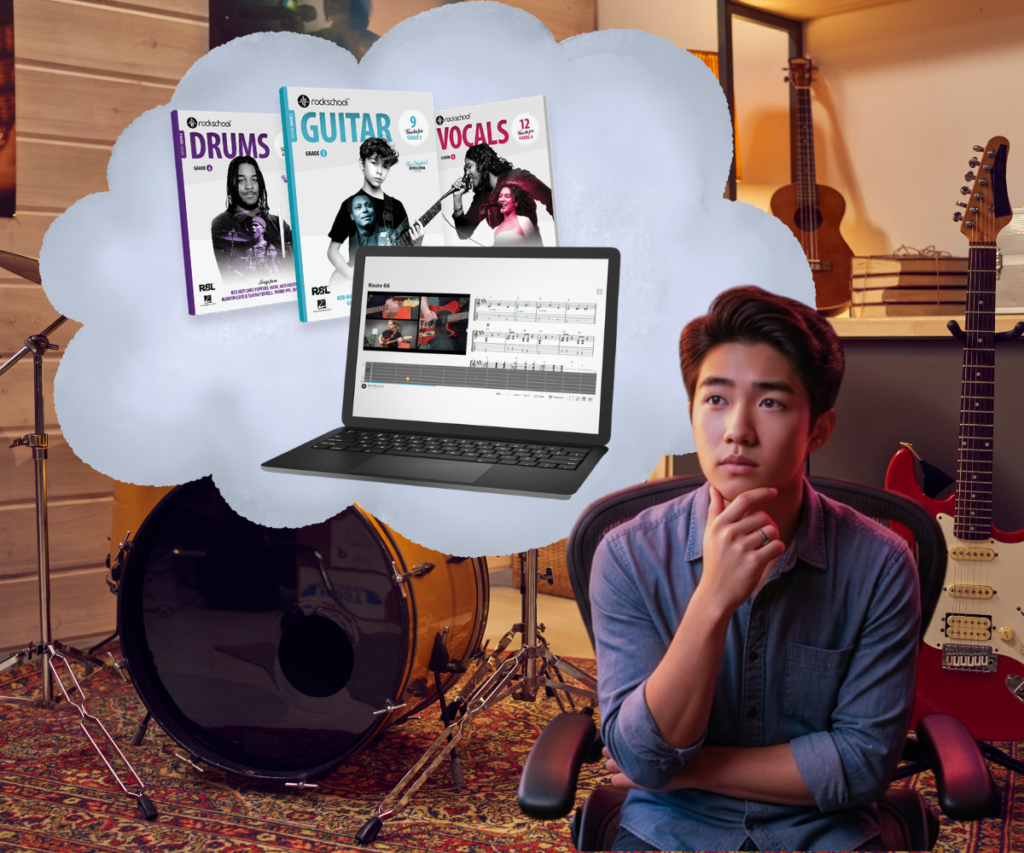
For many music students, the syllabus book becomes a familiar part of their musical journey. The pages gradually fill with pencil markings, annotations and highlighted passages. Over time, it becomes more than just a book — it becomes a record of the work that has gone into preparing for each grade. But what if your syllabus book could do more than show you what to play? What if you could listen to a piece before playing it, watch a demonstration, slow down a difficult passage, repeat a tricky section as many times as you need, and access your learning materials across different devices? That is where RSL Music Exam e-books come in. Powered by RiFF, RSL Awards’ interactive music practice platform, the e-books bring together sheet music, audio, video and practice tools in one digital learning environment. Rather than simply replacing a printed book with a digital version, they offer students additional ways to listen, practise and understand their repertoire. Here is how these features can support students, parents and teachers throughout the learning journey. Hear It Before You Play It One of the most useful ways to approach a new piece is to listen to it first. RSL printed syllabus books have traditionally included access to supporting audio tracks, giving students the opportunity to hear their repertoire before practising. However, using separate downloads can sometimes mean searching for the right file or switching between different resources. With RSL Music Exam e-books, the audio is integrated into the digital learning experience. Students can open their repertoire and access the corresponding audio alongside the score, making it easier to listen and follow the music at the same time. This can be especially helpful when encountering an unfamiliar style, rhythm or musical character. Listening first gives students a clearer idea of what they are working towards before they begin playing. Watch How It Is Played Reading the notes on a page tells us what to play, but it does not always show us how to approach a piece. RSL Music Exam e-books can include video demonstrations and performance guidance, giving students a visual reference alongside their sheet music. Seeing a piece being performed can help students better understand elements such as technique, hand position, articulation and musical phrasing. For younger learners in particular, visual demonstrations can provide another way of understanding something that may be difficult to communicate through notation alone. Teachers can also incorporate these resources into lessons, while students can return to the videos when practising independently at home. Practise Difficult Sections at Your Own Pace Every student has a challenging passage — perhaps a chord change that does not quite flow, a rhythm that keeps going wrong, or a technically demanding section that needs more time to settle. Effective practice often means isolating these sections rather than simply playing the entire piece from beginning to end. RiFF provides interactive practice tools that allow students to select sections of music, loop them and adjust the playback tempo. This makes it possible to work on a difficult passage repeatedly without having to restart the entire track each time. Students can begin at a comfortable tempo, focus on accuracy and gradually work towards the required speed. This is particularly useful when preparing for an examination, where the goal is not simply to play a piece from beginning to end, but to develop consistency and confidence throughout the entire performance. Access Your Materials Across Devices Another advantage of digital learning is flexibility. RSL Music Exam e-books provide access to digital sheet music and supporting materials across compatible devices, while selected materials can also be saved for offline use. This gives students more flexibility in how and where they access their practice resources. A tablet might be useful during a lesson, while a laptop could be more convenient for practice at home. Students can also review their materials when they are away from their usual practice space. Of course, digital resources are not intended to replace time spent actually playing the instrument. The purpose is to make the resources surrounding that practice more accessible and convenient. Everything in One Place A traditional syllabus book provides the sheet music students need, together with access to supporting audio. An RSL Music Exam e-book can bring many of these resources together within one digital platform. Depending on the syllabus, students may have access to: Having these resources together can simplify the practice process. Instead of managing separate audio files, videos and sheet music, students can access many of the materials they need from the same platform. A Useful Resource for Teachers The benefits of RSL e-books are not limited to students. For teachers, the interactive resources can provide another way to support lessons and reinforce concepts introduced during class. A teacher might work through a particular section with a student during the lesson, then encourage the student to revisit that section using the e-book’s playback or video features during the week. This creates a useful connection between guided learning in the lesson and independent practice at home. For students who are beginning to take greater responsibility for their own practice, having access to these resources can also encourage more independent learning. Instead of simply repeating a piece, they can listen, observe, isolate difficult sections and experiment with different practice approaches. Preparing for the Future of Music Learning Moving from printed syllabus books to e-books is more than a change in format. It reflects the way technology is increasingly becoming part of music education and independent practice. For students who have grown up using digital tools in other areas of their education, an interactive syllabus can make music learning feel more familiar and accessible. At the same time, the fundamentals remain unchanged: students still need to practise regularly, develop good technique, listen carefully and work closely with their teacher. The technology simply provides additional tools to support that process. RSL Awards has announced that printed syllabus books in Singapore will be phased out from Q2/Q3 2027. With
Make Every Practice Count: Meet the Cristofori A.I. Port
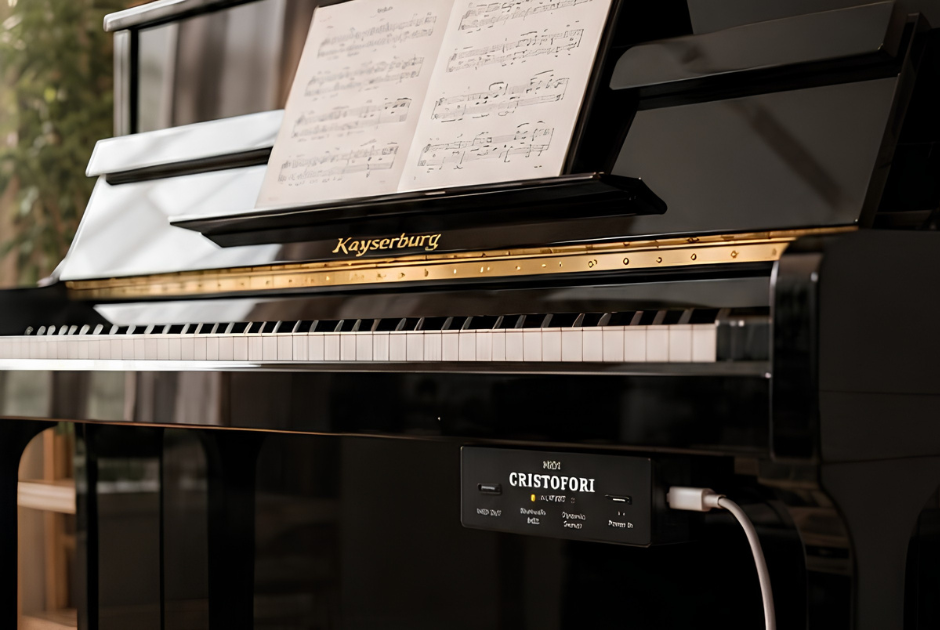
An acoustic piano gives us something technology cannot replace: the natural touch, response and sound of a real instrument. But the hours between lessons are where progress is made, and practising alone can leave students wondering: Am I playing the right notes? Is my timing steady? That’s where the Cristofori A.I. Port comes in. It adds smart learning features to your acoustic upright piano while keeping the touch and sound you love, so home practice becomes more interactive, more engaging and easier to track. Why You’ll Love It Keep the real piano, add real-time feedback.With 88 optical key sensors, the A.I. Port captures your touch, timing and speed as you play. Automatic key calibration on startup keeps note detection accurate and reliable, so the feedback you see reflects what you actually played. Practise in a way that feels fun.Connect by Bluetooth MIDI or USB MIDI to piano learning apps, including the CRISTOFORI e-Book app (powered by Piano Marvel). Demo and follow-along features let students listen, play along and learn at their own pace. Play with your pedals.Sustain and soft pedals are detected and sent out as MIDI signals, so your full playing is captured, not just the keys. Go beyond the lesson book.Through General MIDI, the A.I. Port works with DAWs like GarageBand, so young musicians can start composing and arranging with the piano they already have. Simple to set up.Installation is done on-site and takes within an hour. There’s no need to replace your piano or crowd your living room with another instrument. A Tool, Not a Replacement The A.I. Port is not about replacing traditional piano learning with technology, and it is not a replacement for your teacher. It works alongside them. Our teachers use the CRISTOFORI e-Book app with students during lessons, and we have found it especially valuable for strengthening sight-reading, which is much appreciated by our students preparing for exams. Between lessons, teachers can also track their students’ home practice, so they can see how practice is going and plan what to focus on next. Your teacher still does what no sensor can: shaping technique, interpretation and musicianship, and guiding each student through every stage of progress. The A.I. Port helps make the hours in between more engaging and effective. A Free 1-Year CRISTOFORI e-Book Subscription, Included Every A.I. Port comes with a free 1-year CRISTOFORI e-Book subscription, packed with: It’s a ready-made learning library from the moment your A.I. Port is installed. After the first year, you can continue your subscription for just $80/year. Will It Fit Your Piano? The A.I. Port is designed for 88-key upright acoustic pianos. If you’re unsure about yours, give us a call, and our technical team will be happy to take a look and advise. Pricing All prices include GST. For pianos purchased from Cristofori (special price) For other pianos (standard kit with installation) Build the Complete Learning Setup Pair the A.I. Port with the Cristofori e-Book hardcopies for a full package: Hardware + app + books = a complete learning system. Ready to Upgrade Your Practice? Enquire at your nearest Cristofori outlet or showroom to find out which option suits you and your piano. New to piano? Book a trial class and discover how Cristofori makes learning to play both fun and effective.
The Stage Is Set for the Rockschool Concert × Cristofori Annual Star Student Awards 2026
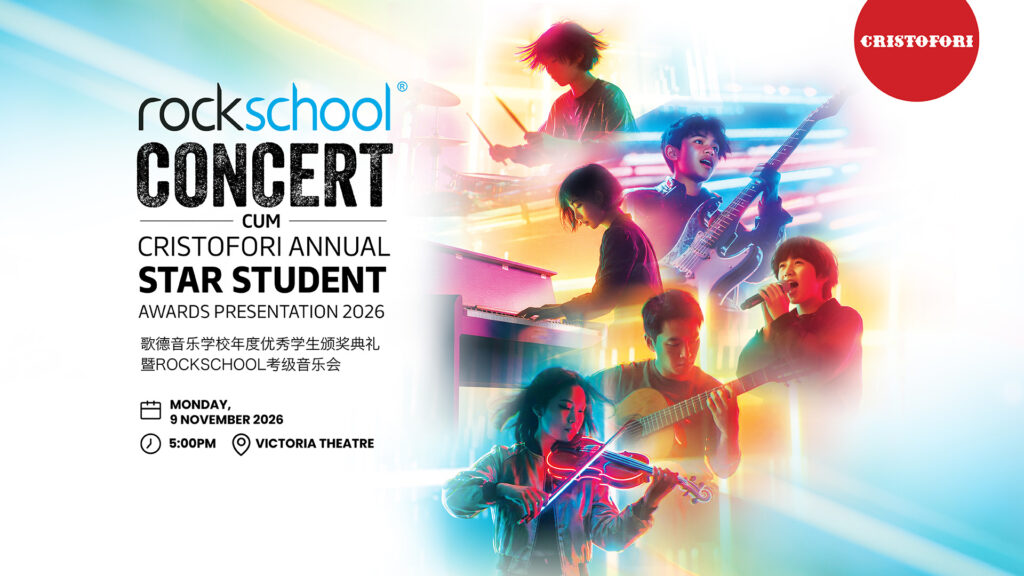
What happens when months of learning, practising and growing finally come together on stage? On Monday, 9 November 2026, we’re about to find out. Cristofori Music School invites you to the Rockschool Concert × Cristofori Annual Star Student Awards 2026, an evening where our students step into the spotlight to perform, celebrate their achievements and share their passion for music. From First Lesson to Centre Stage Every performance begins somewhere quiet: a first lesson, a first chord, a first nervous attempt at a scale. Then come the countless hours of practice, the tricky passages that finally click, and the small wins that build into real confidence. When our students walk onto the stage at Victoria Theatre, they bring that whole journey with them. Each performance reflects growth, courage and dedication, and that is what we’re celebrating. Why This Night Matters At Cristofori, we’ve always believed that performing is not the end of music education. It is the heart of it. Playing for a live audience teaches things no practice room can: how to manage nerves, how to share music with others, and how to feel proud of the work behind every note. The Star Student Awards also give us a chance to recognise the students who have shown outstanding effort and progress. For families, it’s a chance to see what all those weeks of practice have been building towards. Event Details How to Get Your Tickets Tickets are available through Eventbrite.sg. Book your tickets here!, or scan the QR code on the event poster above. Cristofori Students Save 50% on your ticket: Use your respective outlet’s code at checkout, or approach any staff member at your nearest Cristofori outlet and they’ll be happy to help. Come and Cheer Them On Bring your family, your friends and your loudest applause. Whether you’re a parent, a fellow student or simply someone who loves live music, your presence means the world to a young performer on stage. Come support our young musicians and celebrate the moment when learning becomes performance. We can’t wait to see you there. Interested in starting your own musical journey? Book a trial class at Cristofori Music School today.
Decoding Modern Music: A Student & Listener’s Guide to Contemporary Forms
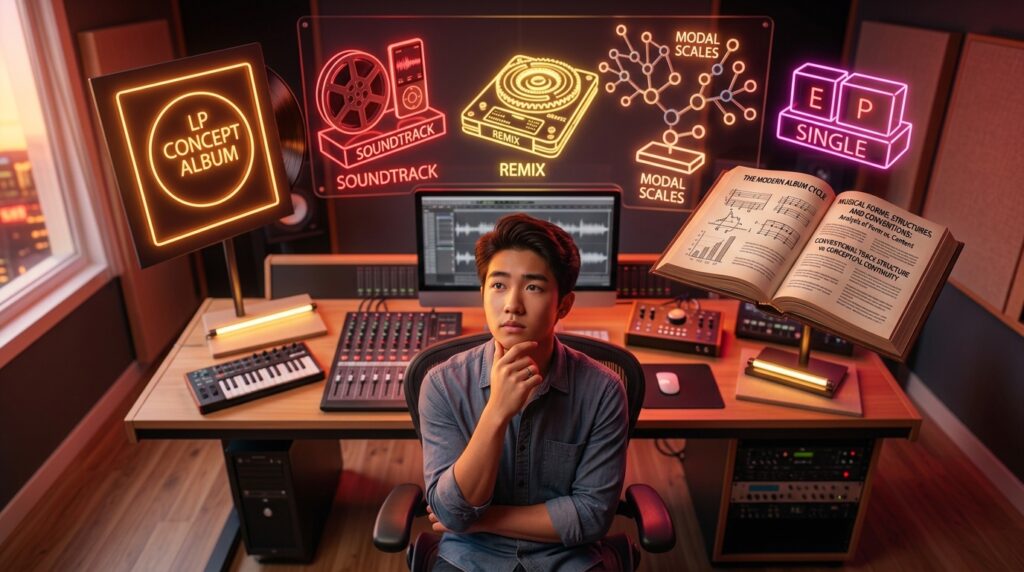
When we step into a music studio at Cristofori, we learn the timeless fundamentals: reading notes, understanding meter, shaping phrases, and mastering touch. We study the architecture of a Bach prelude or a Sonatina to learn how great classical music is built. But what happens when you turn on the radio, put on your headphones, or listen to your favorite playlist? Modern music has its own distinct structures, formats, and conventions. Learning how modern songs and albums are constructed doesn’t take away the magic—it helps you listen with a trained ear and appreciate the immense craft, intention, and practice behind the tracks you love. Here is your quick guide to the most common music formats today. The Pop Song The pop song is the most universal musical format in the world today. In under four minutes, a great pop track can tell a story, evoke deep emotion, and stay in your head for weeks. Just like a classical sonata, most pop songs follow a trusted structural blueprint: Writing something that feels effortless, relatable, and unforgettable in under four minutes requires extraordinary discipline and songwriting technique. Bonus trivia: Did you know Franz Schubert is considered the Father of the Modern Songwriter? Read about it here! The Single A single is one individual track released on its own, designed to make an immediate impression. In the era of vinyl records, singles were physical 7-inch discs with two sides: the A-side (the main commercial hit) and the B-side (where artists put hidden gems or experimental tracks). Today, in the streaming era, singles serve as quick musical highlights or teasers for larger projects. The EP (Extended Play) An EP usually contains 4 to 6 tracks and sits right between a single and a full album. EPs are often raw, focused, and concise—offering a clear snapshot of an artist’s creative direction. The Album (LP) An album (traditionally called an LP or Long Play) is a complete body of work, usually featuring 10 to 14 tracks carefully ordered by the artist. Popularized in the 1960s, the album turned popular music into a unified storytelling medium. Every detail matters: the sequence of the tracks, the seamless transitions, the brief moments of silence between songs, and the cover art. Even in today’s playlist culture, top artists continue making full albums because some artistic ideas are too big for a single song. The Concept Album A concept album takes the traditional album a step further by weaving every track around a single overarching storyline, theme, or character narrative. Rather than a collection of separate tracks, the entire record functions like a musical play, opera, or book—inviting the listener to experience the journey from start to finish. The Producer Track & The Beat In modern music, the producer plays a role similar to an arranger or conductor. A beat is the instrumental foundation of a modern track—built using drum programming, synthesizers, acoustic samples, and harmonic layers. In genres like hip-hop, R&B, and electronic music, a beat is a rich, complete musical world in its own right—even before any lyrics are written or sung. The Remix A remix is far more than just speeding up or turning up the volume on an existing song—it is an act of creative arrangement. Originating in 1970s club culture, remixing takes the individual vocal and instrumental tracks (stems) of a song and completely reimagines them. A delicate ballad can become an energetic dance piece, or a simple melody can be re-harmonized into a dramatic cinematic track. The greatest remixes don’t just alter a song, but also reveal something new in it, something that was always there but that only becomes visible when seen from a different angle. In that sense, the remix is not so different from what jazz musicians have always done with a standard, or what classical performers do with a great score — finding the music inside the music. The Mashup A mashup seamlessly blends two or more existing songs into a single new performance, combining vocal tracks from one song with the instrumental backing of another. The best mashups reveal unexpected harmonic and rhythmic connections between completely different genres—like layering a classical melody over a modern rhythmic beat. It reminds us that across all eras and styles, music relies on the same fundamental building blocks. Soundtracks & Film Scores Music for films, television, and video games serves two distinct purposes: Just like classical symphonies, legendary film scores stand entirely on their own as brilliant orchestral works. Great film scores are complete musical works in their own right. Bernard Herrmann’s score for Psycho, Ennio Morricone’s music for The Good, the Bad and the Ugly, John Williams’ themes for Star Wars and Schindler’s List, Hans Zimmer’s score for Inception, and Jonny Greenwood’s work for Paul Thomas Anderson’s films — these are not merely functional accompaniments to cinema. They are profound artistic achievements that stand entirely on their own terms. The rise of the soundtrack album — a curated collection of existing songs chosen to accompany a film or television series — has created its own distinct form. A great soundtrack album, like the one assembled by Kendrick Lamar for Black Panther, or the Guardians of the Galaxy series’ Awesome Mix tapes, tells its own story through the sequence and juxtaposition of songs, independent of the film it accompanies. Why Understanding Form Makes You a Better Musician It is easy to view modern music as simple everyday entertainment, but behind every great track is a dedication to artistic craft. A songwriter fine-tuning a verse-chorus transition is practicing the same structural awareness as a student polishing a classical piece. A producer layering frequencies is using the same principles of balance as an ensemble playing together. At Cristofori, we believe that all good music education enriches how you experience the world. The instruments, technologies, and formats may change over the centuries—but the passion for creating and sharing sound remains exactly the same.
Franz Schubert: Father of the Modern Songwriter
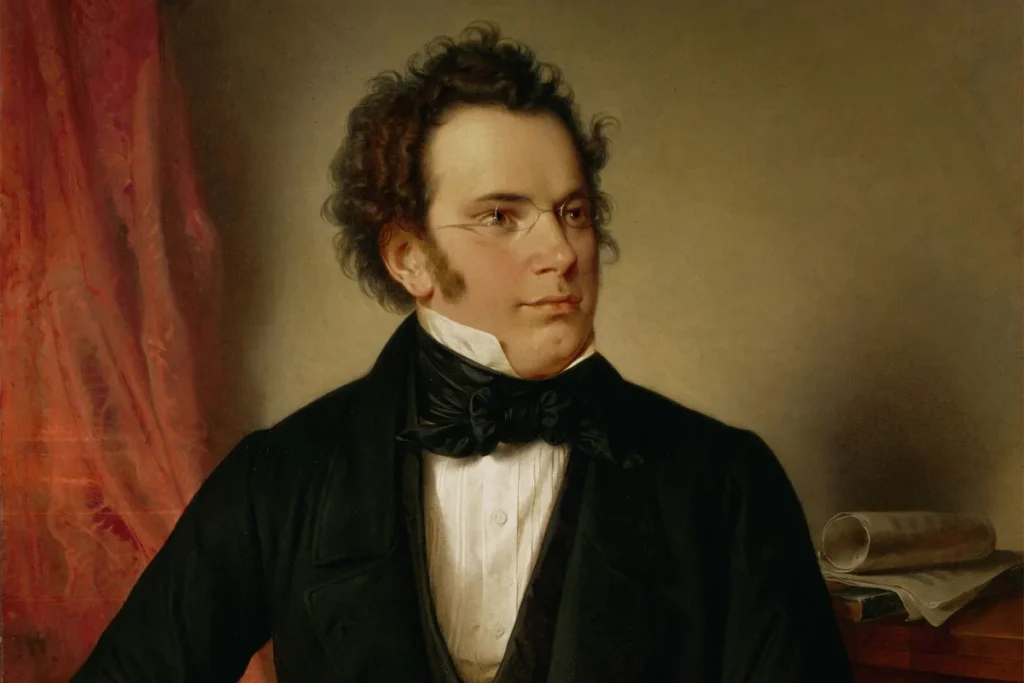
Most pop songs are based on a dozen or so of the most familiar chord sequences that were “discovered” in the late 18th century. In the present age, someone such as Adele is an original singer because of her voice, her attitude and her style. But the chords and sequences she and most pop writers are using have been around for a very long time. Perhaps the originator of the three-minute pop song was John Dowland, way back in Shakespeare’s time, but one must argue that the modern pop song as we know it was created by Franz Schubert. Schubert was a remarkable talent. Melodies poured out of him. He wrote 600 songs (also called “Lieder” or “Art Songs”, pieces specifically composed for a solo voice with piano accompaniment) plus nearly as many piano pieces, some 150 part songs, 40 liturgical compositions (including several masses) and around 20 stage works like operas and incidental music. His orchestral output includes thirteen symphonies (seven completed) and several overtures. Schubert’s chamber music includes over 20 string quartets, and several quintets, trios and duos. Schubert: Father of the modern songwriter Like today’s songwriters, his intention was to write music that would be instantly enjoyable. There’s not a moment where he is trying to catch you out or where you have to listen 10 times before you get your head around a song. He wants you to get it the first time; there’s verse-chorus, voice and piano underneath, and he wants you to remember a catchy chorus. Some of these simple rules of songwriting Schubert used continue to be the simple rules of songwriting today, and there’s nothing much about Adele or Simon & Garfunkel or Leonard Cohen’s songs that would have seemed alien to the Viennese composer in terms of the chords, or the shape, the song structure in way the verse leads into the chorus, or the piano accompaniment. In fact, the thing that would strike Schubert as most odd about an Adele song is the fact that she wrote it herself rather than being its subject. Schubert came to many of the same conclusions as modern songwriters – that writing random song after song is no use, that creating 20 songs and a journey is a much more satisfying form (see the similarity of modern-day albums!). And so that’s what he did with his song cycles. They are longer pieces where people go on a journey, and each song forms the next part of the story. Adele’s voice and style make her an original. But the chords and sequences she uses have been around for a very long time.Photograph: Getty Image That is not really very different from what Adele is doing. Her songs are based on a piano format, with verse-chorus, addressing the issue of love and relationships and shaping the voice around that; emotions are expressed; the length; the format – Adele wants her songs to be instantly enjoyed. Who doesn’t love “Hello”, “Turning Tables” or “Easy on Me”? Speaking of Adele, Emmy, Brit and Bafta-winning composer Howard Goodall, who has written and presented a show charting the development of music from classical composers to pop stars: “I want to show a straight line that runs through to the present day,” he said. Goodall uncovered musical connections between classical composers and their pop and rock counterparts of the modern day, although admittedly the current stars may be unaware of their debt. His examples included linking Schubert and Adele, whose hit songs include Rolling in the Deep and Someone Like You. “Strip away the cultural differences, the clothes and anything that dates them, and there is a strong connection,” Mr Goodall said. “The musical shape, the architecture of it, the kind of chords, the way the accompaniment works and the way voice sits on it, even the subject matter, are remarkably similar.” He compared Adele’s work, including best-selling album 21, with Schubert’s song cycles such as The Winter Journey and Swan Song. “They’ve got catchy tunes, and are emotionally straightforward.” Schubert’s Schubertiads Schubert enjoyed a good time and, in his day, he was famous for his musical parties known as ‘Schubertiads’ when he would gather with his friends and fans and showcase some of his latest songs. Now doesn’t that sound like a modern-day intimate indie Album or EP Launch?! Schubert truly took the work of a songwriter to the next level in his day, and in a way popularised music that was intimate, memorable, and catchy – qualities we all look for in a good modern-day song.
Never too Late! The Amazing Benefits of Learning Music as an Adult
The Evolution of the Concert Piano: From Early Keyboards to the Modern Grand
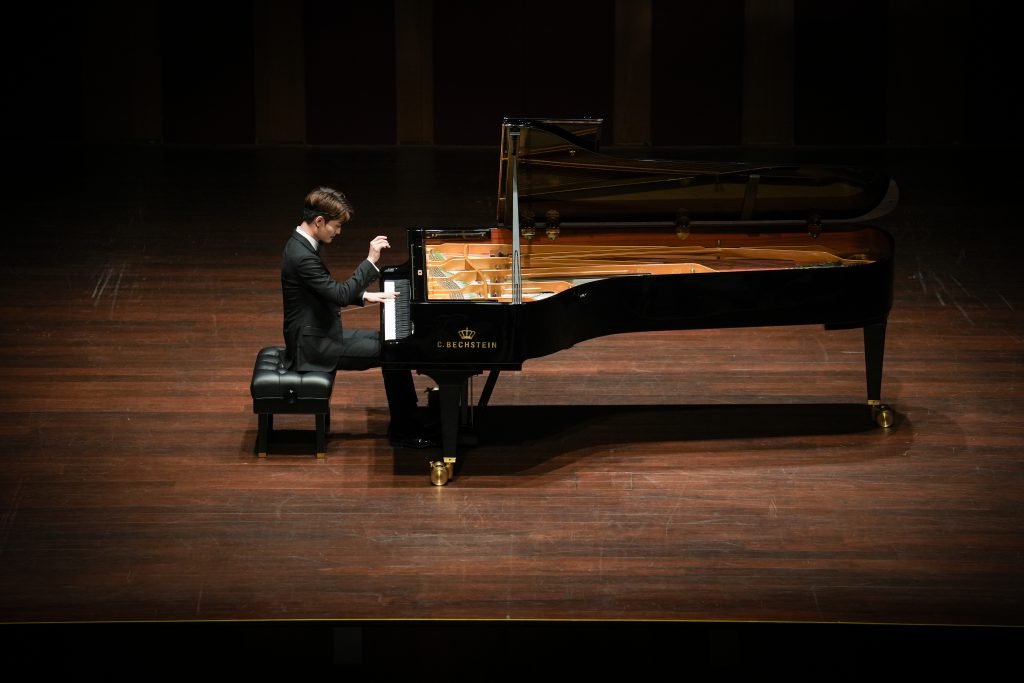
When we sit down at a modern concert grand, it is easy to take its design for granted. Eighty-eight keys, three pedals, a large soundboard, steel strings and a powerful frame may seem like an inevitable combination. But the piano we know today is the result of centuries of experimentation, musical demands and technological development. Its story begins long before the modern piano existed — with early keyboard instruments that offered very different approaches to producing sound. Before the Piano: The Clavichord and Harpsichord The clavichord is one of the earliest known keyboard instruments, emerging in Europe during the 14th century. Compact and quiet, it was primarily suited to private practice and intimate music-making. Unlike the modern piano, the clavichord’s strings were struck directly by small metal tangents. This gave the player a remarkable degree of control over subtle changes in volume and expression. However, its very soft sound meant that it could not project effectively in a concert setting. The harpsichord emerged later, during the 15th century. It became an important instrument in European courts, domestic music-making and professional ensembles. Unlike the clavichord, its strings were plucked, producing a clear and articulate sound that could project more effectively. But the harpsichord had an important limitation: pressing a key harder did not make the note significantly louder. Its mechanism offered little dynamic control through touch. The two instruments continued to coexist for centuries, each serving different musical purposes. Neither, however, could provide the combination of projection and dynamic control that composers and performers would eventually seek. Cristofori and the Birth of the Piano Around 1700, Italian instrument maker Bartolomeo Cristofori developed an entirely new approach to the keyboard. Working in Florence for the Medici court, Cristofori replaced the harpsichord’s plucking mechanism with hammers that struck the strings. Crucially, the mechanism allowed the player to control the volume of a note according to how the key was played. This was a fundamental change. For the first time, a keyboard instrument could respond directly to the player’s touch with meaningful changes in dynamics. A musician could play softly or loudly without changing instruments or using a separate mechanism. Cristofori called his invention the gravicembalo col piano e forte, meaning roughly “harpsichord with soft and loud.” The name was later shortened to pianoforte and eventually piano. Only three of Cristofori’s original pianos survive today, providing an extraordinary link to the instrument’s beginnings. From Cristofori’s Piano to the Fortepiano Cristofori’s invention did not immediately become the modern piano. Instead, his hammer-action principle was developed by instrument makers across Europe. During the 18th century, the fortepiano evolved into a lighter and more delicate instrument than today’s concert grand. Its sound was generally shorter and less powerful, with a distinctive contrast between registers and a wide range of tonal colours. It became the keyboard instrument of composers such as Joseph Haydn, Wolfgang Amadeus Mozart and Ludwig van Beethoven. For these composers, the fortepiano offered something the harpsichord could not: a direct relationship between the performer’s touch and the instrument’s dynamics. But music was changing. Composers were writing increasingly ambitious works, performers were developing new techniques, and public concerts were becoming increasingly important. The piano would have to develop alongside them. The 19th Century: Engineering Changes the Piano The 19th century was a period of enormous change in piano construction. One of the most important developments was the increasing use of iron reinforcement and cast-iron frames. Stronger structures allowed pianos to withstand greater string tension, making it possible to build larger and more powerful instruments. The development of steel strings also contributed to greater tension, projection and sustain. Another important innovation was overstringing, in which the bass strings cross diagonally over the upper strings. This allowed makers to use longer bass strings within a practical-sized instrument, contributing to a fuller and more resonant bass. These developments did not happen all at once, nor were they the work of a single inventor. Piano makers across Europe experimented with different combinations of materials and construction techniques throughout the century. Together, however, these innovations transformed the piano. The relatively light fortepiano gradually developed into a much larger and more powerful instrument capable of filling increasingly large concert spaces. When Composers Began Pushing the Instrument The evolution of the piano was closely connected to the changing expectations of performers and composers. Few musicians demonstrated this more dramatically than Franz Liszt. Liszt’s playing demanded enormous power, range and technical capability from the instruments of his time. His performances helped expose the limitations of many contemporary pianos, while the growth of the public concert also created demand for instruments that could project across much larger halls. This created a productive relationship between musicians and makers. Composers and performers demanded more from the piano. Piano makers responded with stronger frames, improved actions, larger soundboards and greater range. The instrument, in turn, allowed musicians to imagine new possibilities. The piano was no longer simply a household or chamber instrument. It was becoming a major concert instrument. The Rise of the European Piano Makers The 19th century also saw the emergence of many of the European piano manufacturers whose names remain familiar today. In Berlin, Carl Bechstein founded his piano company in 1853, becoming part of a new generation of European makers developing instruments for the demands of the modern concert stage. Other major makers, including Blüthner in Leipzig and Bösendorfer in Vienna, also established their reputations during this period. Each developed its own approaches to construction and tonal design. While the basic principles of the piano were becoming increasingly standardised, makers continued to pursue different ideas about projection, resonance, tonal colour and touch. This is one reason why European pianos can possess such distinctive characteristics even when they share broadly similar construction. The Modern Concert Grand Emerges By the late 19th century, many of the essential features associated with the modern concert grand had been established. The instrument had grown considerably in size and range. Stronger framing allowed higher string tension, while steel strings,
A Night to Remember: Roman Borisov’s Asia Debut at Victoria Concert Hall
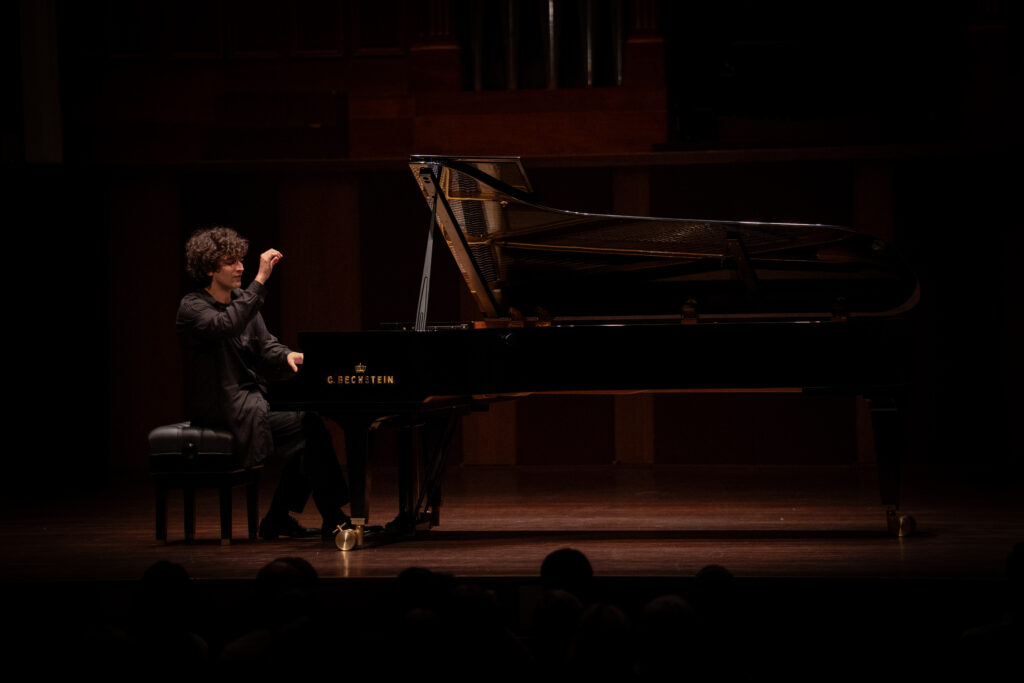
On 29 August 2026, Victoria Concert Hall was the setting for something truly special — the Asia Debut of Berlin-based pianist Roman Borisov, performing works by three of the greatest composers who ever wrote for the piano: Beethoven, Schumann, and Rachmaninoff. The evening was organised by True Music Singapore as part of the European Sound Piano Concert series, and from the very first notes, it was clear this was going to be a night worth remembering. Three Very Different Composers, One Remarkable Evening The programme opened with Beethoven’s famous “Pathétique” Sonata — a piece you may well recognise, with its dramatic opening, singing middle movement, and spirited finale. Borisov brought all three movements to life with real clarity and purpose. Even if you were hearing it for the first time, it felt immediate and alive — never like a museum piece. Next came Schumann’s Humoreske — a more personal, reflective work that shifts constantly between different moods. Think of it as a musical diary rather than a straightforward story — moving freely between joy, tenderness, and restlessness, sometimes within the same breath. It takes a very skilled pianist to hold all of that together, and Borisov did so with a naturalness that was genuinely impressive. After the intermission, Rachmaninoff’s Piano Sonata No. 2 brought the evening to its most powerful point. Rich, dramatic, and deeply emotional, it showed just how extraordinary the piano can sound in the right hands. The quieter passages were just as striking as the big climaxes — moments where the music seemed to breathe and glow. The Piano The instrument Borisov performed on was a C. Bechstein D282 Concert Grand — one of the finest pianos in the world. Its ability to move between thunderous power and the most delicate softness was remarkable throughout the evening, perfectly complimenting Roman’s skilful storytelling. Three Encores and Still Going By the end of the programme, the audience was captivated and Borisov clearly felt the connection too. He returned to the stage for three encores: Mendelssohn’s Song Without Words Op. 67 No. 2, Rachmaninoff’s Prelude in G minor Op. 23 No. 5, and Medtner’s Canzona Serenata Op. 38 No. 6. Even after the third, the applause showed no signs of stopping. After the concert, Borisov stayed to meet the audience at a Meet and Greet — warm, approachable, and genuinely delighted to connect with Singapore music lovers for the very first time. It was, in every sense, a delightful debut recital. This event was presented by Bechstein Music World and organised by True Music Singapore, divisions of Cristofori Music Group. Follow Cristofori Music School on Facebook and Instagram for news on upcoming concerts and events.
A Deutsche Grammophon Star Makes His Singapore Debut
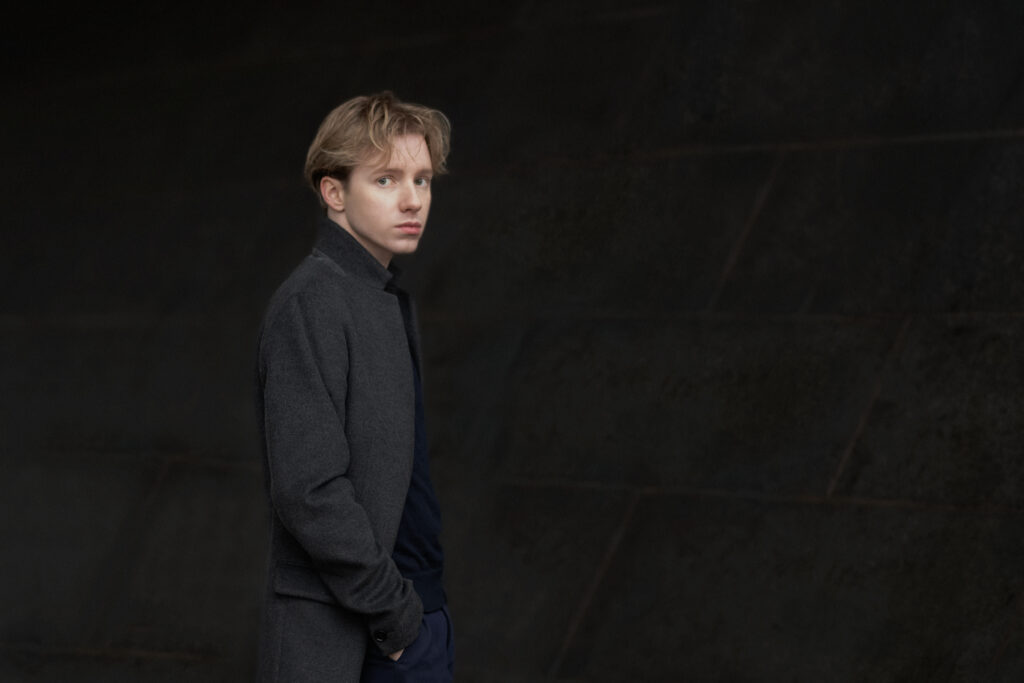
11 November 2026 · 8pm · Victoria Concert Hall Calling all Cristofori students — here’s a concert worth putting in your diary. German pianist Julius Asal is making his very first visit to Singapore, and we’re excited to have our students in the room for it. Praised by the legendary pianist Menahem Pressler for his “uniquely beautiful sound and special sonority,” Asal is one of the most talked-about young pianists working today. In 2023, Deutsche Grammophon — the most storied name in classical recording — signed him as an exclusive artist; he’s since been named a BBC Radio 3 New Generation Artist and Classic FM’s Rising Star. He’s played some of the world’s great stages, from Wigmore Hall and the Musikverein Vienna to Suntory Hall Tokyo, and in 2025 stepped in on short notice for Evgeny Kissin to perform Scriabin’s Piano Concerto with the Orchestra del Teatro Comunale di Bologna — the kind of moment that makes a career. His Deutsche Grammophon debut album, Scriabin–Scarlatti, has already passed 25 million streams. About the Programme: “Last Words” Asal’s Singapore programme, titled “Last Words,” will be built around music composers wrote at the end of something — the end of a life, a story, or what words alone can say. It will be a rich programme to sit with as a student, because each piece approaches “ending” so differently. The evening will open with Schumann’s Ghost Variations, the very last piece he completed before his breakdown in 1854 — hushed, fragile music that feels like a private goodbye rather than a grand statement. Next will come Beethoven’s Piano Sonata No. 32, Op. 111, his final piano sonata: just two movements, moving from a stormy opening struggle to an Arietta that dissolves slowly into trills and stillness. It will be well worth listening for how Beethoven uses space and silence here — there’s a lot to learn from how little he needs to say by the end. Singapore will get its first hearing of Lera Auerbach’s Love Letters of Emma Hauck, a piece written especially for Asal and premiered by him this past March. It is inspired by real letters from a woman who wrote the same two words to her husband, over and over, for years — and Auerbach’s music turns that repetition into something searching and unresolved, a compelling case study in how a single musical idea can carry an entire piece. The evening will close with a suite from Prokofiev’s Romeo and Juliet, mixing Prokofiev’s own piano transcriptions with new ones by Asal himself — a great one for anyone curious about how orchestral music gets reimagined for solo piano, and a bold, theatrical way to end the night. Whether you’ve been playing for two years or twenty, this is a rare chance to hear a world-class artist’s technique and interpretation up close, and to walk away with new repertoire on your radar. Event Details Julius Asal, piano — “Last Words” Tuesday, 11 November 2026, 8pm Victoria Concert Hall, Singapore Tickets go on sale Tuesday, 1 September 2026, via Ticketmaster.SG. This recital is brought to you by True Music Singapore and Bechstein Music World, both part of the Cristofori Music Group, as part of True Music Singapore’s 2026 European Sound Piano Concert series. Follow True Music Singapore on Facebook and Instagram, and Bechstein Music World on Facebook and Instagram for updates. We hope to see many of our Cristofori students in the audience! This is exactly the kind of concert that can shape, and open new horizons in how you think about music.