
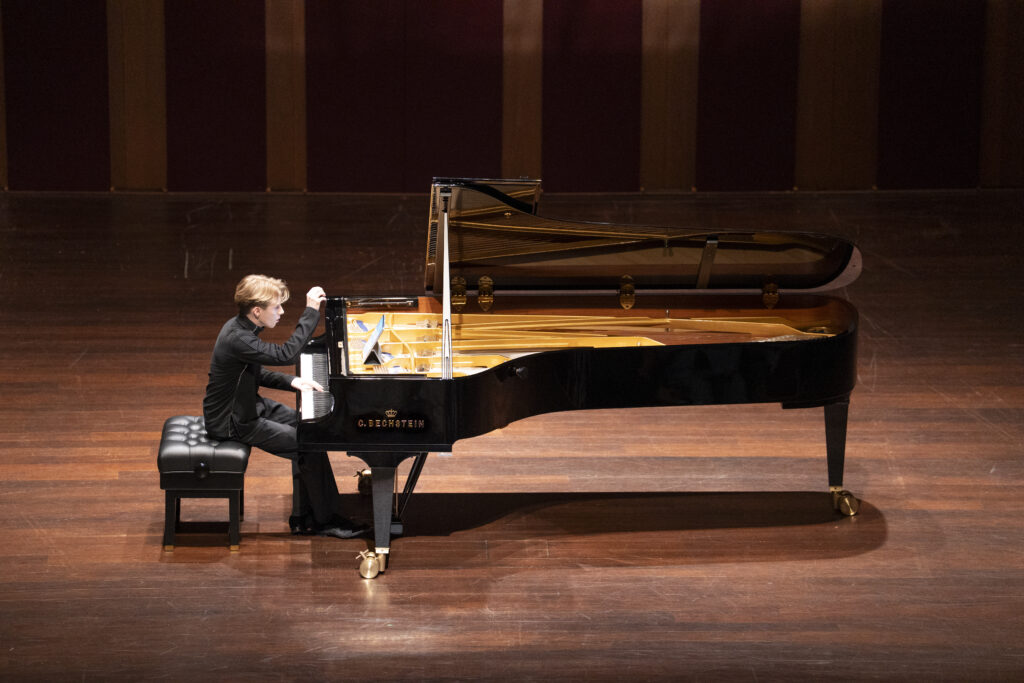
Some recitals impress us with sheer technical skill, while others stay with us because of how deeply they move us. German pianist Julius Asal’s Singapore debut, Last Words: Ghosts · Farewells · Love · Eternity, at Victoria Concert Hall on 11 November 2026, showed that he is capable of both. Yet it is perhaps his ability to touch the audience through music that makes his playing especially memorable.
Built around a simple yet moving question—what do composers express when ordinary words are not enough?—the evening brought together four works shaped by love, longing, and farewell. From Robert Schumann’s Ghost Variations and Beethoven’s final piano sonata to Lera Auerbach’s Love Letters of Emma Hauck and Sergei Prokofiev’s Romeo and Juliet, the programme took the audience on a deeply personal journey.
The best way to describe Asal’s playing lies in a phrase he once used for Schumann’s Ghost Variations: “Es geht direkt ins Herz” — it goes straight to the heart. Watching him perform, you quickly realize his musical power does not come from banging the keys or making grand gestures. Instead, it works quietly beneath the surface. Even in the softest, most delicate moments, there is a gripping intensity to his sound, proving that a pianist doesn’t need to play loudly to captivate an entire concert hall.
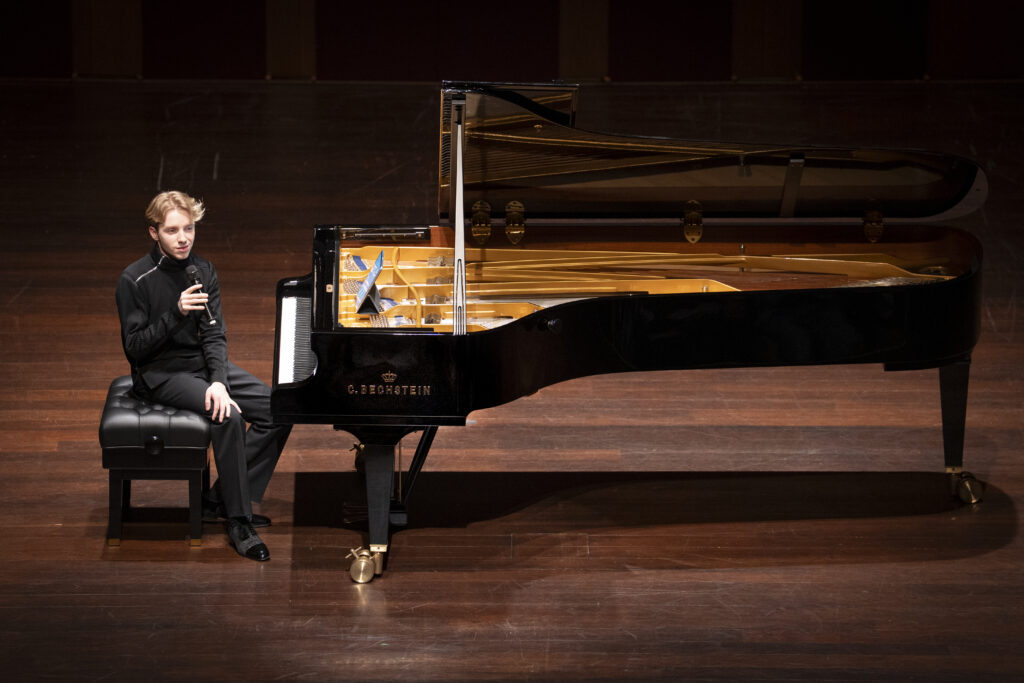
Before starting, Asal greeted the audience and offered a few brief, welcoming introductions to the music. He also made the thoughtful choice to play Schumann’s Ghost Variations and Beethoven’s Sonata Op. 111 back-to-back without stopping. Even though the two pieces were written decades apart, Asal felt they belonged together. Moving seamlessly from Schumann’s fragile, gentle melodies into the dramatic storms and peaceful variations of Beethoven’s final sonata created a seamless, dreamlike opening half.
The emotional heart of the night, however, was the Singapore premiere of Lera Auerbach’s Liebesbriefe von Emma Hauck (Love Letters of Emma Hauck). Before playing, Asal shared that he describes this work not just as a piece of music, but as an immersive experience. Inspired by Emma Hauck, a German woman hospitalized in 1909, the music reflects the heartbreaking letters she repeatedly wrote to her husband while struggling with her inner demons—a battle that eventually cost her her life. Across the pages, she wrote the same desperate plea thousands of times: “Herzensschatzi, komm” (“Darling, please come back to me”), letters that were never delivered.
Rather than telling the story with words, Auerbach captures that aching longing and repetition in sound. In a programme titled Last Words, it was a poignant reminder that music can preserve human stories and voices that might otherwise be forgotten.
After intermission, the mood shifted from quiet reflection to high drama with selections from Prokofiev’s Romeo and Juliet, featuring both Prokofiev’s own piano transcriptions and Asal’s personal arrangements.
It was fascinating to watch Asal bring Shakespeare’s characters to life at the keyboard—switching effortlessly from the tender romance of Madrigal to the fierce tension of Tybalt Recognizes Romeo and the bold, heavy march of Dance of the Knights. Despite his slight, lean frame, Asal drew an enormous, orchestral range of colours from the C. Bechstein D 282 concert grand, filling the hall with bold energy while keeping every musical line crystal clear.
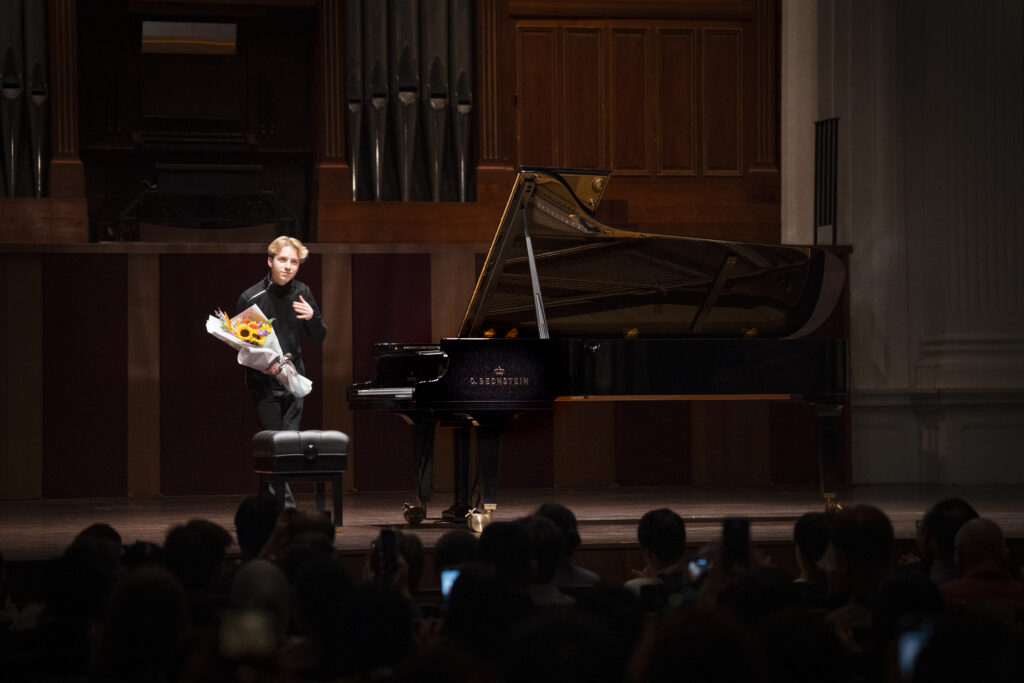
After such an emotionally intense programme, Asal sent the audience home with two warm, lighter encores: Moszkowski’s sparkling Étude in A-flat Major, followed by Schumann’s gentle Von fremden Ländern und Menschen (a familiar favourite from Scenes from Childhood that many young piano students know and love). It was a thoughtful, comforting way to close the night.
Ultimately, Last Words felt less like a formal concert and more like a quiet act of remembrance—much like traditions where families share stories to keep the memory of loved ones alive. Asal’s playing never tried to turn tragedy into a show; instead, he simply created a space for the audience to sit, listen, and feel. For anyone learning an instrument or simply loving music, it was a memorable reminder of why we play: not just to hit the right notes, but to connect with the human stories behind them.