

Choosing the Right Drumsticks for You
When drummers think about improving their sound, they often focus on drums, cymbals, or technique. But one of the most influential — and most overlooked — tools is the drumstick.
Drumsticks are the direct connection between your hands and the instrument. The material of the stick, the material of the tip, and the shape of the tip all play a role in how your drums respond, how your cymbals speak, and how comfortable playing feels over long sessions.
Understanding these factors helps drummers of all levels make smarter choices, whether you’re practising at home, performing on stage, or preparing for exams.
1. Stick Material: The Foundation of Feel and Response
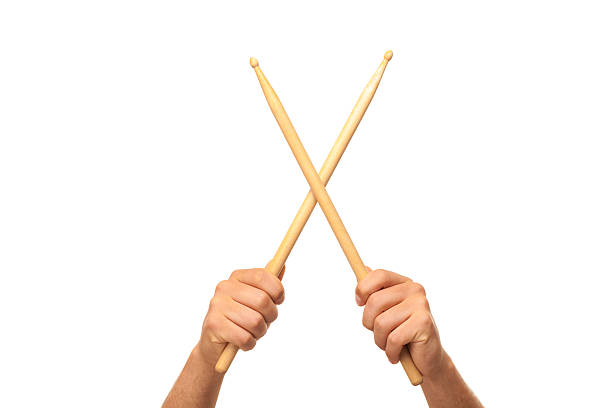
Traditional Wood Drumsticks
Wood remains the most common drumstick material, valued for its natural feel and tonal warmth.
Common woods include:
- Hickory – Balanced weight, excellent shock absorption, and durability
- Maple – Lighter, faster, and quieter; good for low-volume settings
- Oak – Dense and powerful, with strong projection but less shock absorption
Wood sticks feel organic and responsive, making them popular with students and professionals alike. However, they wear down over time and may break under heavy use.
Carbon Fibre Drumsticks


Carbon fibre drumsticks are a modern alternative designed for consistency and longevity.
Key characteristics:
- Extremely durable and resistant to breaking
- Consistent weight and balance from pair to pair
- Strong rebound, requiring less effort from the hands
They are especially useful for:
- Frequent or intensive practice
- Drummers who want reliable feel across sessions
- Players looking to reduce long-term stick replacement costs
Carbon fibre sticks don’t replace wood — they offer a different playing experience that suits certain needs and environments.
2. Tip Material: Shaping Brightness and Definition
Wood Tips
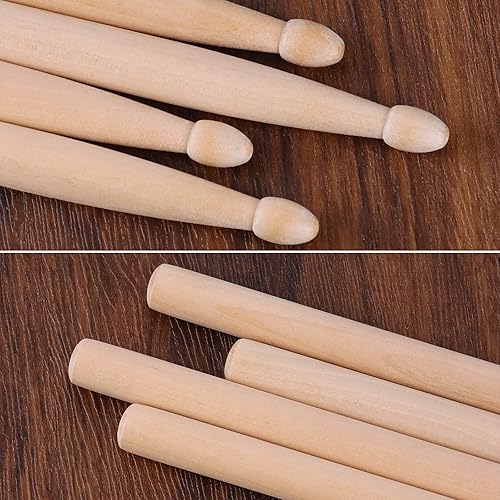
Wood tips produce a warmer, more natural sound, especially on cymbals. As they wear down, the tone can subtly change over time, which some drummers enjoy for its organic character.
Best for:
- Jazz, orchestral, and acoustic settings
- Players who prefer tonal warmth and nuance
Nylon / Plastic Tips

Nylon tips are harder and more durable, producing a brighter, more defined cymbal sound.
Best for:
- Clear ride and hi-hat articulation
- Louder genres where definition matters
- Players who want consistency and longer-lasting tips
The choice between wood and nylon tips is less about skill level and more about sound preference and playing context.
3. Tip Shape: A Small Detail with a Big Impact

Round (Ball) Tips
- Focused, precise articulation
Bright, consistent cymbal tone
Minimal tonal variation regardless of angle
Favoured for clarity and detailed playing.
Teardrop Tips
- Balanced tone and response
Versatile across many styles
Slight tonal variation depending on angle
A popular all-purpose choice for students and working drummers.
Acorn Tips
Fuller, warmer cymbal sound
Rich tone on toms
Broader contact area
Well-suited for rock, pop, and expressive playing.
Barrel Tips
Wide contact area
Powerful projection
Less focus, more volume
Often chosen for louder styles where presence is key.
4. How Material and Tip Design Work Together
Stick material, tip material, and tip shape interact to create your overall playing experience.
For example:
- A wood stick with an acorn wood tip produces warmth and depth
- A wood stick with a round nylon tip delivers clarity and definition
- A carbon fibre stick with a focused tip shape offers consistency and strong rebound
This explains why two sticks of the same size can feel and sound very different in your hands.
5. Choosing the Right Drumsticks for You

You may prefer wood sticks with wood tips if you value warmth, nuance, and traditional feel.
You may prefer wood sticks with nylon tips if you want bright articulation and durability.
You may prefer carbon fibre sticks if you practise often, want consistency, or need long-lasting reliability.
Tip shape then fine-tunes the experience:
- Round tips for precision
- Teardrop tips for versatility
- Acorn tips for fullness
- Barrel tips for power
Many drummers keep more than one type of stick and switch depending on repertoire, venue, or practice goals.
Why This Matters for Students
For students, drumsticks affect:
- Hand comfort and fatigue
- Control and rebound
- Dynamic range
- Sound consistency
Choosing the right stick makes practice more enjoyable and helps build good technique without unnecessary tension. It also encourages students to listen critically — an essential skill for musical growth.
Final Thoughts
Drumsticks may be simple tools, but they carry enormous influence. By understanding material, tip material, and tip shape, drummers can make informed choices that support their sound, comfort, and musical goals.
The best drumstick isn’t universal — it’s the one that helps you play with confidence, control, and expression.


