

A Listener’s Guide to Space: Understanding Singapore’s Concert Hall Designs
Singapore’s cultural scene has grown quietly but confidently over the years. Today, audiences can choose from orchestral concerts, piano recitals, musicals, operas, and student performances held in world-class venues across the island. With initiatives such as government grants and programmes like Culture Pass, live performances have become more accessible than ever—encouraging families, students, and first-time concertgoers to step into concert halls and experience music live.
We often remember a concert for the performers on stage: a powerful singer, a moving melody, or a thrilling finale. But one way to appreciate a concert event more deeply is to look beyond what we see, and to zoom out to consider the space in which the performance takes place. The room itself plays a quiet but powerful role in shaping how music reaches us.
Behind every memorable performance in Singapore lies an unseen collaborator: architectural acoustics—the careful shaping of space so that sound travels with clarity, warmth, and emotional impact.
In essence, venues themselves are instruments too, and they can be tuned to perfection. Across Singapore, several distinct concert hall designs can be found, each offering a different listening experience.
The Fan Shape: Intimacy and Sightlines
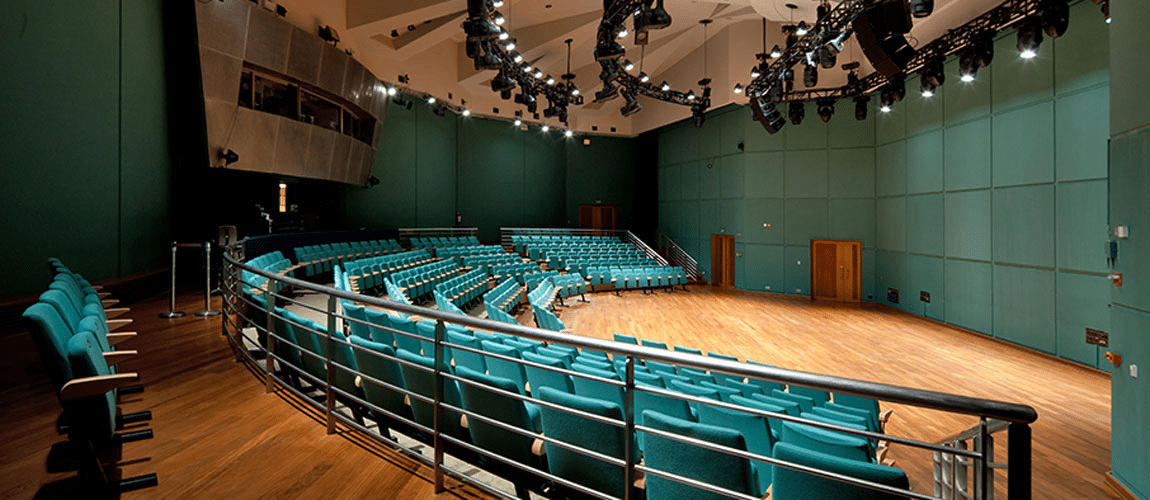
Some venues use a fan-shaped design, where the hall widens gradually from the stage. A good example is the Esplanade Recital Studio.
This layout brings the audience closer to the performer, both physically and emotionally. Sightlines are excellent, allowing listeners to catch subtle gestures and expressions that are especially valuable in solo or chamber music. Because sound can spread out too quickly in a widening space, acousticians carefully shape the walls with timber ribs and diffusing surfaces. These elements gently scatter sound, ensuring that even delicate instruments retain their presence and immediacy throughout the room.
The Horseshoe Shape: The Drama of the Voice
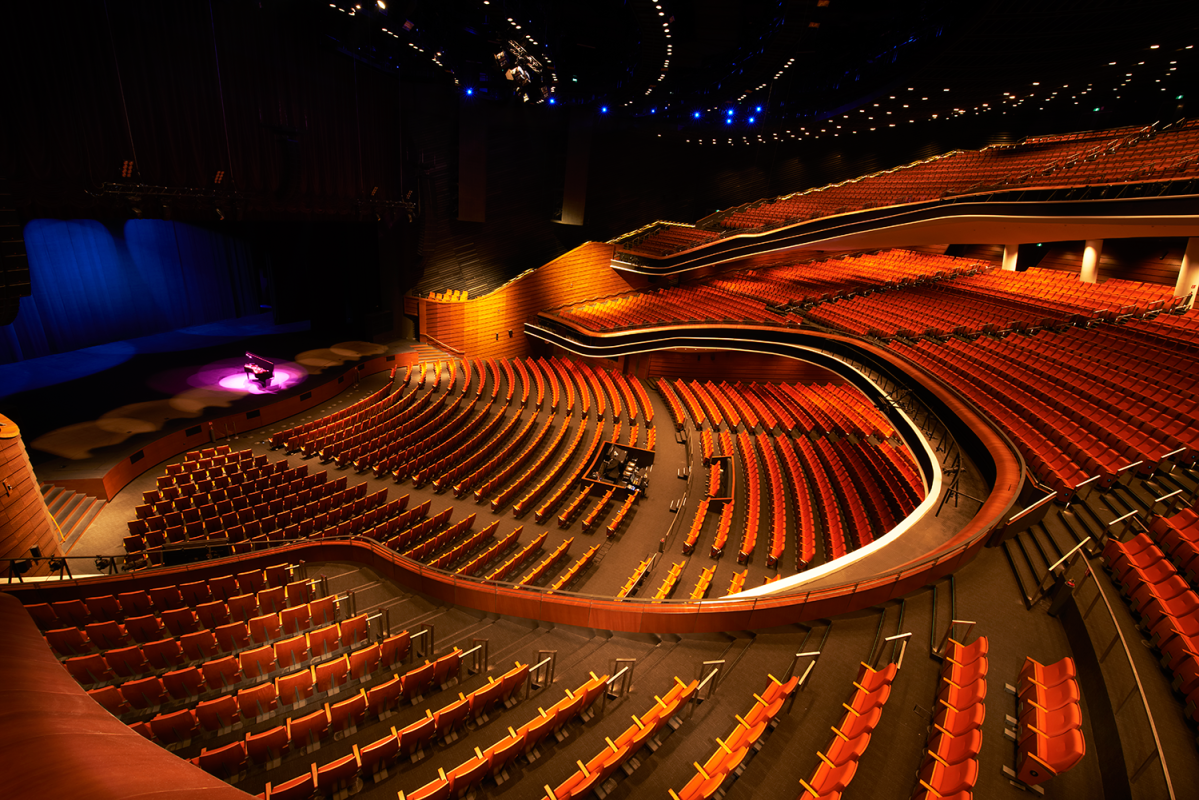
Other venues draw inspiration from traditional European opera houses, adopting a horseshoe-shaped design. Spaces such as the Esplanade Theatre, The Star Theatre, and the Ho Bee Auditorium at NUS curve around the stage in a way that naturally supports the human voice.
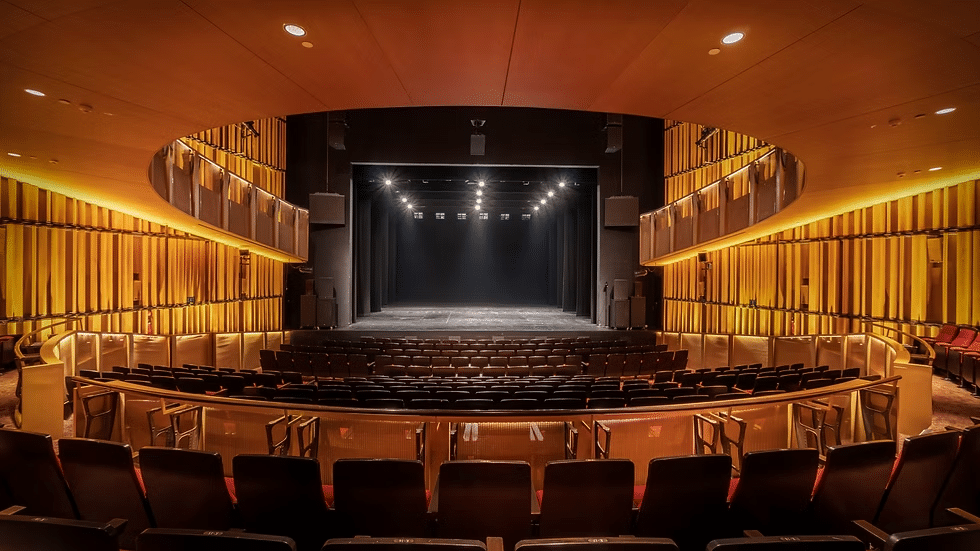
This shape shortens the distance between performers and audience, helping words and musical lines project clearly—a crucial feature for opera, musical theatre, and spoken performance. In larger halls, acousticians must also control the scale of the space, using carefully designed ceilings and sound-absorbing materials so that amplified sound remains focused and intelligible rather than overwhelming.
The Vineyard Shape: Immersive Community
A more modern approach can be found in vineyard-style halls, where seating terraces surround the stage on all sides. Here, the audience is placed at the centre of the musical experience, creating a strong sense of shared attention and immersion.
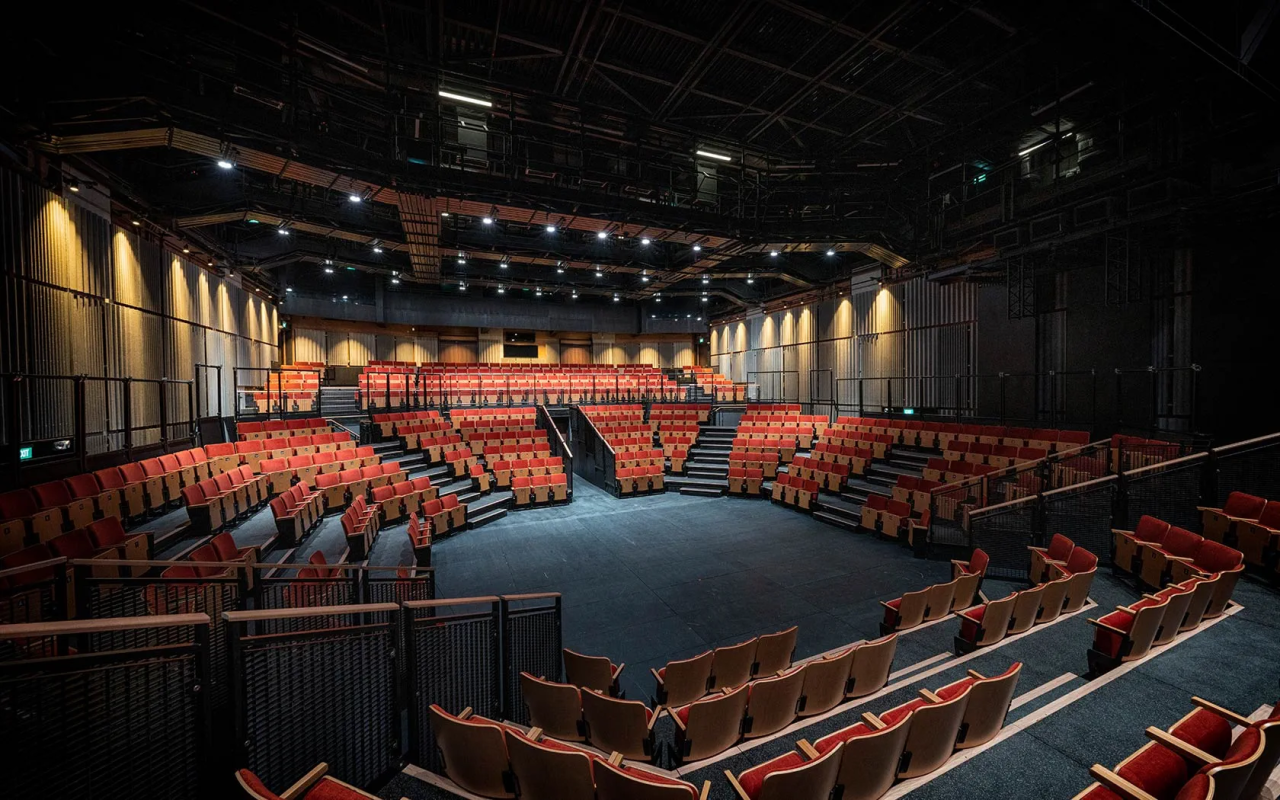
The Esplanade Concert Hall is Singapore’s most prominent example, though it can be considered a hybrid of the Vineyard and Shoebox shapes.
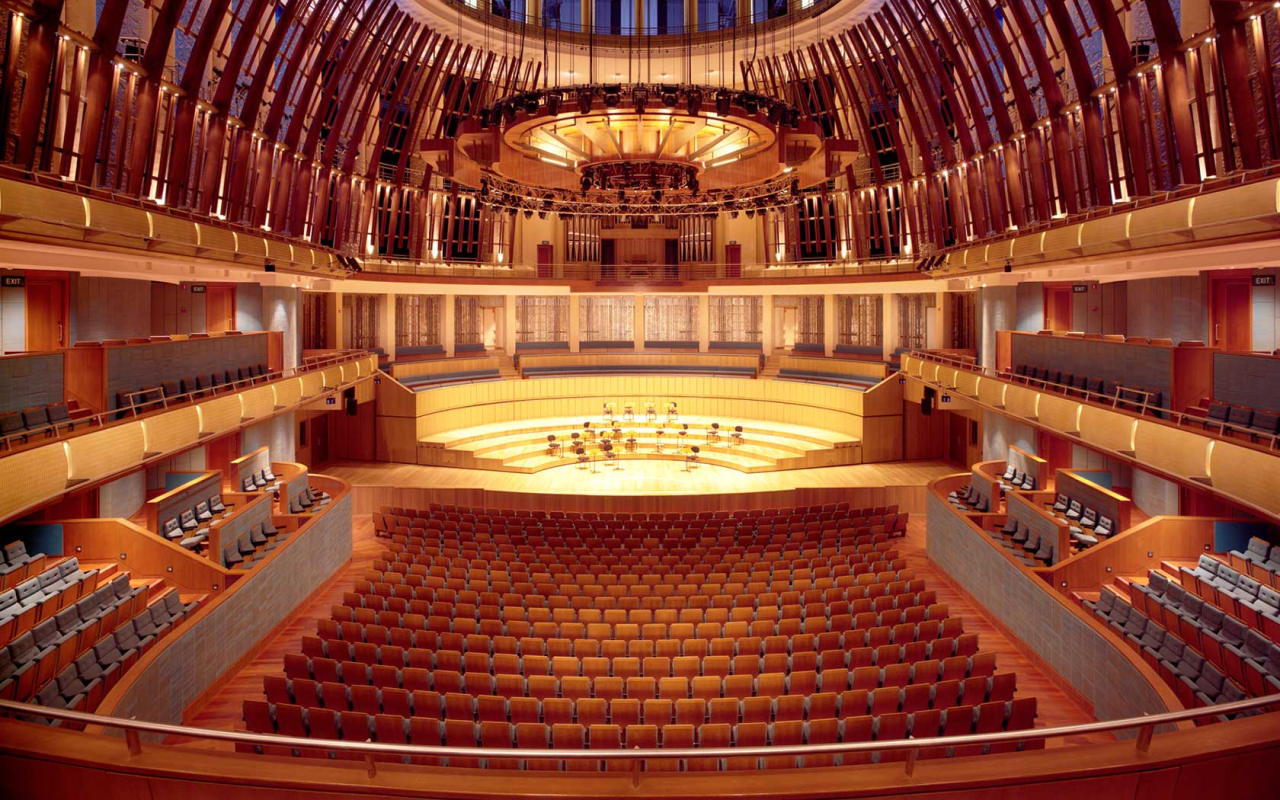
One of the Esplanade Concert hall’s most remarkable features is its adjustable acoustic canopy, which can be raised or lowered to change how sound behaves in the room. When the canopy is lowered, the space feels more intimate, ideal for chamber music. Raised higher, it allows sound to expand and bloom, giving larger ensembles and the pipe organ the space they need to resonate fully.
The Shoebox Shape: The Gold Standard
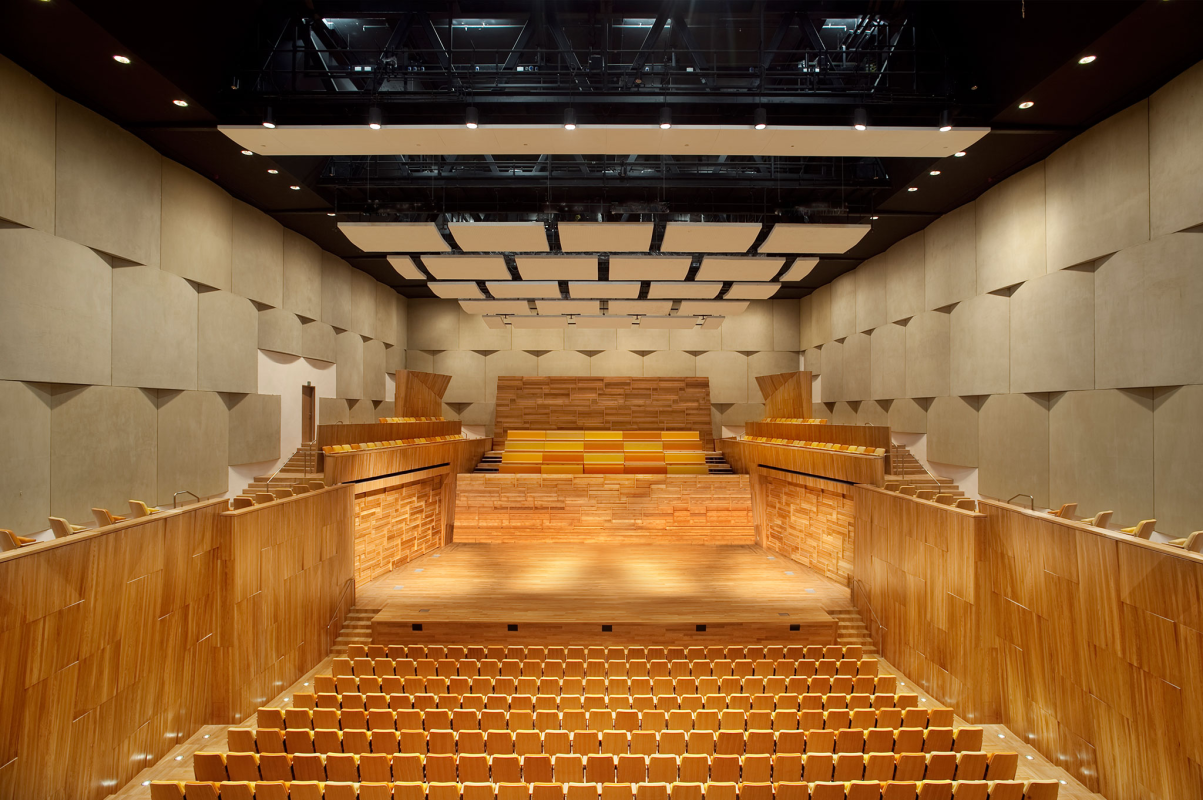
The most traditional design, often considered the gold standard for classical music, is the shoebox-shaped hall. Venues such as Victoria Concert Hall (VCH), the Yong Siew Toh Conservatory, and SOTA Concert Hall follow this tall, rectangular form. This design allows for the best lateral reflections; because the side walls are parallel and relatively close together, sound waves bounce off them and reach your ears from both sides almost simultaneously. This creates a rich, “enveloped” feeling, or “envelopment“, as if the music is wrapping around you rather than just playing in front of you.
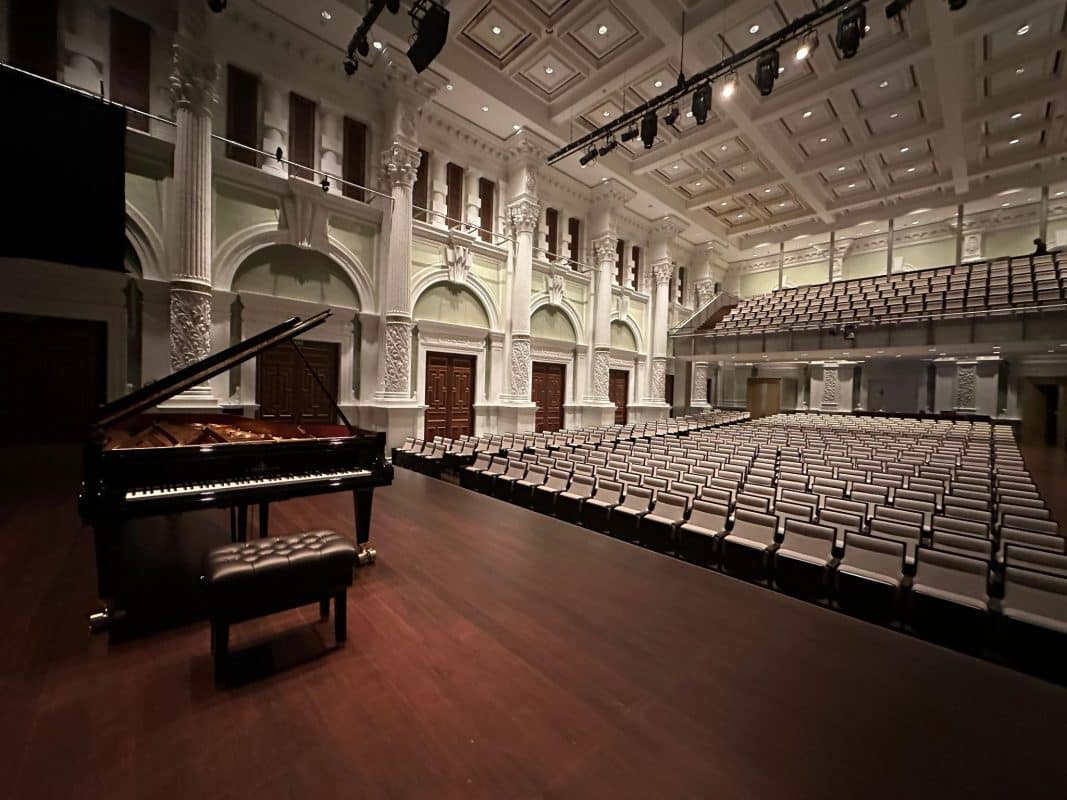
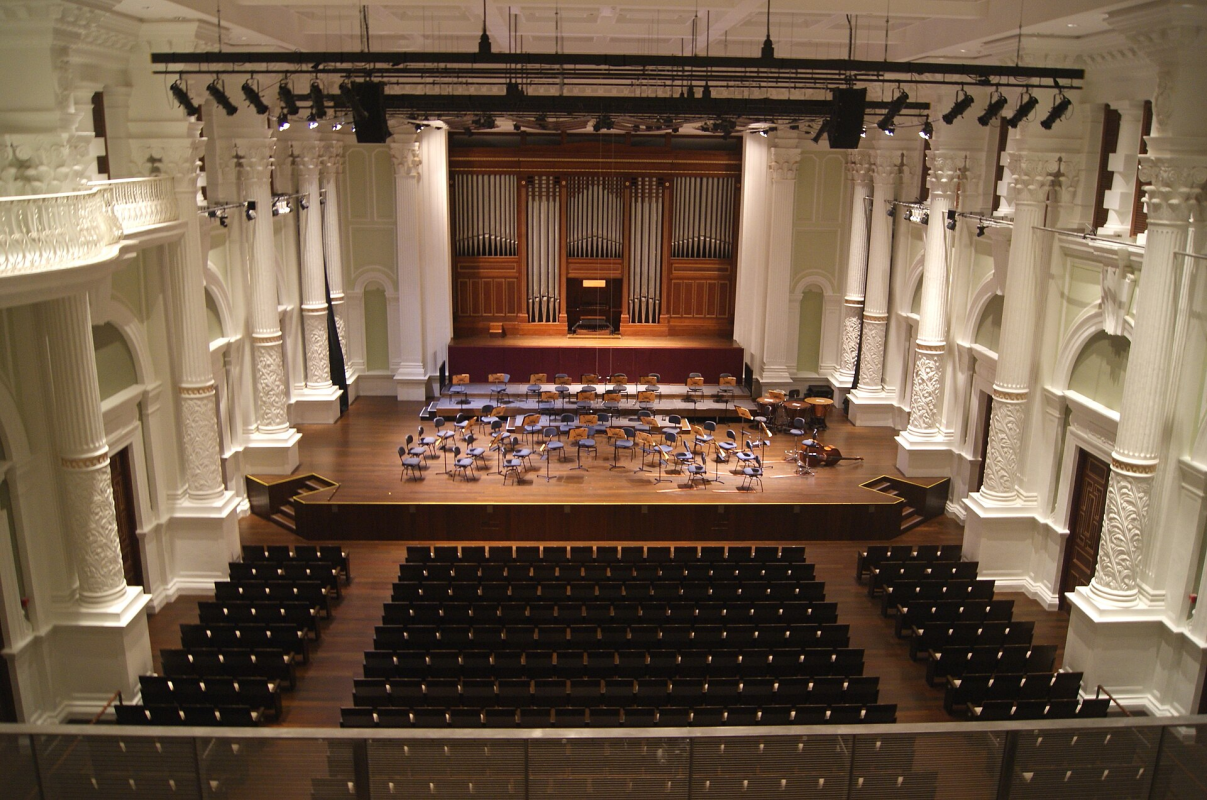
During its restoration, Victoria Concert Hall reduced its seating capacity to increase the acoustic space per listener, allowing notes to linger longer and giving the hall a warmer, more resonant character. Integrated into this design is the Klais pipe organ, an instrument voiced specifically for the hall’s proportions. It can blend gently with a solo instrument or fill the entire space with sound, demonstrating how architecture and instrument design work hand in hand.
A New Way to Listen
For parents introducing their children to concerts, for students beginning to listen more critically, or for those attending their first live performance, these spaces quietly shape the experience. Long before a musician steps on stage, decisions have already been made about how the music will travel, how it will surround us, and how it will be remembered.
The next time you take your seat in a concert hall, listen not only to the performers, but also to the room itself. The walls, the ceiling, and even the distance between seats are all part of the performance—the silent partner that helps music come alive.
Catch concerts throughout the year at Victoria Concert Hall with True Music Singapore’s European Sound Piano Concerts 2026, presented in collaboration with Bechstein Music World Singapore and Cristofori Academy of Fine Arts.
Be sure to follow True Music Singapore at their socials linked below for updates on this series of concerts!
True Music Singapore on Facebook and Instagram
GLOSSARY OF TERMS
Acoustic Canopy A large, often movable structure suspended above the stage. By raising or lowering the canopy, technicians can change the “volume” of the room: lower canopy = intimate and clear (great for soloists); higher canopy = sound can reverberate and swell (perfect for a full orchestra).
Architectural Acoustics The branch of engineering and architecture that studies how sound behaves in a building to achieve high speech intelligibility and/or superior music quality by controlling how sound waves bounce, disappear, or linger.
Diffusing Surfaces (Diffusion) Walls or panels that are intentionally uneven (like the timber “ribs” in the Esplanade Recital Studio). Instead of sound hitting a flat wall and bouncing back like a mirror, diffusion scatters the sound in many directions, creating a smooth, natural feel in the room.
Envelopment The sensation of being “surrounded” by sound, when sound reaches your ears from the sides rather than just from the stage. This is a hallmark of the shoebox design.
Intelligibility The degree to which words and individual musical notes can be clearly understood. In horseshoe theatres, high intelligibility is vital so that every lyric in a musical or opera reaches the audience without being blurred by echoes.
Lateral Reflections Sound waves that bounce off side walls and hit your ears from the left and right.
Reverberation (Resonance) Often called “reverb,” this is how long a sound persists after the original source has stopped. If a hall has high resonance, the notes linger in the air.
Sightlines The unobstructed line of sight between an audience member and the performer.
Timbre (Tone Colour) The unique character or quality of a musical sound.
Voicing The process of adjusting an instrument so that its tone fits the specific acoustics of the room it lives in.


