The Lentor neighborhood is undergoing a vibrant transformation, and we are thrilled to announce that Cristofori Music School is now part of the landscape. From 2 January 2026, our newest outlet at Lentor Modern is officially open, bringing world-class music education directly to the heart of this thriving residential community!
Whether you are a resident of the new Lentor Modern heights or live in the surrounding landed estates, your musical journey just got a lot more convenient.
A Prime Location for the Community
Located conveniently on the ground floor of the Lentor Modern integrated development, our school is perfectly situated for families and music enthusiasts in the area. We understand that convenience is key to a consistent musical education, which is why we chose a spot that fits seamlessly into your daily routine.
MRT Accessibility: Getting to us is effortless. We are located just a stone’s throw from Lentor MRT Station (Exit 1). Whether you are commuting home from work or bringing your child for a weekend lesson, the journey is seamless.
Neighborhood Vibes: Surrounded by a mix of modern condominiums and lush landed estates, the school sits in a peaceful yet connected hub.
A Family Affair: Lentor Modern is quickly becoming a lifestyle destination. After a productive lesson, you can explore the various restaurants in the mall—some of which are even pet-friendly, making it the perfect outing for the whole family (and your four-legged friends).
Our Lentor Modern outlet is equipped to help you or your child master a variety of instruments. Our experienced teachers are ready to welcome students of all ages and skill levels for:
Piano: From classical foundations to contemporary favorites.
Guitar & Ukulele: Perfect for those looking to pick up a versatile, portable instrument.
Drums: For the aspiring percussionists looking to find their rhythm.
At Cristofori Music Academy – Lentor Modern, we have everything you need to start on your musical journey.
Visit Us at Lentor Modern
We invite you to drop by, view our modern facilities, and speak with our team about the best program for your musical goals.
The arrival of Cristofori at Lentor Modern marks our commitment to making music accessible to every corner of Singapore. We look forward to seeing the Lentor community fill our halls with song and rhythm!
Be sure to follow the new Cristofori Music Academy – Lentor Modern on Facebook and Instagram for the latest updates!
Singapore’s cultural scene has grown quietly but confidently over the years. Today, audiences can choose from orchestral concerts, piano recitals, musicals, operas, and student performances held in world-class venues across the island. With initiatives such as government grants and programmes like Culture Pass, live performances have become more accessible than ever—encouraging families, students, and first-time concertgoers to step into concert halls and experience music live.
We often remember a concert for the performers on stage: a powerful singer, a moving melody, or a thrilling finale. But one way to appreciate a concert event more deeply is to look beyond what we see, and to zoom out to consider the space in which the performance takes place. The room itself plays a quiet but powerful role in shaping how music reaches us.
Behind every memorable performance in Singapore lies an unseen collaborator: architectural acoustics—the careful shaping of space so that sound travels with clarity, warmth, and emotional impact.
In essence, venues themselves are instruments too, and they can be tuned to perfection. Across Singapore, several distinct concert hall designs can be found, each offering a different listening experience.
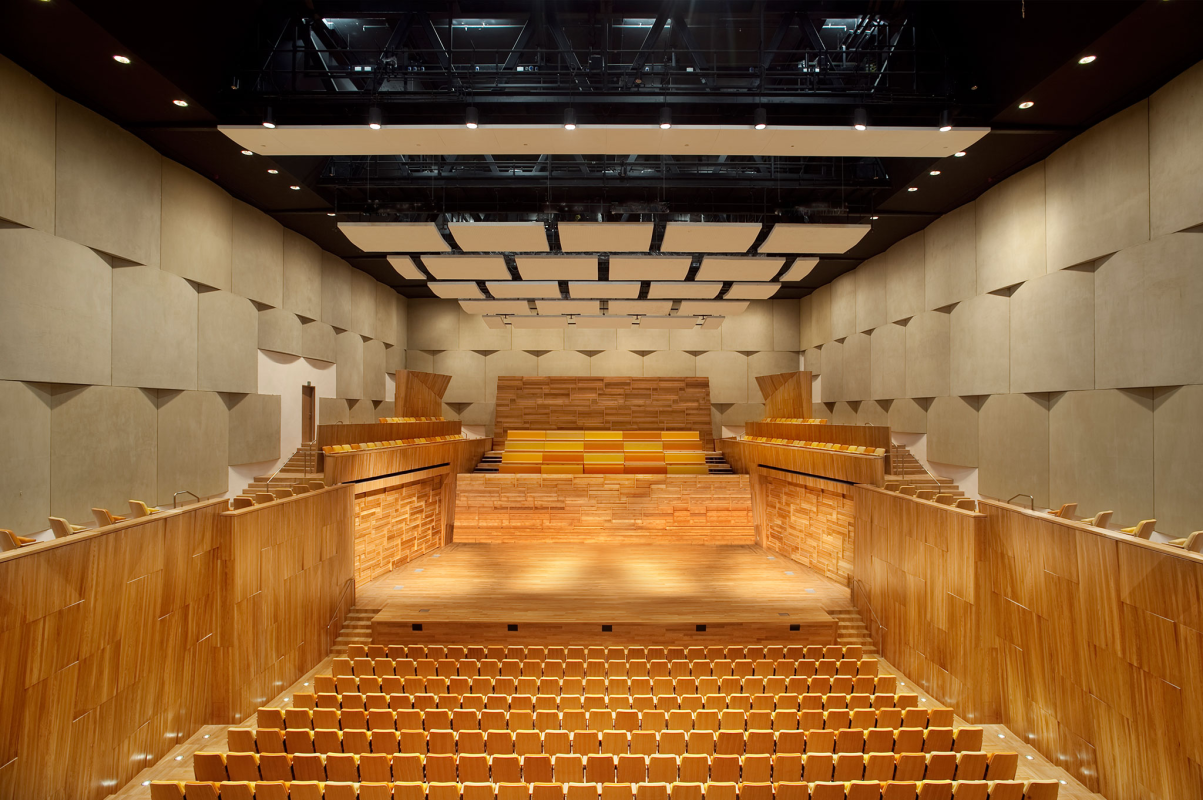
The Fan Shape: Intimacy and Sightlines
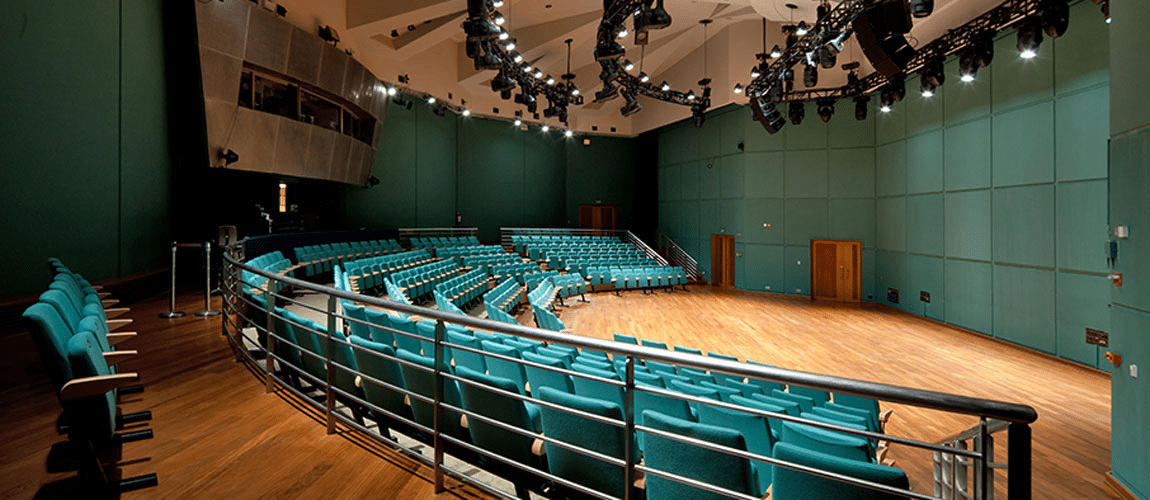
The Esplanade Recital studio’s fan layout offers clear sight-lines to the performance from all sides.
Some venues use a fan-shaped design, where the hall widens gradually from the stage. A good example is the Esplanade Recital Studio.
This layout brings the audience closer to the performer, both physically and emotionally. Sightlines are excellent, allowing listeners to catch subtle gestures and expressions that are especially valuable in solo or chamber music. Because sound can spread out too quickly in a widening space, acousticians carefully shape the walls with timber ribs and diffusing surfaces. These elements gently scatter sound, ensuring that even delicate instruments retain their presence and immediacy throughout the room.
The Horseshoe Shape: The Drama of the Voice
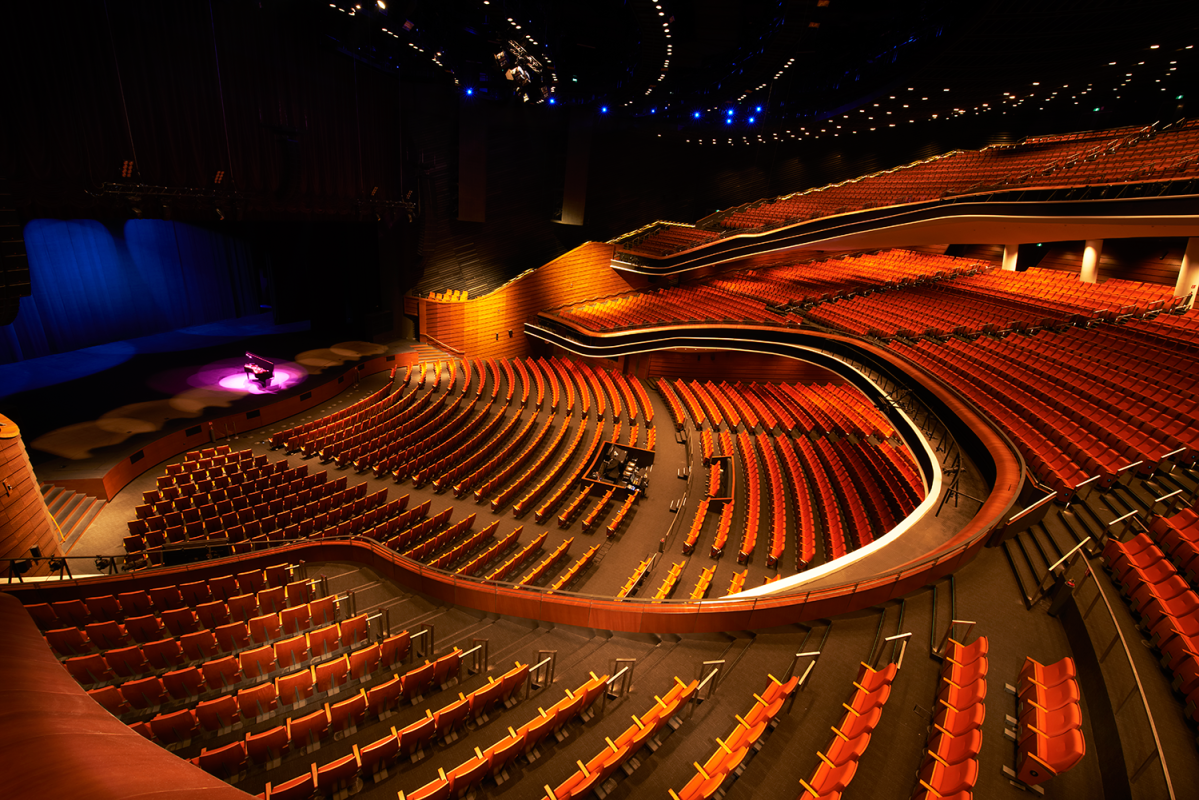
The Star Theatre at the Star Performing Arts Centre in Buona Vista, Singapore
Other venues draw inspiration from traditional European opera houses, adopting a horseshoe-shaped design. Spaces such as the Esplanade Theatre, The Star Theatre, and the Ho Bee Auditorium at NUS curve around the stage in a way that naturally supports the human voice.
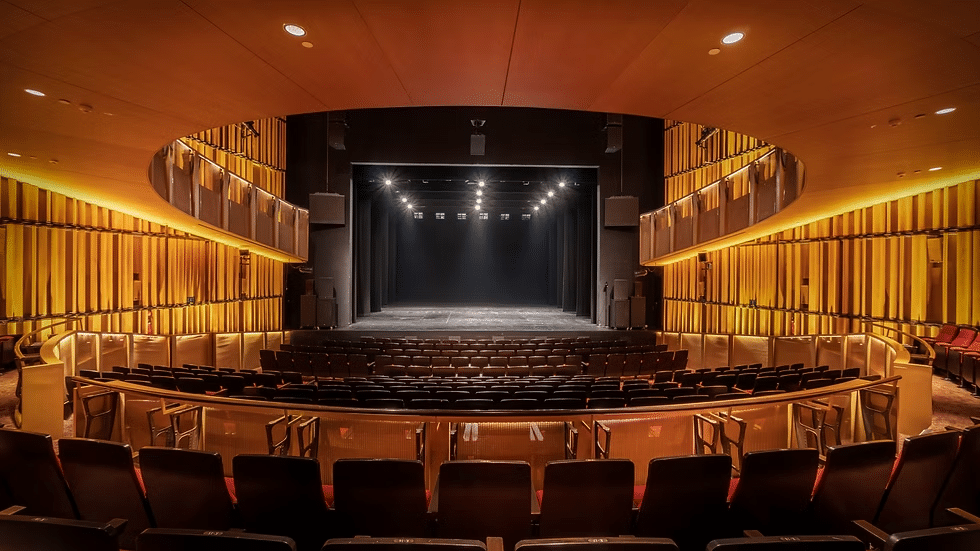
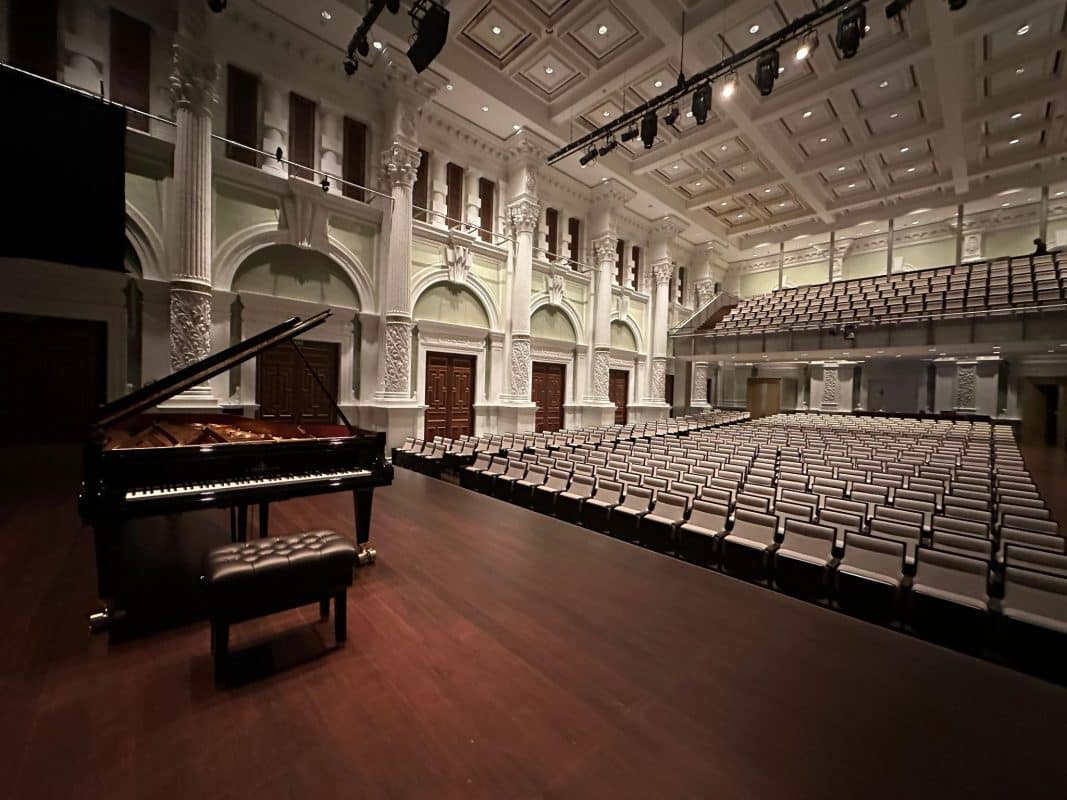
The View from the stalls at the Victoria Theatre
This shape shortens the distance between performers and audience, helping words and musical lines project clearly—a crucial feature for opera, musical theatre, and spoken performance. In larger halls, acousticians must also control the scale of the space, using carefully designed ceilings and sound-absorbing materials so that amplified sound remains focused and intelligible rather than overwhelming.
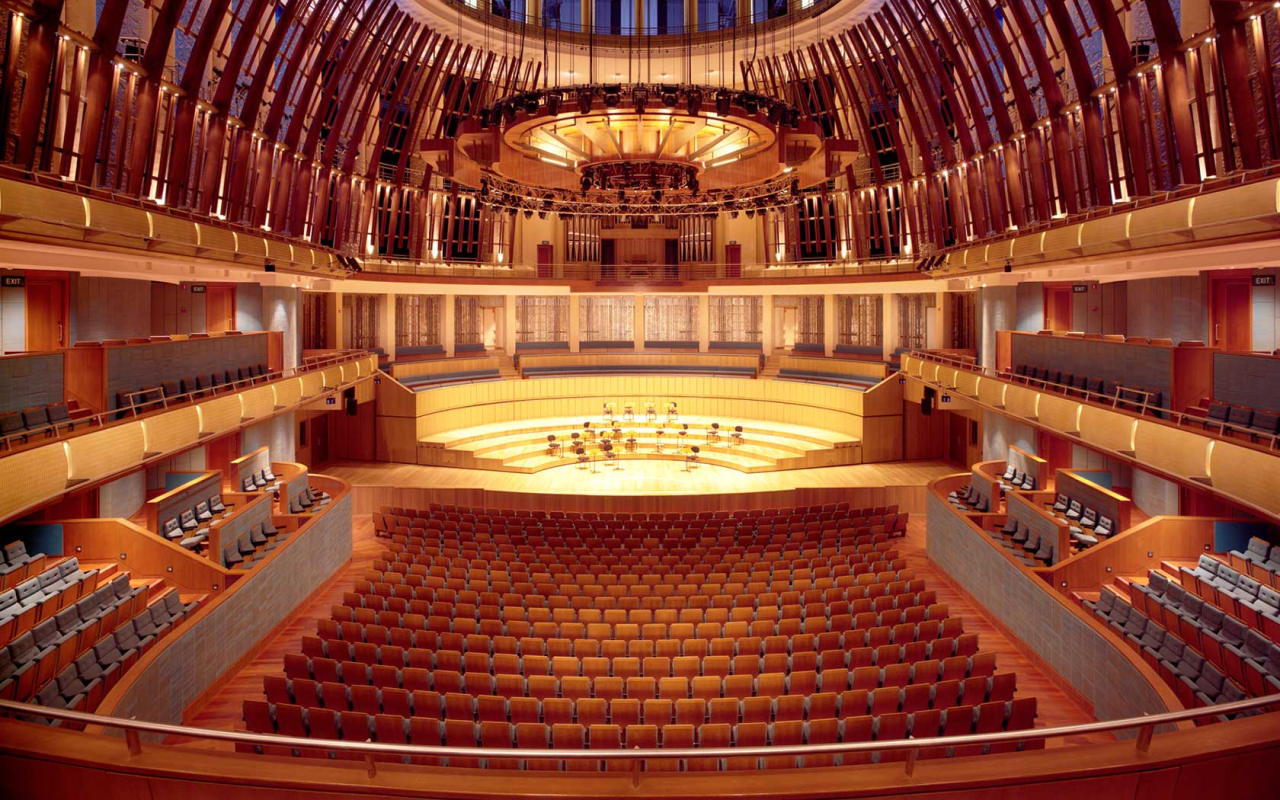
The Vineyard Shape: Immersive Community
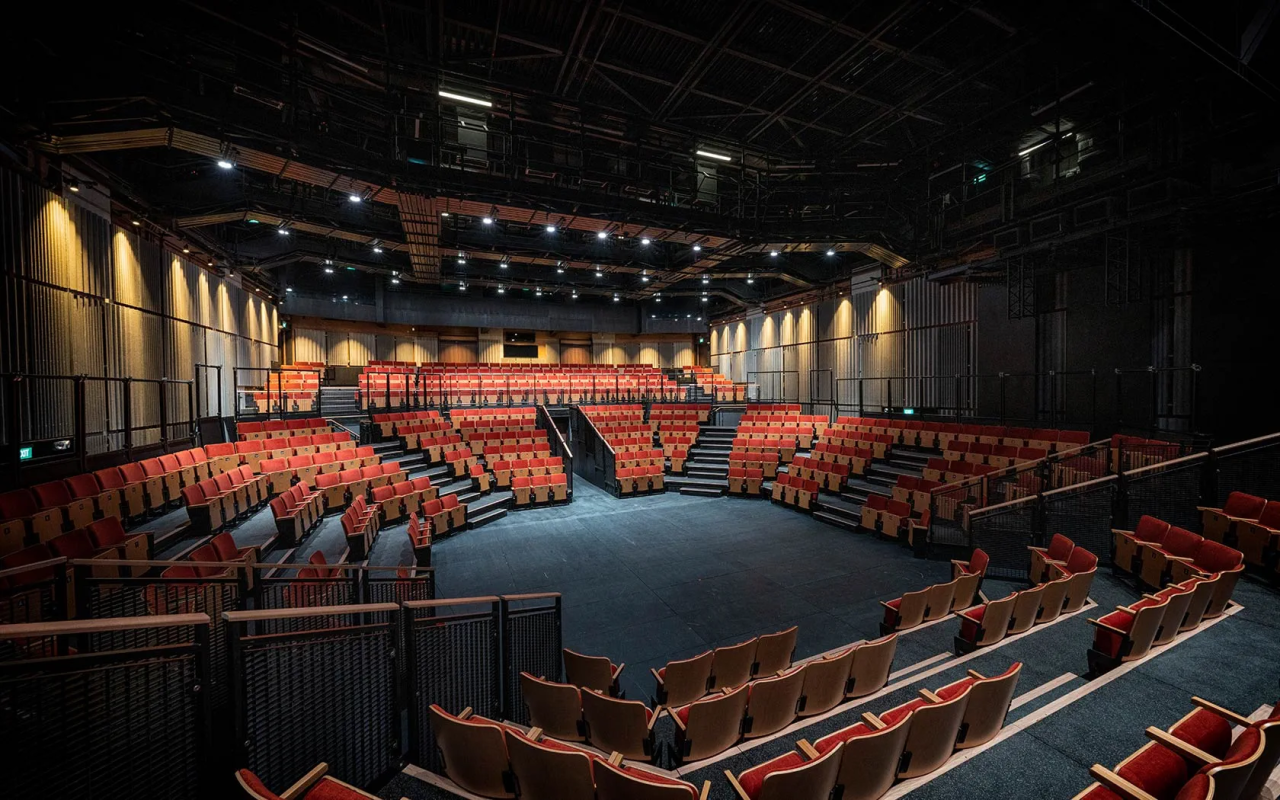
A more modern approach can be found in vineyard-style halls, where seating terraces surround the stage on all sides. Here, the audience is placed at the centre of the musical experience, creating a strong sense of shared attention and immersion.
The Singtel Waterfront Theatre (also at the Esplanade) can be configured to a Vineyard layout (also called “in-the-round”).
The Esplanade Concert Hall is Singapore’s most prominent example, though it can be considered a hybrid of the Vineyard and Shoebox shapes.
One of the Esplanade Concert hall’s most remarkable features is its adjustable acoustic canopy, which can be raised or lowered to change how sound behaves in the room. When the canopy is lowered, the space feels more intimate, ideal for chamber music. Raised higher, it allows sound to expand and bloom, giving larger ensembles and the pipe organ the space they need to resonate fully.
The Shoebox Shape: The Gold Standard
The SOTA Concert Hall.
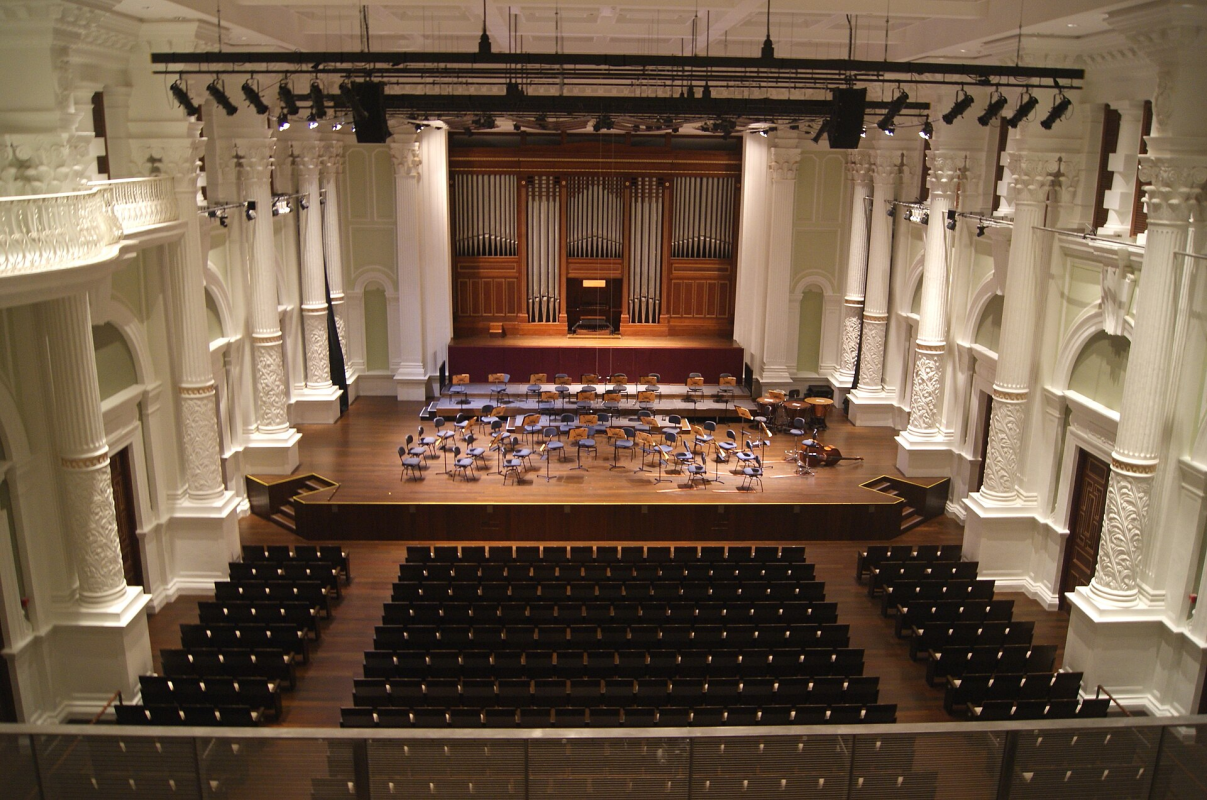
The most traditional design, often considered the gold standard for classical music, is the shoebox-shaped hall. Venues such as Victoria Concert Hall (VCH), the Yong Siew Toh Conservatory, and SOTA Concert Hall follow this tall, rectangular form. This design allows for the best lateral reflections; because the side walls are parallel and relatively close together, sound waves bounce off them and reach your ears from both sides almost simultaneously. This creates a rich, “enveloped” feeling, or “envelopment“, as if the music is wrapping around you rather than just playing in front of you.
The Victoria Concert Hall is a prime example of a shoebox shape.
During its restoration, Victoria Concert Hall reduced its seating capacity to increase the acoustic space per listener, allowing notes to linger longer and giving the hall a warmer, more resonant character. Integrated into this design is the Klais pipe organ, an instrument voiced specifically for the hall’s proportions. It can blend gently with a solo instrument or fill the entire space with sound, demonstrating how architecture and instrument design work hand in hand.
A New Way to Listen
For parents introducing their children to concerts, for students beginning to listen more critically, or for those attending their first live performance, these spaces quietly shape the experience. Long before a musician steps on stage, decisions have already been made about how the music will travel, how it will surround us, and how it will be remembered.
The next time you take your seat in a concert hall, listen not only to the performers, but also to the room itself. The walls, the ceiling, and even the distance between seats are all part of the performance—the silent partner that helps music come alive.
Catch concerts throughout the year at Victoria Concert Hall with True Music Singapore’s European Sound Piano Concerts 2026, presented in collaboration with Bechstein Music World Singapore and Cristofori Academy of Fine Arts.
Be sure to follow True Music Singapore at their socials linked below for updates on this series of concerts!
Acoustic Canopy A large, often movable structure suspended above the stage. By raising or lowering the canopy, technicians can change the “volume” of the room: lower canopy = intimate and clear (great for soloists); higher canopy = sound can reverberate and swell (perfect for a full orchestra).
Architectural Acoustics The branch of engineering and architecture that studies how sound behaves in a building to achieve high speech intelligibility and/or superior music quality by controlling how sound waves bounce, disappear, or linger.
Diffusing Surfaces (Diffusion) Walls or panels that are intentionally uneven (like the timber “ribs” in the Esplanade Recital Studio). Instead of sound hitting a flat wall and bouncing back like a mirror, diffusion scatters the sound in many directions, creating a smooth, natural feel in the room.
Envelopment The sensation of being “surrounded” by sound, when sound reaches your ears from the sides rather than just from the stage. This is a hallmark of the shoebox design.
Intelligibility The degree to which words and individual musical notes can be clearly understood. In horseshoe theatres, high intelligibility is vital so that every lyric in a musical or opera reaches the audience without being blurred by echoes.
Lateral Reflections Sound waves that bounce off side walls and hit your ears from the left and right.
Reverberation (Resonance) Often called “reverb,” this is how long a sound persists after the original source has stopped. If a hall has high resonance, the notes linger in the air.
Sightlines The unobstructed line of sight between an audience member and the performer.
Timbre (Tone Colour) The unique character or quality of a musical sound.
Voicing The process of adjusting an instrument so that its tone fits the specific acoustics of the room it lives in.
A Series by True Music Singapore | Presented in Partnership with Bechstein Music World and Cristofori Academy of Fine Arts
The European Sound Piano Concerts return in 2026 with a curated season of five recitals at Victoria Concert Hall, bringing together a new generation of internationally recognised pianists whose artistry reflects depth, individuality, and a strong connection to the European piano tradition. Presented across the year, the series places emphasis on musical substance and interpretative integrity, with each recital shaped by the relationship between artist, repertoire, and instrument.
The 2026 season brings together artists from across the globe, each offering a distinct musical perspective shaped by training, competition experience, and long-term engagement with the core piano repertoire. Performances will take place on C. Bechstein and PETROF pianos, in collaboration with Bechstein Music World and Cristofori Academy of Fine Arts, and are organised by True Music Singapore.
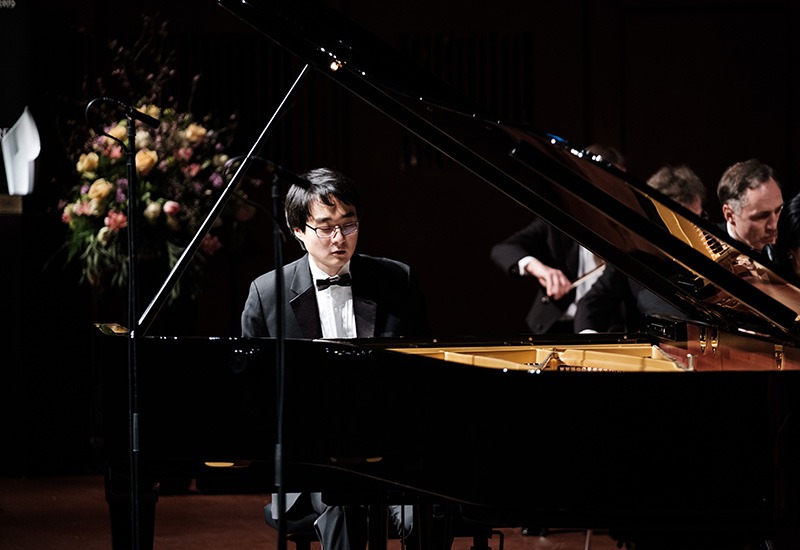
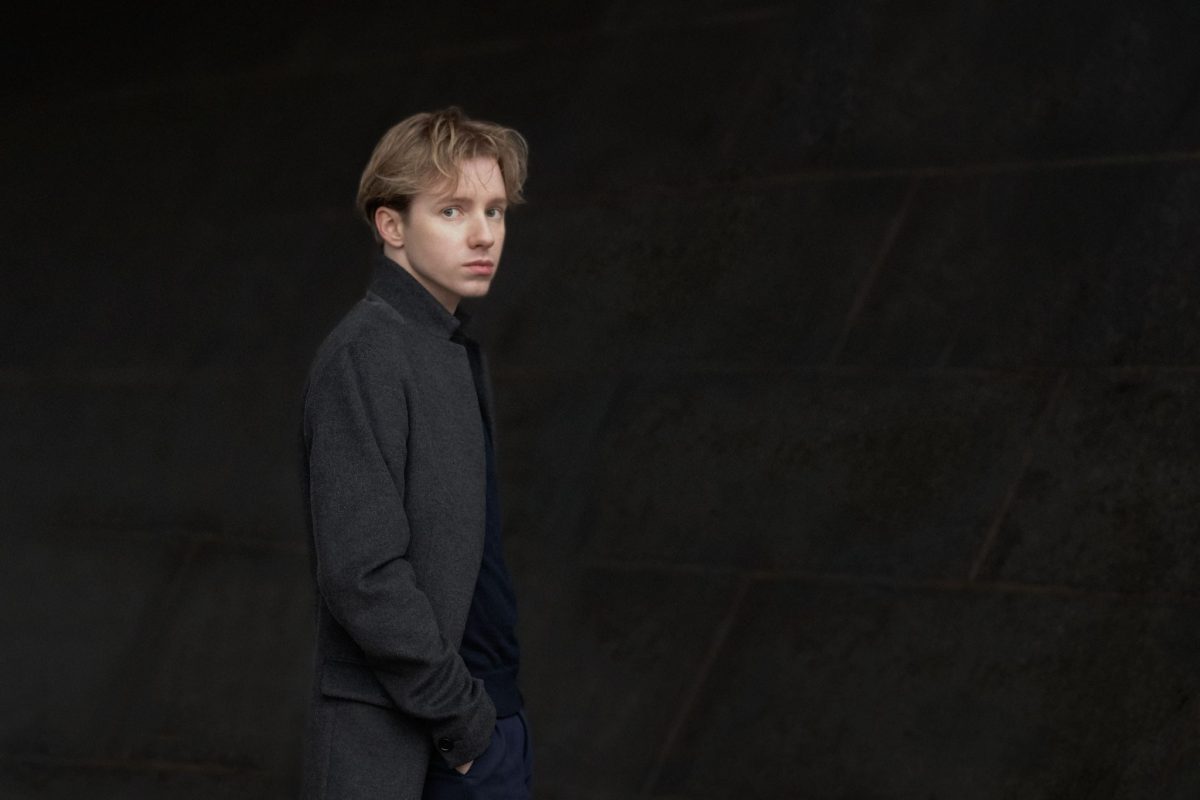
Hans Suh
8 March 2026 · Victoria Concert Hall · 7.30pm · C. Bechstein
The 2026 season opens with a recital by pianist and composer Hans Suh, marking his appearance in Singapore with a programme framed around the theme “A Tale of Four Cities: Where Journey Begins and Heart Returns.” Suh first gained significant international attention as the winner of the 2021 International Telekom Beethoven Competition Bonn and the International German Piano Award, accolades that speak to his command of the most demanding and intellectually rigorous bodies of piano literature.
Educated at Columbia University and The Juilliard School, Suh’s continued engagement with the classical canon has shaped an approach that values structural clarity and long-range thinking. However, what sets him apart for the audience is his dual identity as a creator; the recital features the Singapore Premiere of his own work, Der fliegende Koreaner, commissioned by Deutsche Telekom AG. By placing a contemporary voice in dialogue with Brahms and Beethoven, Suh revives the historical tradition of the composer-pianist, offering the audience a rare opportunity to hear a masterwork interpreted by the mind that conceived it.
TicketsTickets for Hans Suh’s Singapore recital are NOW ON SALE via Ticketmaster.sg.
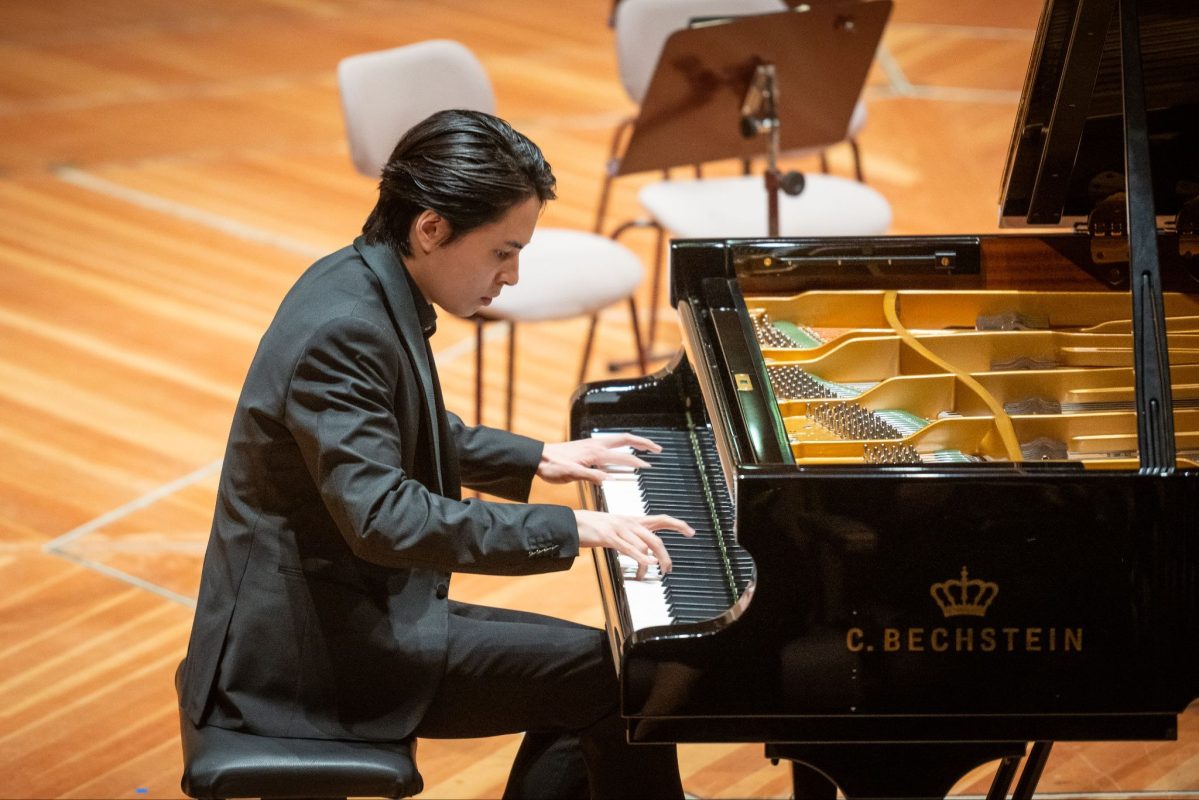
Ron Maxim Huang
29 May 2026 · Victoria Concert Hall · 8.00pm · C. Bechstein
In May, the series welcomes Berlin-based pianist Ron Maxim Huang, an artist recognised for an approach that prioritises tone, pacing, and inner continuity. As the winner of the 2023 International German Piano Award, Huang has been lauded for a musical maturity that transcends his years, characterized by a patient, balanced unfolding of the score.
His training at the Universität der Künste Berlin has instilled a deep reverence for the European performance tradition, particularly in its attention to color and proportion. For the listener, Huang’s artistry offers a profound sense of connection through restraint; his performances avoid surface-level display in favor of a rich, singing tone. It is a style of pianism that invites the audience to experience music as a shared meditation, where every decision emerges from a deep, internal listening to the score.
Tickets: Details will be announced via True Music Singapore and Bechstein Music World.
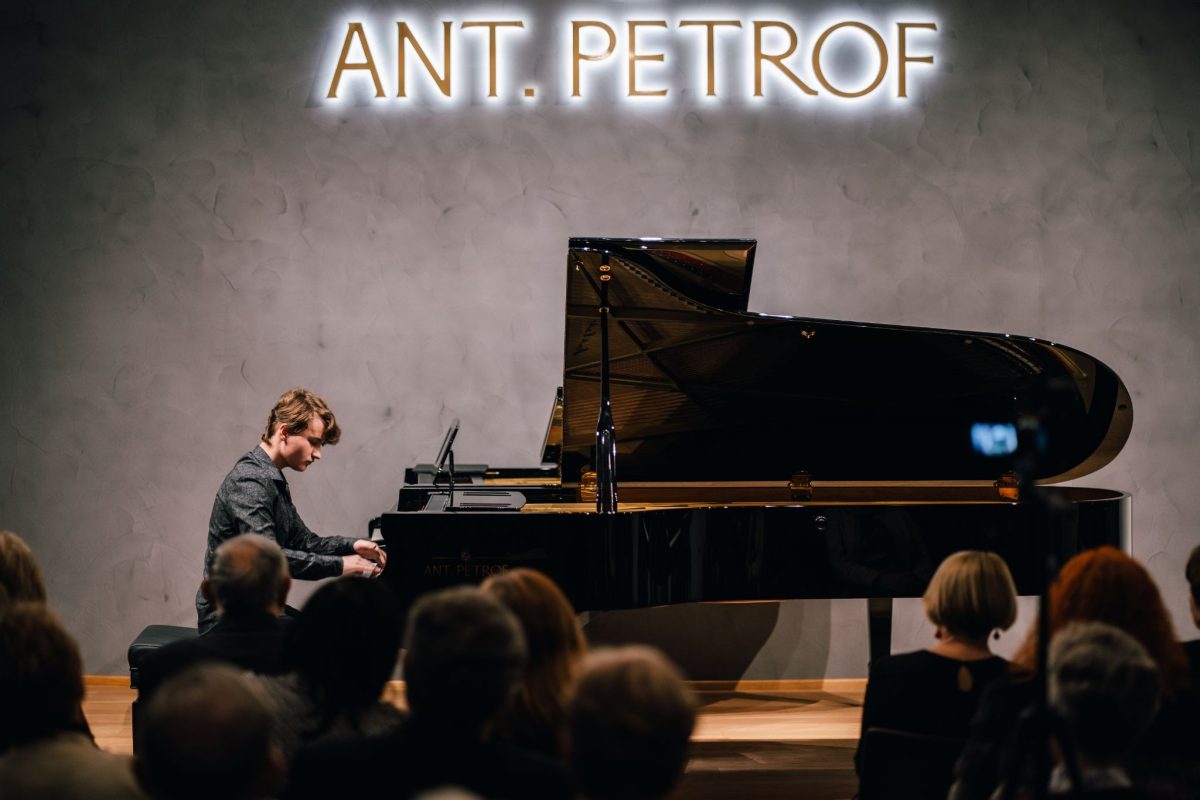
Jan Schulmeister
24 July 2026 · Victoria Concert Hall · 8.00pm · PETROF
Czech pianist Jan Schulmeister brings a direct, living connection to Central European musical traditions. A prolific prize-winner with over 30 first prizes in international competitions, including the prestigious Concertino Praga, Schulmeister represents the vanguard of the Czech piano school.
His interpretations are shaped by a native structural awareness and a naturalness of phrasing that is closely associated with the historic Austro-German and Czech lineages. As a PETROF artist, Schulmeister’s appearance in Singapore offers a unique cultural synchronicity. Performing on a PETROF piano, he highlights the interaction between performer and instrument within a shared cultural heritage, allowing the audience to hear the specific “vocal” quality and tonal warmth that has defined Czech music for centuries.
Tickets: Information will be released via True Music Singapore and Cristofori Academy of Fine Arts.
Roman Borisov
29 August 2026 · Victoria Concert Hall · 8.00pm · C. Bechstein
Roman Borisov represents a younger generation of pianists engaging actively with the European repertoire through a contemporary lens. Since winning the First Prize at the 2022 Kissinger Klavierolymp, Borisov has moved rapidly onto the global stage, appearing at major venues like the Concertgebouw Amsterdam.
His performances are defined by a formidable technical command and a keen sense of musical architecture, allowing large-scale works to unfold with striking coherence. For the audience, Borisov offers a bridge between the analytical depth of the past and the physical energy of the present. His approach provides insight into how European pianism continues to evolve—maintaining its groundedness in tradition while speaking with a bold, modern clarity that resonates with today’s listeners.
Tickets: Details will be announced on the social media platforms of True Music Singapore and Bechstein Music World.
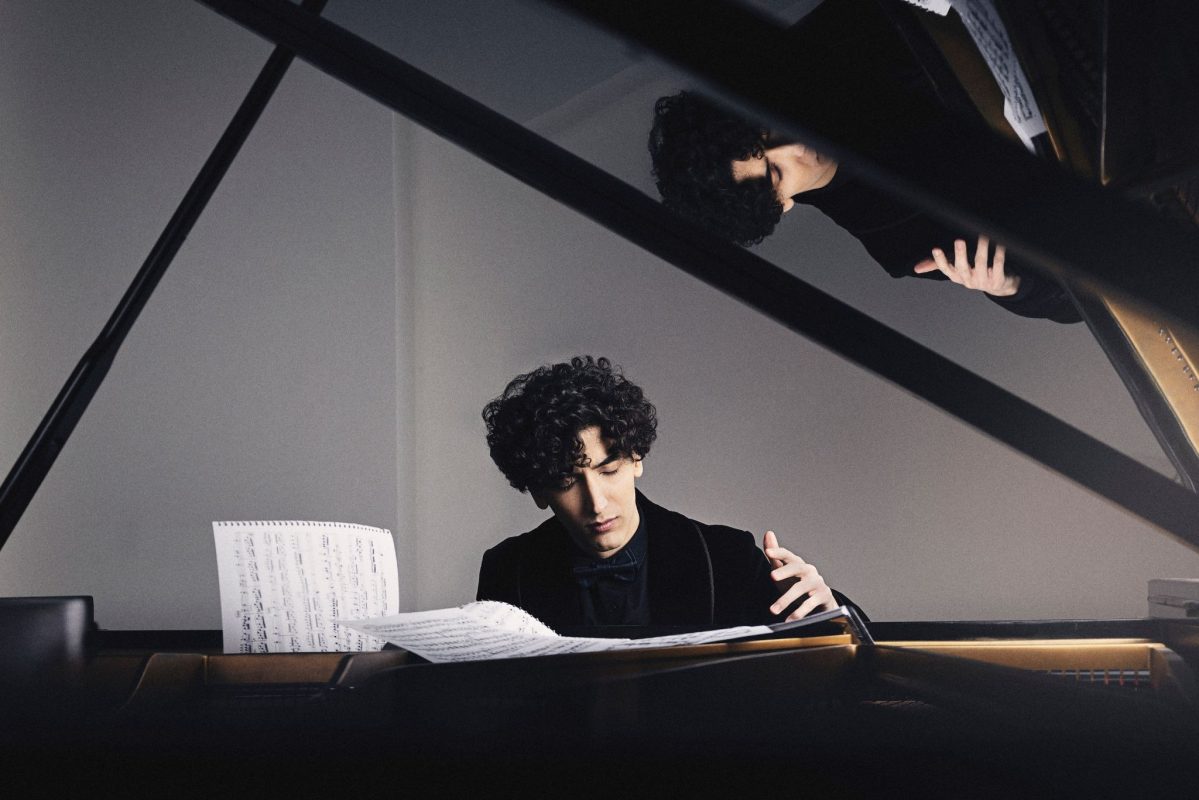
Julius Asal
11 November 2026 · Victoria Concert Hall · 8.00pm · C. Bechstein
The season concludes with German pianist Julius Asal, a Deutsche Grammophon artist whose work is defined by intellectual curiosity and highly intentional programming. Asal has captivated the international music community with his ability to find hidden, poetic links between disparate composers, often creating a “hauntingly” beautiful atmosphere that invites close, active listening.
His engagement with the European repertoire is shaped by reflection, emphasizing perspective and texture over mere virtuosity. In an Asal recital, the audience is not just a witness to a performance but a participant in a storytelling experience. His ability to craft a delicate, luminous sound—the “Asal touch”—brings the 2026 season to a close by focusing on music as an intimate, philosophical journey of discovery.
Tickets: Details will be shared closer to the concert date via True Music Singapore and Bechstein Music World.
The Sound of Europe in Singapore
Across its 2026 season, the 2026 European Sound Piano Concerts serve as a bridge to a living musical legacy. By uniting the distinct artistic lineages of these five performers with the legendary craftsmanship of C. Bechstein and PETROF pianos, the series offers an authentic encounter with the European sound. This is an invitation to experience the depth of a tradition where the heritage of the instrument and the voice of the artist converge, bringing the storied resonance of Europe’s great concert halls to the Victoria Concert Hall stage.
Be sure to follow Bechstein Music World and True Music Singapore at their socials linked below for updates on this event! Becshtein Music World on Facebook and Instagram
8 March 2026 (Sunday), 7.30pmVictoria Concert HallThe European Sound Piano Concerts 2026 open with a recital by pianist and composer Hans Suh, marking his appearance in Singapore with a programme that brings together established repertoire and a major contemporary work of his own. The concert centres on the theme “A Tale of Four Cities: Where Journey Begins and Heart Returns”, framing the evening as a musical journey shaped by movement, memory, and place.A key highlight of the recital is the Singapore premiere of Der fliegende Koreaner, composed by Suh between 2022 and 2023 and commissioned by Deutsche Telekom AG. The work reflects Suh’s ongoing engagement with the idea of travel across cities, cultures, and artistic traditions, and places his voice as a composer at the centre of the evening’s narrative.Alongside his own composition, Suh presents works drawn from the European piano tradition, allowing the recital to span different eras while remaining unified by its overarching theme of journey and return.
The programme reflects Suh’s position as an artist shaped by a global career and a deep engagement with the classical canon.Hans Suh’s artistic journey has been shaped by a close engagement with the core repertoire and by formative experiences on the international stage. He first came to wider attention as a prizewinner at the Telekom Beethoven Competition in Bonn, a competition closely associated with one of the most demanding and intellectually rigorous bodies of piano literature. The experience placed him in direct dialogue with Beethoven’s music at a formative stage of his career, reinforcing an approach that values depth of thought, structural understanding, and personal responsibility to the score.
Trained in Europe and active internationally, Suh has since built a career that moves fluidly between performance and composition. Rather than viewing these paths separately, he approaches them as complementary disciplines, each informing the other. His work as a composer reflects a pianist’s understanding of the instrument, while his interpretations as a performer are shaped by a creator’s sensitivity to form and context. This dual perspective gives his concerts a particular sense of coherence and purpose, even when spanning different eras and styles.
For audiences, a Hans Suh recital offers more than a presentation of familiar works. It is an opportunity to encounter an artist whose musical outlook has been shaped by study, competition, travel, and self-reflection — experiences familiar to many, whether in music or beyond. His Singapore appearance, anchored by the premiere of his own work, presents a portrait of a musician in motion: grounded in tradition, open to the present, and deeply engaged with the idea of journey and return.
See him in action here:
Tickets for the recital go on sale on 8 January 2026 via ticketmaster.sg.
This concert is presented by Bechstein Music World and organised by True Music Singapore.
Ticket Price: $18/ $28 / $38 / $58 / $78
Cristofori Music School students and Teachers are entitled to discounts via promo code – just ask any of our friendly Cristofori outlet staff!
Students and senior citizens in the general public are also entitled to a 30% discount. All available discounts will apply for Categories 1-4.
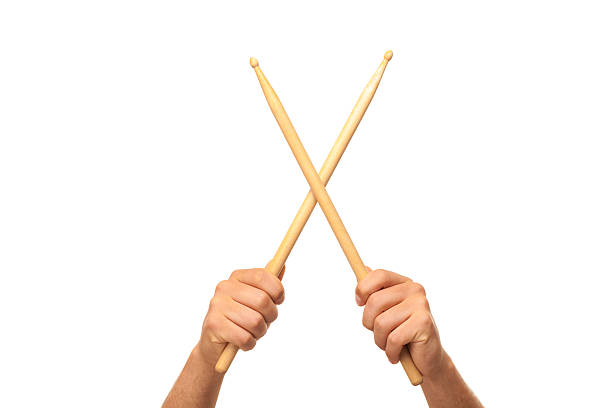
When drummers think about improving their sound, they often focus on drums, cymbals, or technique. But one of the most influential — and most overlooked — tools is the drumstick.
Drumsticks are the direct connection between your hands and the instrument. The material of the stick, the material of the tip, and the shape of the tip all play a role in how your drums respond, how your cymbals speak, and how comfortable playing feels over long sessions.
Understanding these factors helps drummers of all levels make smarter choices, whether you’re practising at home, performing on stage, or preparing for exams.
1. Stick Material: The Foundation of Feel and Response
Traditional Wood Drumsticks
Wood remains the most common drumstick material, valued for its natural feel and tonal warmth.
Common woods include:
Hickory – Balanced weight, excellent shock absorption, and durability
Maple – Lighter, faster, and quieter; good for low-volume settings
Oak – Dense and powerful, with strong projection but less shock absorption
Wood sticks feel organic and responsive, making them popular with students and professionals alike. However, they wear down over time and may break under heavy use.
Carbon Fibre Drumsticks
Carbon fibre drumsticks are a modern alternative designed for consistency and longevity.
Key characteristics:
Extremely durable and resistant to breaking
Consistent weight and balance from pair to pair
Strong rebound, requiring less effort from the hands
They are especially useful for:
Frequent or intensive practice
Drummers who want reliable feel across sessions
Players looking to reduce long-term stick replacement costs
Carbon fibre sticks don’t replace wood — they offer a different playing experience that suits certain needs and environments.
2. Tip Material: Shaping Brightness and Definition
Wood Tips
Wood tips produce a warmer, more natural sound, especially on cymbals. As they wear down, the tone can subtly change over time, which some drummers enjoy for its organic character.
Best for:
Jazz, orchestral, and acoustic settings
Players who prefer tonal warmth and nuance
Nylon / Plastic Tips
Nylon tips are harder and more durable, producing a brighter, more defined cymbal sound.
Best for:
Clear ride and hi-hat articulation
Louder genres where definition matters
Players who want consistency and longer-lasting tips
The choice between wood and nylon tips is less about skill level and more about sound preference and playing context.
3. Tip Shape: A Small Detail with a Big Impact
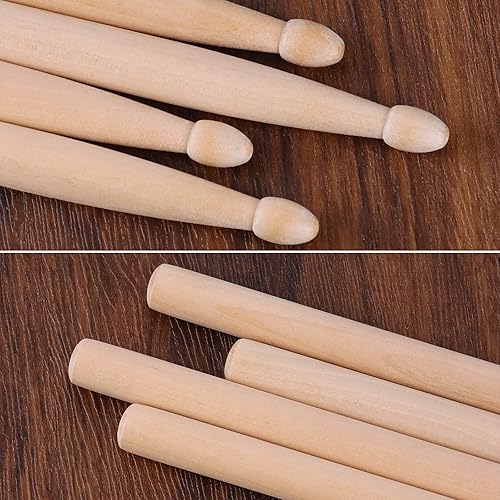
Tip shape determines how much surface area contacts the drum or cymbal, which affects articulation, tone, and projection.
Round (Ball) Tips
Focused, precise articulation Bright, consistent cymbal tone Minimal tonal variation regardless of angle Favoured for clarity and detailed playing.
Teardrop Tips
Balanced tone and response Versatile across many styles Slight tonal variation depending on angle A popular all-purpose choice for students and working drummers.
Acorn Tips
Fuller, warmer cymbal sound Rich tone on toms Broader contact area Well-suited for rock, pop, and expressive playing.
Barrel Tips
Wide contact area Powerful projection Less focus, more volume Often chosen for louder styles where presence is key.
4. How Material and Tip Design Work Together
Stick material, tip material, and tip shape interact to create your overall playing experience.
For example:
A wood stick with an acorn wood tip produces warmth and depth
A wood stick with a round nylon tip delivers clarity and definition
A carbon fibre stick with a focused tip shape offers consistency and strong rebound
This explains why two sticks of the same size can feel and sound very different in your hands.
5. Choosing the Right Drumsticks for You
You may prefer wood sticks with wood tips if you value warmth, nuance, and traditional feel.
You may prefer wood sticks with nylon tips if you want bright articulation and durability.
You may prefer carbon fibre sticks if you practise often, want consistency, or need long-lasting reliability.
Tip shape then fine-tunes the experience:
Round tips for precision
Teardrop tips for versatility
Acorn tips for fullness
Barrel tips for power
Many drummers keep more than one type of stick and switch depending on repertoire, venue, or practice goals.
Why This Matters for Students
For students, drumsticks affect:
Hand comfort and fatigue
Control and rebound
Dynamic range
Sound consistency
Choosing the right stick makes practice more enjoyable and helps build good technique without unnecessary tension. It also encourages students to listen critically — an essential skill for musical growth.
Final Thoughts
Drumsticks may be simple tools, but they carry enormous influence. By understanding material, tip material, and tip shape, drummers can make informed choices that support their sound, comfort, and musical goals.
The best drumstick isn’t universal — it’s the one that helps you play with confidence, control, and expression.
Bechstein Music World, 13 December 2025 Presented by Bechstein Music World and organised by True Music Singapore, Cherry Ge’s lecture-recital Empathy in a Fractured World offered an afternoon of music and reflection at the Bechstein Music World Event Hall. Combining performance with spoken commentary, the programme examined how music emerges from lived experience, and how it continues to speak meaningfully in a time shaped by uncertainty and unrest. In an interview prior to her lecture-recital, Cherry spoke candidly about the contemporary reality many listeners recognise all too well: constant exposure to global headlines, war and displacement, environmental anxiety, and the quiet paralysis that comes with witnessing so much suffering from afar. Rather than proposing answers, she positioned music as a space for reflection and human connection, a way of responding thoughtfully within the means of her own artistic practice. The works she selected were framed not as abstract masterpieces, but as expressions born from human struggle, resilience, and emotional truth. The recital featured works by Hamelin, Janáček, and Schumann, with Cherry guiding listeners through the historical and emotional contexts behind each piece. Her commentary was measured and purposeful, enhancing understanding without overwhelming the music itself. The focus remained on how composers transform personal and collective experience into sound, allowing listeners to encounter familiar works through a more human lens. At the piano, Cherry’s playing reflected this same clarity of intent. There was no emphasis on theatrical gesture or outward display; instead, her performance prioritised structure, tonal balance, and sincerity of expression. The intimate setting, paired with the warm and responsive sound of the C. Bechstein D282 concert grand piano, allowed subtle colours and inner voices to emerge naturally, reinforcing the reflective spirit of the programme. The evening concluded with an encore, Chopin’s Mazurka in A minor, Op. 17 No. 4, which, rather than feeling tacked onto the programme, contributed a quiet summation. Introspective and restrained, the piece echoed the central idea of the lecture-recital: that music, shaped by human experience, offers a way to process complexity without spectacle or excess. In a year that has seen Singapore host an impressive roster of international pianists, Empathy in a Fractured World was also a reminder of the depth and seriousness that local artists bring to the concert stage. Cherry Ge’s lecture-recital affirmed that Singapore-based musicians are not merely participants in the global classical music landscape, but thoughtful contributors, engaging with the world as it is and responding through the language of their art. Updates on the upcoming European Sound Piano Concert Lineup for 2026 will be released soon. Follow True Music Singapore and Bechstein Music World on Facebook and Instagram for updates!
When we talk about musical tone, we often focus on technique, strings, reeds, or electronics. But beneath all of that lies a quieter influence that shapes how an instrument sounds, responds, and even feels to play: wood.
Across pianos, guitars, violins, ukuleles, and drum kits, different woods — often called tonewoods — play a crucial role in resonance, projection, warmth, and clarity. Understanding this doesn’t require advanced physics; it simply deepens how we listen and appreciate sound.
How Wood Affects Sound
At its core, wood influences three main aspects of tone:
Resonance – how freely sound vibrates and sustains
Timbre – warmth, brightness, and tonal complexity
Response – how quickly sound reacts to touch or attack
Denser woods tend to produce focused, powerful tones. Lighter woods often sound warmer, more open, and quicker to respond. The way wood is cut, aged, and combined also matters greatly — sometimes as much as the species itself.
Pianos: The Hidden Power of the Soundboard
For pianos, the most important tonewood is the soundboard , typically made from spruce.
Spruce is prized because it is light yet strong, highly elastic, and exceptionally good at transmitting vibration. A well-crafted spruce soundboard acts like the piano’s voice box, amplifying string vibrations and shaping tone colour, projection, and sustain.
European piano makers have long been known for their careful selection and seasoning of soundboard spruce, often sourced from high-altitude regions where slow-growing trees develop ideal grain density. Companies such as C. Bechstein, W. Hoffman, Seiler, and Petrof are especially respected for this tradition, combining high-quality spruce soundboards with finely engineered rims made from hardwoods like maple and beech. These structural woods contribute stability, clarity, and long-term durability, allowing the instrument’s tone to mature beautifully over time.
This attention to wood choice and craftsmanship is one reason why two pianos of similar size can sound remarkably different — even before a single note is played.
Guitars: A Balance of Top, Back, and Sides
Acoustic & Classical Guitars
In acoustic and classical guitars, the top (soundboard) has the greatest impact on tone.
Common top woods include:Spruce (clear, articulate, with a wide dynamic range) and Cedar (warmer, darker, and more immediately responsive).
Back and side woods shape resonance and tonal colour:Rosewood (rich overtones and deep bass), Mahogany (focused mids and warmth), and Maple (brightness and strong note separation).
Renowned European guitar makers such as Esteve, Alhambra, and Raimundo are known for pairing traditional Spanish craftsmanship with carefully selected tonewoods. Their classical and flamenco guitars often feature solid spruce or cedar tops combined with rosewood or mahogany backs and sides, resulting in instruments that respond sensitively to touch and support expressive phrasing — qualities especially valuable for students developing tone control and musical nuance.
Don’t get us started on some more exotic selections like Koa (endemic to Hawaii), Cocobolo, or Ziricote among others for their vibrant appearance and exceptional tonal colour, or increasingly regulated Indian Rosewood. That’s a whole other rabbit-hole to dive into!
Electric Guitars
While pickups play a major role in shaping amplified sound, wood still influences sustain, attack, and feel.
Common electric guitar woods include:Alder (balanced and versatile), Ash (bright with strong low-end clarity), Mahogany (warm, thick tone with long sustain), and Maple (often used for necks or tops to add brightness and snap).
The wood determines how strings vibrate before the signal even reaches the electronics, subtly shaping the instrument’s personality.
Violins: Centuries of Wood Wisdom
String instruments rely on a finely balanced combination of woods.
Spruce is used for the top plate for its responsiveness and clarity.
Maple is used for the back, sides, and neck, adding brilliance and strength.
The interaction between these woods gives violins their singing quality and wide dynamic range. Aging, carving precision, and wood density all contribute to why great violins continue to develop sonically over time.
Check out top quality violins here in Singapore at our Sun Mao Violin Workshop at Blk 3013 Bedok Industrial Park E #04-2120 Singapore 489979. Reach out to them to book an appointment by call or WhatsApp to (+65) 88238599.
Ukuleles: Small but Mighty
Ukuleles originate from Hawaii and are traditionally made of Koa wood, which is native to the region.
Because ukuleles are compact, wood choice plays an especially noticeable role in tone.
Common ukulele tonewoods include:Mahogany (warm, mellow, and balanced), Koa (bright, lively, and traditionally associated with Hawaiian ukuleles), and Spruce tops (increased clarity and projection).
A wide variety of ukuleles and acoustic guitars, covering different wood combinations and sizes, allows students to hear and feel these differences firsthand. As listening skills develop, players begin to recognise how wood affects sweetness, volume, and responsiveness — even in smaller instruments.
Drum Kits: More Than Just Skins and Sticks
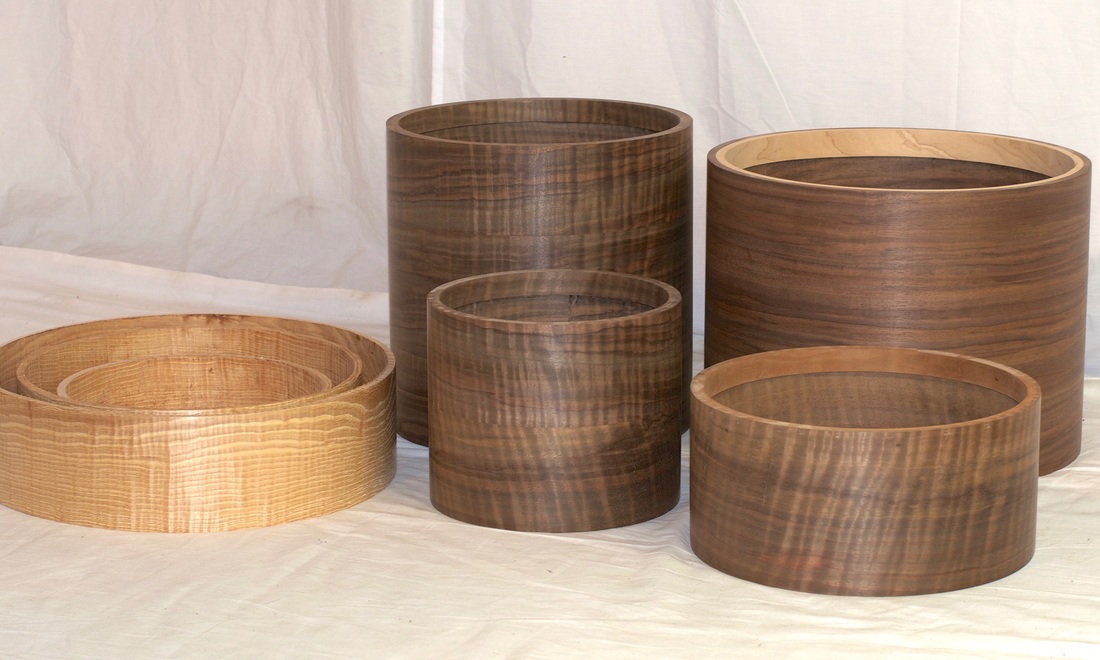
Drum shells act as resonating chambers, and wood choice shapes tone dramatically.
Common drum woods include:Maple (warm, balanced, and versatile), Birch (bright attack with focused projection), and Mahogany (deep, punchy, vintage character).
Drum shells can be made from various materials, including different tonewoods.
Shell thickness also matters: thicker shells produce louder, more focused tones, while thinner shells resonate more freely. For drummers, wood choice affects both sound and dynamic response.
Sustainability and Instrument Care
Paneveggio Forest in Italy’s Dolomites, famous for its red spruce trees (Picea abies) that produce exceptional tonewood for crafting high-quality violins, cellos, and pianos was declared a UNESCO World Heritage site in 2009.
The Future of Tonewoods (Sustainability)
The very best tonewoods—such as Brazilian Rosewood, some species of Mahogany, and older, slowly-grown spruce—are becoming increasingly scarce and, in many cases, heavily regulated under international agreements (like CITES). This is a crucial topic for the industry and for instrument owners.
Innovation: Manufacturers are now exploring excellent alternative tonewoods (like Walnut, Cherry, and Bamboo) and highly sustainable practices, such as utilizing reclaimed wood or thermal modification (torrefaction) to treat common woods so they achieve the sound qualities of aged timber.
Companies like the Pearl River Piano Group have explored alternative materials for some lines of their instruments such as the Kayserburg KP121 – Bamboo Series.
Ethical Sourcing: Supporting brands that prioritize responsible and certified sustainable sourcing helps preserve these precious natural resources for future generations of musicians.
The Importance of Caring for Wood (Maintenance)
Unlike metal or plastic, wood is organic and constantly reacting to its environment. Proper instrument care is essential for maintaining the wood’s acoustic properties and structural integrity.
Humidity: Wood expands and contracts with changes in humidity. For solid wood instruments like guitars and violins, extreme shifts can cause cracking, warping, and serious tonal damage. Storing instruments in a climate-controlled environment or using humidifiers is vital.
Temperature: Avoid exposing instruments to rapid temperature changes or direct heat (like car boots or direct sunlight), which stress the wood and glues.
Cleaning: Regular, gentle cleaning with appropriate, non-abrasive polishes and cloths helps protect the wood’s finish and longevity.
Why This Matters for Students
Understanding tonewoods isn’t about choosing a “better” instrument — it’s about listening more deeply.
As students progress, recognising how materials affect sound helps them:
Develop a more refined ear
Make informed instrument choices
Understand why technique interacts differently with different instruments
Appreciate craftsmanship, not just brand names
For families and students in Singapore, this is especially valuable when instruments can be explored both online and in person. A wide selection of pianos, guitars, and ukuleles is available via Cristofori’s eShop, with many models also viewable and playable at Cristofori showrooms island-wide — allowing players to experience how wood, build, and touch come together in real life.
Final Thoughts
Wood is the silent partner in music-making. It doesn’t replace good technique, but it amplifies it — shaping warmth, clarity, power, and character across every family of instruments.
The more we understand how tonewoods work, the more intentional we become as listeners and musicians. And ultimately, that awareness leads to better playing, more meaningful practice, and a deeper connection to sound itself.
Want to try some of the best European pianos in the world? Book a tasting with at the European Timbre Piano Showcase at the Music Paradise of Cristofori Music (9 Bishan Place, #04-02D, Junction 8 Shopping Centre, Singapore 579837). Find out more here!
Your guide to ending the year stronger — and starting the next one with purpose
December often feels like a blur of celebrations, travel, and well-deserved rest. But for music students, it’s also the perfect moment to pause, take stock, and set yourself up for a fresh, motivated start in the new year. Think of it as a musical reset: a chance to reflect on your growth, reorganise your space, and prepare for the exciting challenges ahead.
Whether you’re a beginner or preparing for advanced exams, here are seven year-end habits that can make a huge difference in your musical journey.
1. Look Back at How Far You’ve Come
Before setting new goals, take a moment to appreciate your progress. Listen to old practice recordings, revisit pieces you struggled with back in March, or try sight-reading something you couldn’t manage last year. You’ll be surprised by how much you’ve grown.
For younger students, this also makes practice feel meaningful — progress is easier to see when we stop and acknowledge it.
2. Clean and Reset Your Practice Space
A tidy space makes for a focused mind. Clear out old scores, organise your books, give your instrument a wipe-down to remove dust and any grime build-up, and reset your stand, bench, or sticks. For apartment living in Singapore, even small improvements — like better lighting or a quieter practice corner — can make practice feel calmer and more enjoyable.
This is one of the quickest ways to boost your motivation without even touching a single scale.
3. Refresh Your Repertoire List
Make a list of:
Pieces you’ve mastered
Pieces in progress
Pieces you want to learn next year
Dream pieces to aim for
Teachers love seeing this kind of list — it shows ownership of your learning and helps craft a clearer plan for the New Year. Bonus: it also makes your lesson time more efficient. Your playlist should grow as you do!
4. Review Your Technique Fundamentals
December is ideal for strengthening the basics that get neglected during exam preparation or busy school terms.
Think of this as your “technique tune-up” before January kicks off.
5. Try Something New (Even If It’s Just for Fun)
End the year with a little musical curiosity.
You could:
Improvise freely for 5 minutes
Learn a short holiday tune for family gatherings
Experiment with a genre you rarely play
Arrange a simple melody
Try a new practice app or backing track
Exploration keeps your relationship with music fresh — and often reveals skills you didn’t know you had.
6. Set Three Music Goals for the New Year
Not ten goals. Not resolutions you’ll forget by February. Just three clear, realistic goals that truly matter.
Examples:
“Improve my rhythm by practising with a metronome 4 times a week.”
“Finish my Grade 4 piano pieces by March.”
“Play one full song confidently for my family.”
“Join my school ensemble.”
Good goals are specific, motivating, and manageable.
7. Celebrate Your Achievements — Big or Small
Music learning is slow, steady, and deeply personal. It deserves celebrating.
Share a performance with your family, record your favourite piece of the year, or treat yourself to a new score, journal, or music gadget. Recognition builds confidence — and confidence fuels progress.
Final Thoughts
A year-end reset isn’t about starting over, but about moving forward carrying everything you’ve learned, clearing away what no longer serves you, and stepping into the new year with clarity and excitement.
With a refreshed mindset and a well-organised practice routine, you’ll be ready to take on new pieces, new exams, new performances — and a whole new musical year.
Practising music isn’t just about putting in the hours — it’s about how you use your time. A well-planned session helps you progress consistently, feel more confident, and actually enjoy the learning process, no matter what instrument you play. This how-to guide is written for young musicians (and anyone young at heart) who want their practice to feel smoother, clearer, and more rewarding.
1. Start with a clear goal
Before you begin, decide what you want to achieve today. A good practice goal is focused, realistic, and small enough to finish in one session.
This might look like: • Piano: making a four-bar left-hand pattern feel steady and controlled • Guitar: smoothing a tricky chord change so it flows naturally • Violin: fixing an out-of-tune phrase so it sits cleanly with the backing track • Drums: tightening a groove or fill so it feels stable, clean, and precise
A clear goal keeps you from drifting into random playing and makes improvement easier to notice.
2. Warm Up With Intention
A warm-up isn’t something to rush through — it prepares your body and sets your focus.
Examples: • Pianists: slow scales or five-finger patterns • Guitarists: gentle finger stretching or simple picking patterns • String players: long bows and relaxed scales • Drummers: quiet, slow rudiments • Singers: humming, lip trills, or easy slides
Keep your warm-up short, calm, and controlled.
3. Work in Small Sections
Instead of playing the whole piece over and over, break it into small, manageable chunks. Most musicians improve faster when they zoom in on the hardest spots.
Try practising: • A single phrase • Four bars • One tricky shift, run, or rhythm • A difficult hand position or bow change
If a section still feels overwhelming, shrink it further. Three well-built bars are more valuable than three messy play-throughs.
4. Slow Practice — But the Right Kind of Slow
You’ve probably heard the saying: “If you can play it slowly, you can play it fast.” Musicians debate this, but the fuller truth is more useful:
Slow practice works only when it is easy, accurate, and relaxed.
It’s not about dragging through the notes — it’s about giving your fingers, ears, and brain time to understand the music clearly. If the slow version feels tense, uncertain, or uneven, speeding up won’t fix it.
Once your slow playing feels smooth and controlled, increase the tempo gradually. A great approach is to combine: • Medium-tempo practice, where everything feels mostly comfortable • Short bursts at full speed, just a few notes at a time, so your muscles learn what fast movement actually feels like
This helps you gain speed with confidence instead of forcing it.
How this looks on different instruments: • Piano: relaxed wrists, clear finger patterns, stable hand shapes • Guitar: light left-hand pressure, consistent picking, no clamping • Violin: slow bow control, centred intonation, even shifts • Drums: clean sticking and steady subdivisions
If you can play it slowly with ease and accuracy, you can speed it up later with confidence.
5. Switch Between “Building” and “Testing”
A productive practice session usually alternates between two modes:
Building mode — slow, careful, focused problem-solving. Testing mode — play a longer section at a comfortable tempo to see how it holds together.
A balanced session might look like: • Fix eight difficult bars (building) • Play the whole page to check progress (testing)
Switching modes keeps your practice interesting and helps you track improvement.
6. Record Yourself — Even Once a Week Helps
Recording is one of the quickest shortcuts to better playing. You’ll hear things you miss while playing.
Listen back for: • Rhythm and timing • Tone quality • How smoothly you change positions • Dynamic contrast • Rushing or dragging
This works for every instrument, from piano to drums to vocals, and more.
7. End on a Positive Note
Never finish a session right after something frustrating. Ending with something enjoyable helps you associate practice with progress, not stress.
Try: • A favourite piece • An improvisation • A polished section you’re proud of • A fun groove or riff
This small habit makes it easier to come back tomorrow.
These Tips Work for Every Instrument
Even though the examples come from a range of instruments, the underlying principles are universal. No matter what you play — piano, guitar, violin, drums, voice, or anything else — effective practice always includes: • Clear, achievable goals • An intentional warm-up • Working in small, focused sections • The right kind of slow practice • A balance between building and testing • Occasional recording and self-review • Ending with something musical and satisfying
Repetition is just a small part of a good practice session. Remember; it’s thoughtful, patient planning that gets you the best outcome and helps you improve with confidence and consistency.
Final Thoughts
You don’t need long hours to make real progress. What you need is focus, curiosity, and steady habits. When you know how to plan your practice, every session becomes more productive, more musical, and much more enjoyable.
If you’re looking to get started on your Music Journey, reach out to our Lessons Enquiry Hotline to find out how!
On 18 November 2025, Singapore was graced with a rare Southeast Asia appearance by the legendary Eliso Virsaladze, presenting a full Chopin programme at the Victoria Concert Hall. For any pianist, tackling this demanding repertoire is a feat; to do so at 83, showing no signs of slowing down, underscores her unique and enduring authority. For piano students and listeners who often find interpretations of Chopin divisive—either due to excessive emotionalism or dry technical polish—Virsaladze’s recital offered a profound lesson, delivering a performance grounded in discipline and musical integrity.
Virsaladze’s greatest appeal, in our humble opinion, is as an artist who allows the music’s truth to emerge without adornment.
The Authority of Restraint: A Lesson in Presence
Virsaladze established her unique authority not just through her sound, but through her presence. Students could observe a model of controlled mastery: she approached the instrument with an astounding economy of motion. There were no overly dramatic gestures or extraneous visual cues designed to project feeling. Her stillness reflected absolute command, demanding that the audience’s focus remain entirely on the sound. This profound restraint sharpens the ear, making every colour and structural turn emerge with piercing clarity. Paired with the crystal clear tone of a C. Bechstein D282, this made for a profoundly apt match to the evening’s repertoire.
This philosophy was instantly showcased in the monumental Polonaise-Fantasie, Op. 61. Avoiding the exaggerated rubato (the slight give-and-take of tempo) that often clouds this late work, Virsaladze delivered an interpretation anchored in the score’s structural rhythm rather than surface drama. The complex harmonic landscape and fragmented narrative unfolded with an organic, unmistakable logic, achieving conviction without succumbing to melodrama.
Hard-Won Depth: The Value of Simplicity
The depth of her reading is not a simple talent, but the result of relentless dedication—a crucial lesson for developing musicians. Virsaladze has openly discussed the difficulty she faced internalizing Chopin, noting that true mastery lies in preserving the music’s innate beauty and sophistication—a feat achieved through deceptive simplicity.
This discipline was vital in the Piano Sonata No. 3 in B minor, Op. 58. Virsaladze ensured the vast architecture was coherent, shaping the four movements as a unified narrative. The Allegro maestoso (the fast, majestic first movement) achieved a perfect balance between its turbulent power and moments of pure lyricism. The Scherzo possessed focused precision, while the Largo created a sustained stillness that resonated with profound depth. The Finale built with careful, controlled power toward a gripping, earned close.
Insight and Intimacy: Expression Without Exaggeration
In the program’s second half, a journey through Nocturnes, Mazurkas, and Waltzes, Virsaladze underscored her gift for intimacy. Drawing warm, honest tones from the instrument, she proved that Chopin’s complex emotional world can remain deeply moving without dramatic exaggeration. The Grand Valse, Op. 42 captivated through sheer elegance and focused sound. Her encores—a pensive Mazurka in A minor (Op. 68 No. 2) and a jubilant Waltz in A-flat major (Op. 34 No. 1)—closed the evening with the same sincerity that defined the night.
In a musical landscape saturated with interpretation, Eliso Virsaladze offered something far more compelling: a hard-won, honest, and profoundly insightful realization of the repertoire. She allowed the composer’s voice to speak without flourish, gifting the audience a true Traversal of the life and authentic heart of Frédéric Chopin.
Stay Connected
Follow True Music Singapore and Bechstein Music World for more concert updates and behind-the-scenes news: