Blog

A Listener’s Guide to Space: Understanding Singapore’s Concert Hall Designs

Singapore’s cultural scene has grown quietly but confidently over the years. Today, audiences can choose from orchestral concerts, piano recitals, musicals, operas, and student performances held in world-class venues across the island. With initiatives such as government grants and programmes like Culture Pass, live performances have become more accessible than ever—encouraging families, students, and first-time concertgoers to step into concert halls and experience music live.  

We often remember a concert for the performers on stage: a powerful singer, a moving melody, or a thrilling finale. But one way to appreciate a concert event more deeply is to look beyond what we see, and to zoom out to consider the space in which the performance takes place. The room itself plays a quiet but powerful role in shaping how music reaches us.  

Behind every memorable performance in Singapore lies an unseen collaborator: architectural acoustics—the careful shaping of space so that sound travels with clarity, warmth, and emotional impact.  

In essence, venues themselves are instruments too, and they can be tuned to perfection. Across Singapore, several distinct concert hall designs can be found, each offering a different listening experience.


The Fan Shape: Intimacy and Sightlines
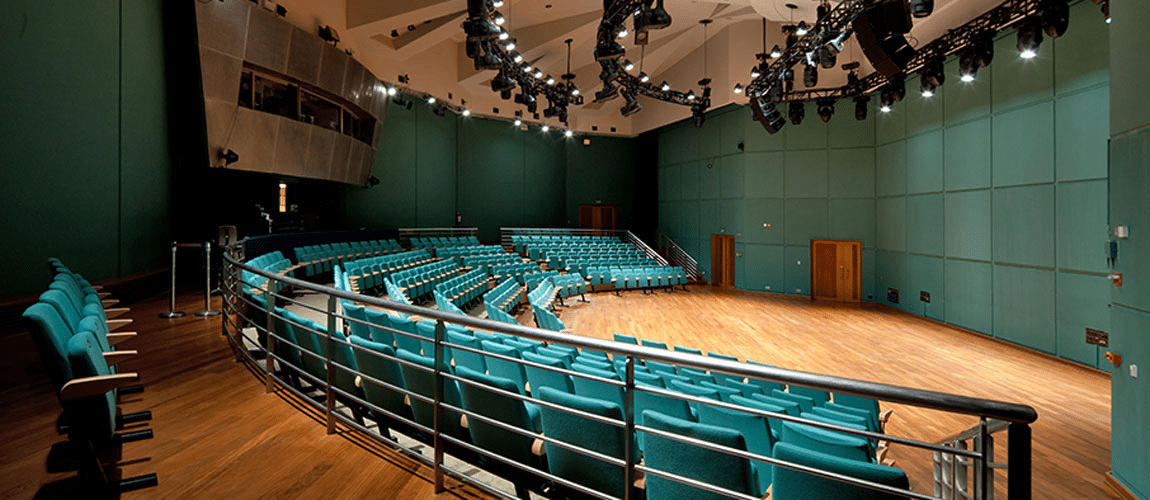
The Esplanade Recital studio’s fan layout offers clear sight-lines to the performance from all sides.

Some venues use a fan-shaped design, where the hall widens gradually from the stage. A good example is the Esplanade Recital Studio.  

This layout brings the audience closer to the performer, both physically and emotionally. Sightlines are excellent, allowing listeners to catch subtle gestures and expressions that are especially valuable in solo or chamber music. Because sound can spread out too quickly in a widening space, acousticians carefully shape the walls with timber ribs and diffusing surfaces. These elements gently scatter sound, ensuring that even delicate instruments retain their presence and immediacy throughout the room.


The Horseshoe Shape: The Drama of the Voice
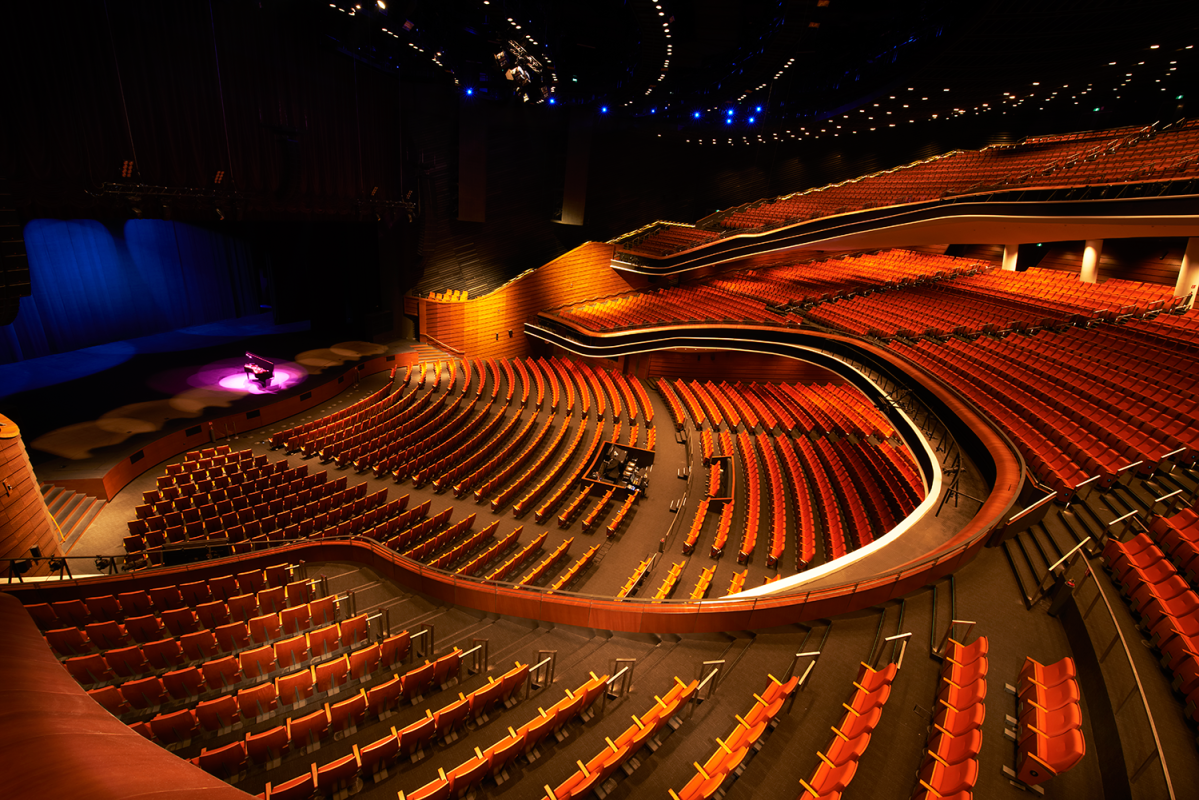
The Star Theatre at the Star Performing Arts Centre in Buona Vista, Singapore

  Other venues draw inspiration from traditional European opera houses, adopting a horseshoe-shaped design. Spaces such as the Esplanade Theatre, The Star Theatre, and the Ho Bee Auditorium at NUS curve around the stage in a way that naturally supports the human voice.
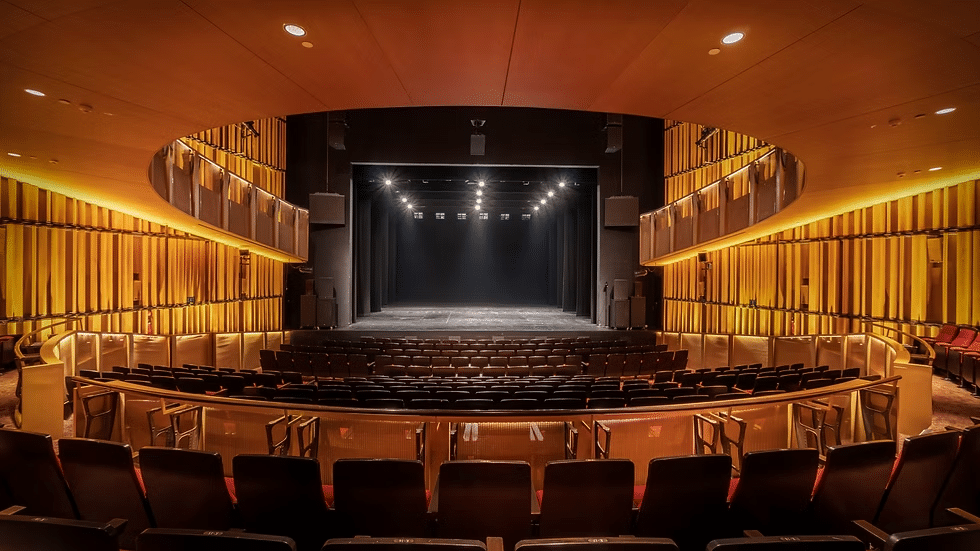
The View from the stalls at the Victoria Theatre

  This shape shortens the distance between performers and audience, helping words and musical lines project clearly—a crucial feature for opera, musical theatre, and spoken performance. In larger halls, acousticians must also control the scale of the space, using carefully designed ceilings and sound-absorbing materials so that amplified sound remains focused and intelligible rather than overwhelming.


The Vineyard Shape: Immersive Community

  A more modern approach can be found in vineyard-style halls, where seating terraces surround the stage on all sides. Here, the audience is placed at the centre of the musical experience, creating a strong sense of shared attention and immersion.
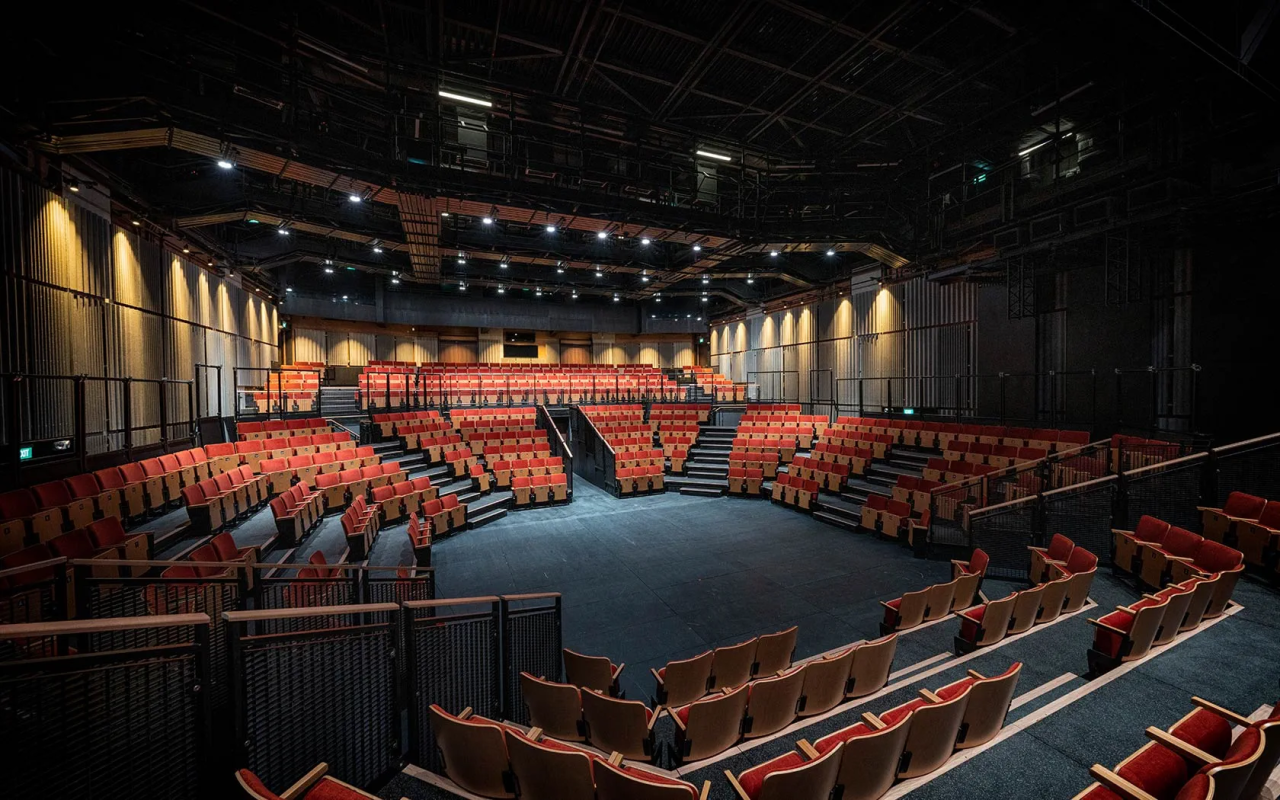
The Singtel Waterfront Theatre (also at the Esplanade) can be configured to a Vineyard layout (also called “in-the-round”).

  The Esplanade Concert Hall is Singapore’s most prominent example, though it can be considered a hybrid of the Vineyard and Shoebox shapes.
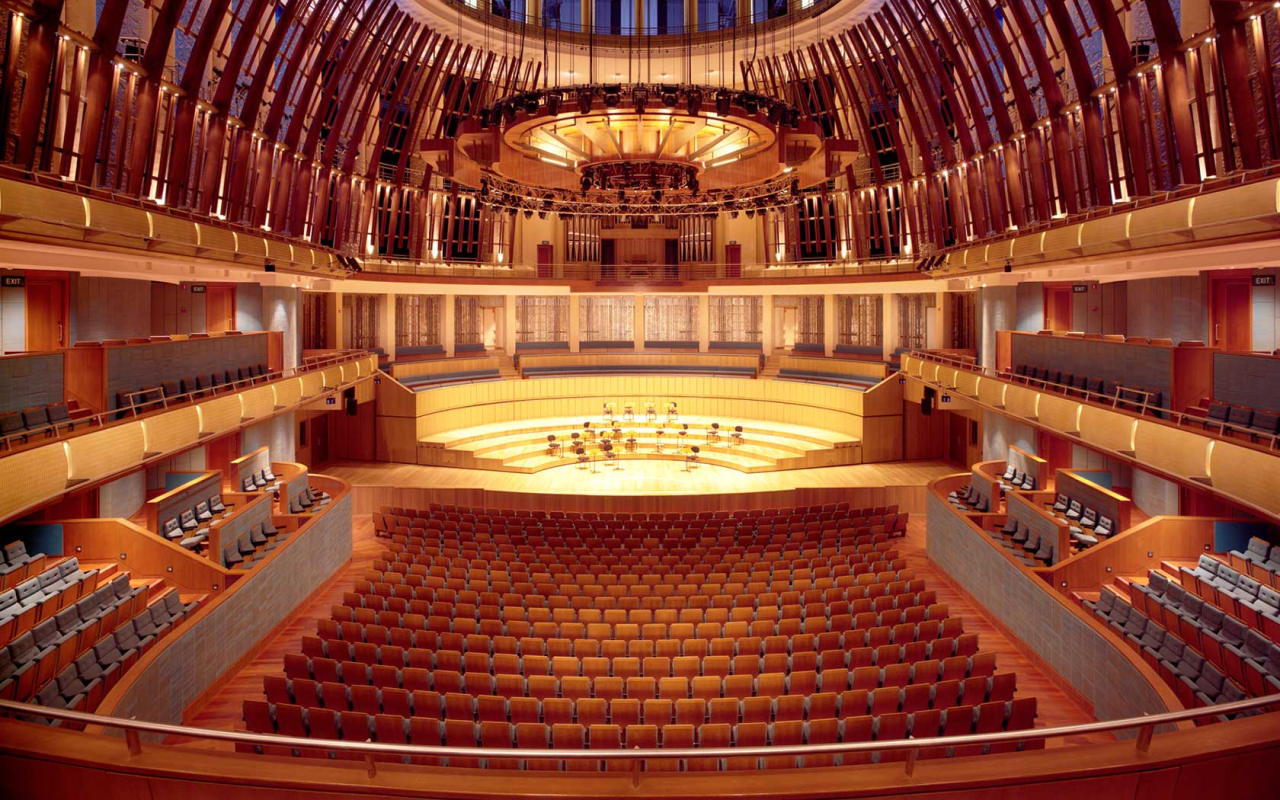
  One of the Esplanade Concert hall’s most remarkable features is its adjustable acoustic canopy, which can be raised or lowered to change how sound behaves in the room. When the canopy is lowered, the space feels more intimate, ideal for chamber music. Raised higher, it allows sound to expand and bloom, giving larger ensembles and the pipe organ the space they need to resonate fully.


The Shoebox Shape: The Gold Standard
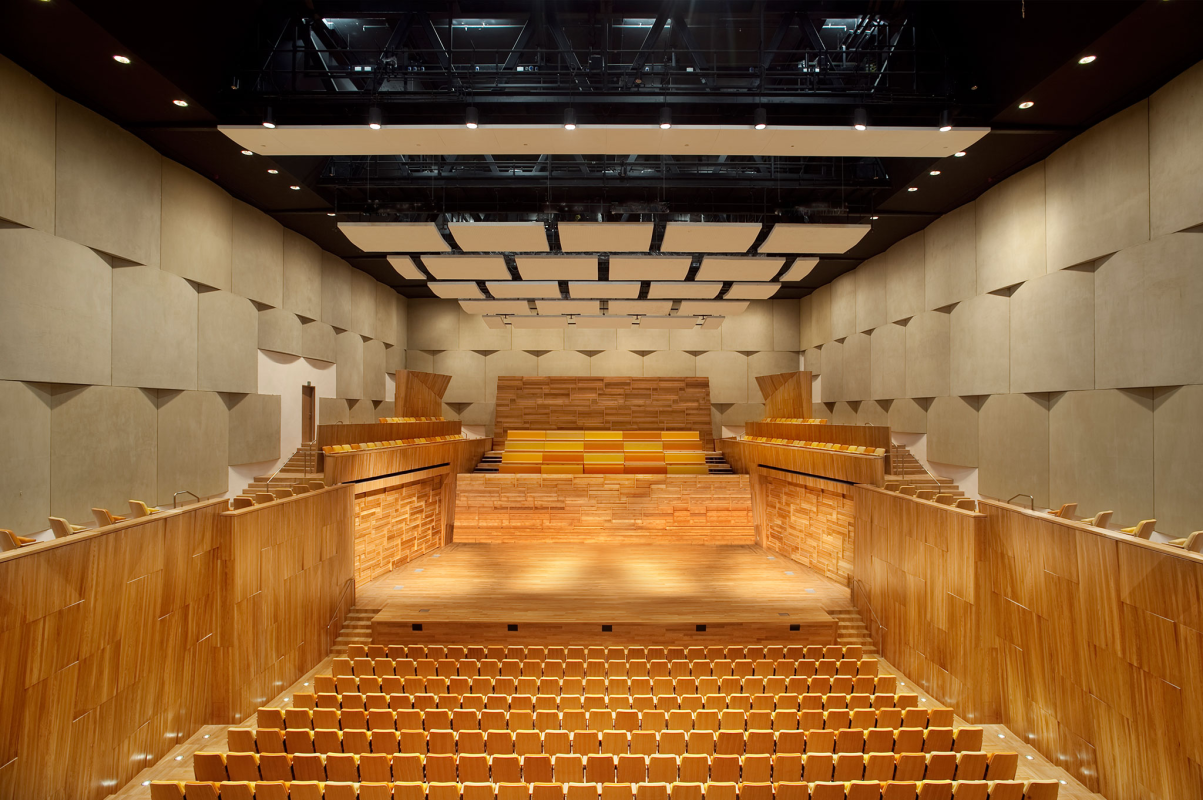
The SOTA Concert Hall.

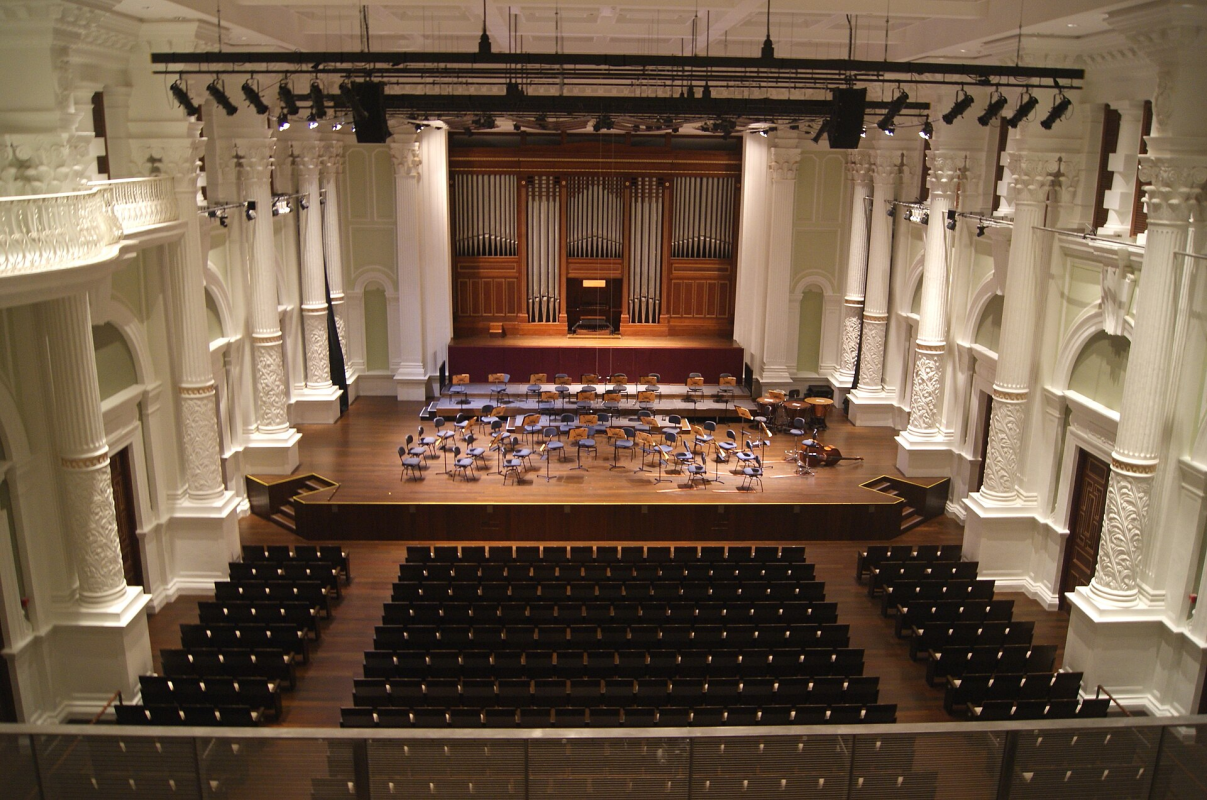
  The most traditional design, often considered the gold standard for classical music, is the shoebox-shaped hall. Venues such as Victoria Concert Hall (VCH), the Yong Siew Toh Conservatory, and SOTA Concert Hall follow this tall, rectangular form. This design allows for the best lateral reflections; because the side walls are parallel and relatively close together, sound waves bounce off them and reach your ears from both sides almost simultaneously. This creates a rich, “enveloped” feeling, or “envelopment“, as if the music is wrapping around you rather than just playing in front of you.
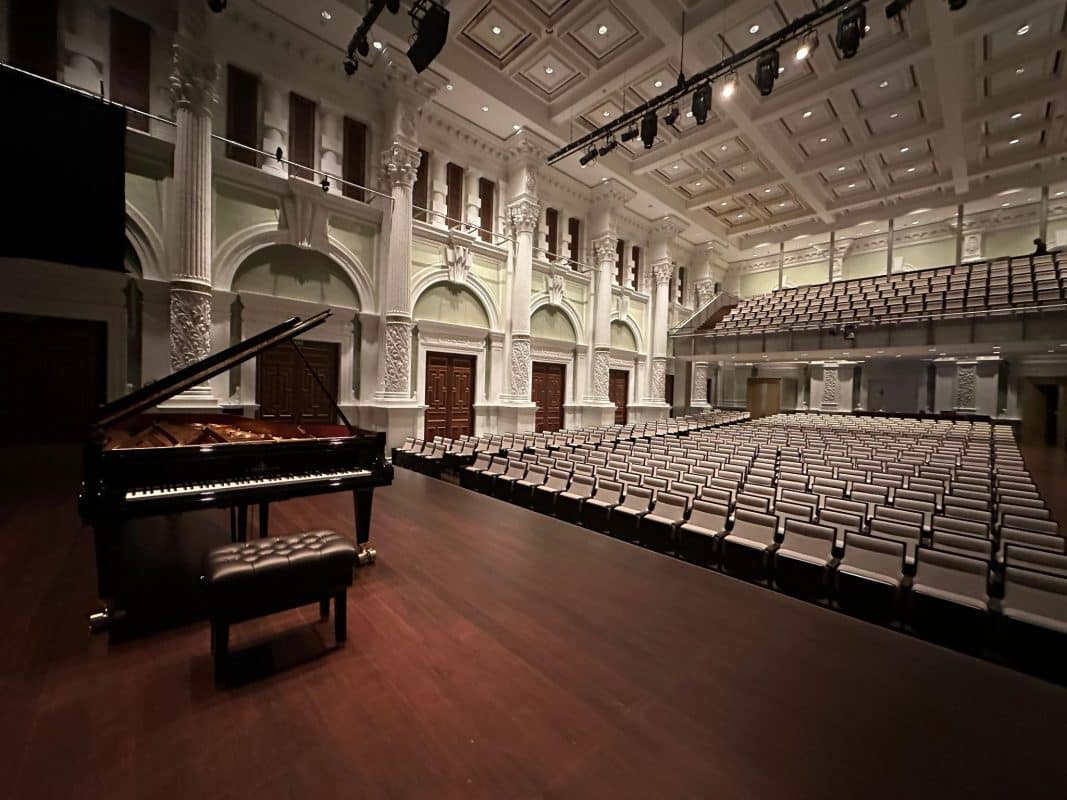
The Victoria Concert Hall is a prime example of a shoebox shape.

  During its restoration, Victoria Concert Hall reduced its seating capacity to increase the acoustic space per listener, allowing notes to linger longer and giving the hall a warmer, more resonant character. Integrated into this design is the Klais pipe organ, an instrument voiced specifically for the hall’s proportions. It can blend gently with a solo instrument or fill the entire space with sound, demonstrating how architecture and instrument design work hand in hand.

A New Way to Listen

    For parents introducing their children to concerts, for students beginning to listen more critically, or for those attending their first live performance, these spaces quietly shape the experience. Long before a musician steps on stage, decisions have already been made about how the music will travel, how it will surround us, and how it will be remembered.

    The next time you take your seat in a concert hall, listen not only to the performers, but also to the room itself. The walls, the ceiling, and even the distance between seats are all part of the performance—the silent partner that helps music come alive.

    Catch concerts throughout the year at Victoria Concert Hall with True Music Singapore’s European Sound Piano Concerts 2026, presented in collaboration with Bechstein Music World Singapore and Cristofori Academy of Fine Arts.

    Be sure to follow True Music Singapore at their socials linked below for updates on this series of concerts!

  True Music Singapore on Facebook and Instagram

GLOSSARY OF TERMS

  Acoustic Canopy A large, often movable structure suspended above the stage. By raising or lowering the canopy, technicians can change the “volume” of the room: lower canopy = intimate and clear (great for soloists); higher canopy = sound can reverberate and swell (perfect for a full orchestra).

  Architectural Acoustics The branch of engineering and architecture that studies how sound behaves in a building to achieve high speech intelligibility and/or superior music quality by controlling how sound waves bounce, disappear, or linger.

  Diffusing Surfaces (Diffusion) Walls or panels that are intentionally uneven (like the timber “ribs” in the Esplanade Recital Studio). Instead of sound hitting a flat wall and bouncing back like a mirror, diffusion scatters the sound in many directions, creating a smooth, natural feel in the room.

  Envelopment The sensation of being “surrounded” by sound, when sound reaches your ears from the sides rather than just from the stage. This is a hallmark of the shoebox design.

  Intelligibility The degree to which words and individual musical notes can be clearly understood. In horseshoe theatres, high intelligibility is vital so that every lyric in a musical or opera reaches the audience without being blurred by echoes.

  Lateral Reflections Sound waves that bounce off side walls and hit your ears from the left and right.

  Reverberation (Resonance) Often called “reverb,” this is how long a sound persists after the original source has stopped. If a hall has high resonance, the notes linger in the air.

  Sightlines The unobstructed line of sight between an audience member and the performer.

  Timbre (Tone Colour) The unique character or quality of a musical sound.

  Voicing The process of adjusting an instrument so that its tone fits the specific acoustics of the room it lives in.

Read more
Blog

The Resonance of a Continent: The European Sound Piano Concerts for 2026

A Series by True Music Singapore | Presented in Partnership with Bechstein Music World and Cristofori Academy of Fine Arts

The European Sound Piano Concerts return in 2026 with a curated season of five recitals at Victoria Concert Hall, bringing together a new generation of internationally recognised pianists whose artistry reflects depth, individuality, and a strong connection to the European piano tradition. Presented across the year, the series places emphasis on musical substance and interpretative integrity, with each recital shaped by the relationship between artist, repertoire, and instrument.  

The 2026 season brings together artists from across the globe, each offering a distinct musical perspective shaped by training, competition experience, and long-term engagement with the core piano repertoire. Performances will take place on C. Bechstein and PETROF pianos, in collaboration with Bechstein Music World and Cristofori Academy of Fine Arts, and are organised by True Music Singapore.  


Hans Suh

  8 March 2026 · Victoria Concert Hall · 7.30pm · C. Bechstein  

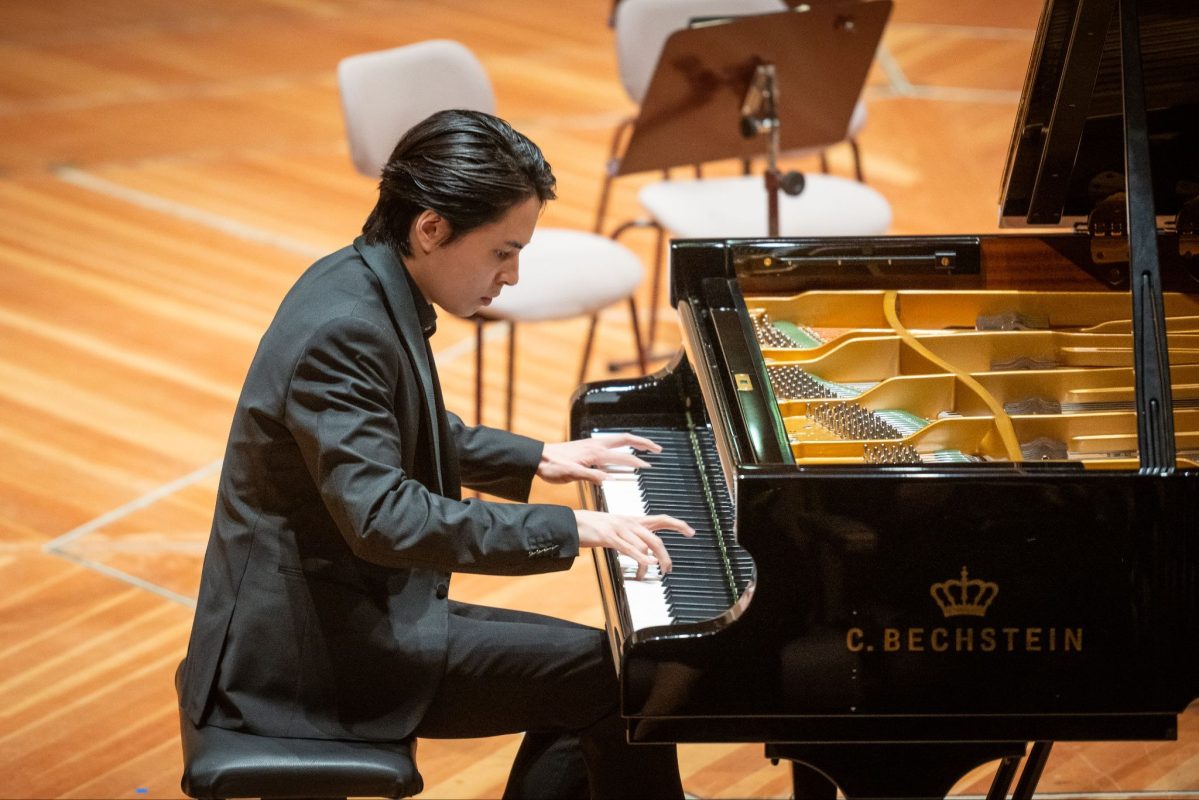
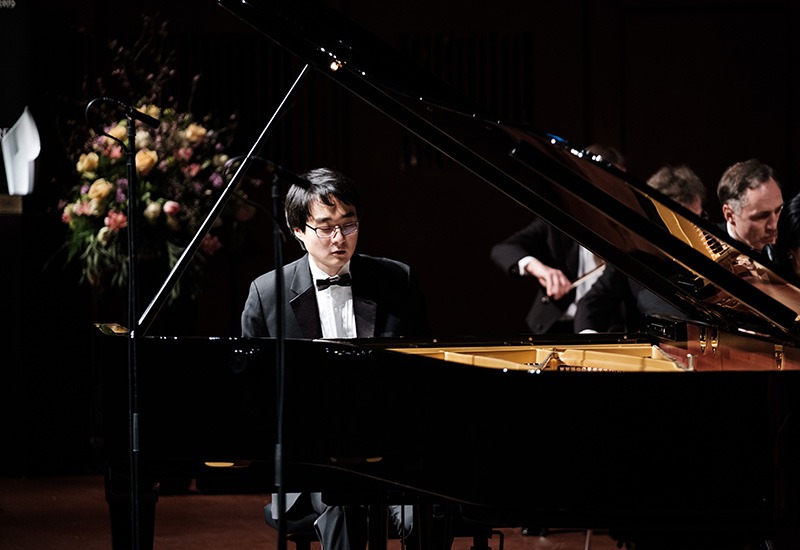
The 2026 season opens with a recital by pianist and composer Hans Suh, marking his appearance in Singapore with a programme framed around the theme “A Tale of Four Cities: Where Journey Begins and Heart Returns.” Suh first gained significant international attention as the winner of the 2021 International Telekom Beethoven Competition Bonn and the International German Piano Award, accolades that speak to his command of the most demanding and intellectually rigorous bodies of piano literature.  

Educated at Columbia University and The Juilliard School, Suh’s continued engagement with the classical canon has shaped an approach that values structural clarity and long-range thinking. However, what sets him apart for the audience is his dual identity as a creator; the recital features the Singapore Premiere of his own work, Der fliegende Koreaner, commissioned by Deutsche Telekom AG. By placing a contemporary voice in dialogue with Brahms and Beethoven, Suh revives the historical tradition of the composer-pianist, offering the audience a rare opportunity to hear a masterwork interpreted by the mind that conceived it.  

Tickets Tickets for Hans Suh’s Singapore recital are NOW ON SALE via Ticketmaster.sg.


Ron Maxim Huang

  29 May 2026 · Victoria Concert Hall · 8.00pm · C. Bechstein  

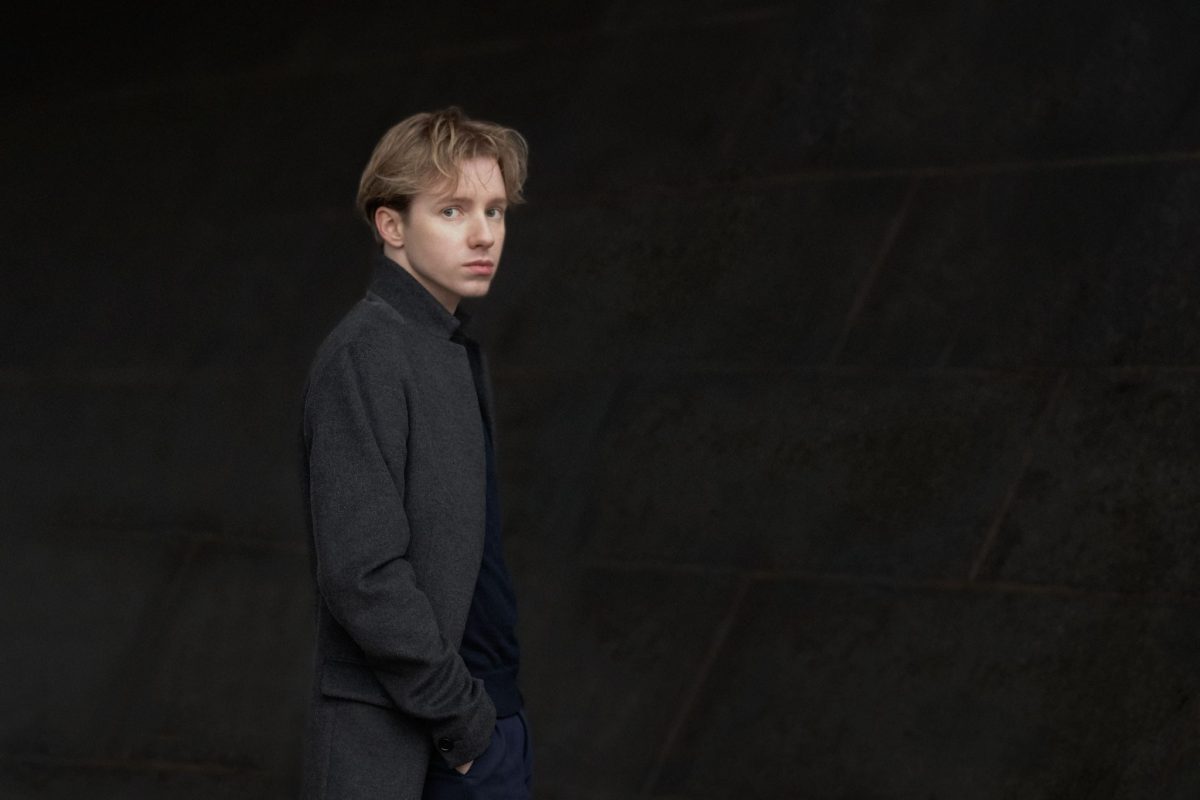
In May, the series welcomes Berlin-based pianist Ron Maxim Huang, an artist recognised for an approach that prioritises tone, pacing, and inner continuity. As the winner of the 2023 International German Piano Award, Huang has been lauded for a musical maturity that transcends his years, characterized by a patient, balanced unfolding of the score.  

His training at the Universität der Künste Berlin has instilled a deep reverence for the European performance tradition, particularly in its attention to color and proportion. For the listener, Huang’s artistry offers a profound sense of connection through restraint; his performances avoid surface-level display in favor of a rich, singing tone. It is a style of pianism that invites the audience to experience music as a shared meditation, where every decision emerges from a deep, internal listening to the score.  

Tickets: Details will be announced via True Music Singapore and Bechstein Music World.


Jan Schulmeister

  24 July 2026 · Victoria Concert Hall · 8.00pm · PETROF  

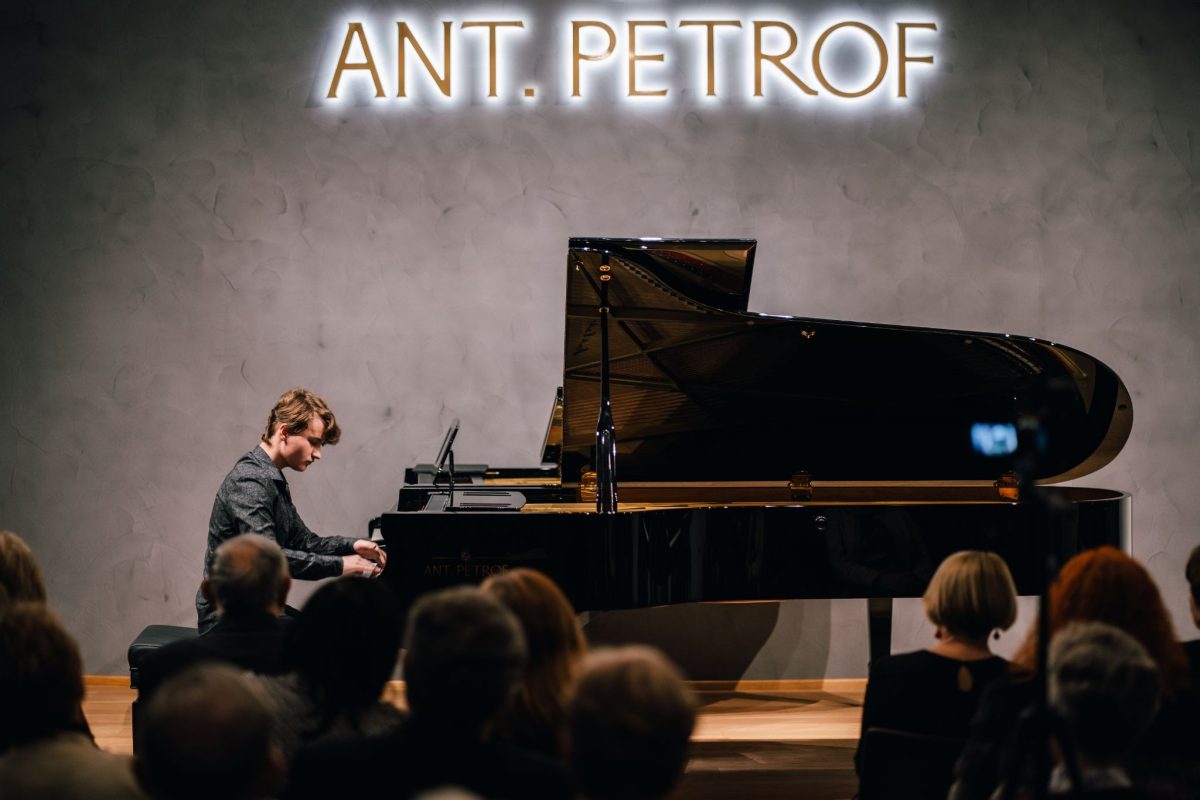
Czech pianist Jan Schulmeister brings a direct, living connection to Central European musical traditions. A prolific prize-winner with over 30 first prizes in international competitions, including the prestigious Concertino Praga, Schulmeister represents the vanguard of the Czech piano school.

  His interpretations are shaped by a native structural awareness and a naturalness of phrasing that is closely associated with the historic Austro-German and Czech lineages. As a PETROF artist, Schulmeister’s appearance in Singapore offers a unique cultural synchronicity. Performing on a PETROF piano, he highlights the interaction between performer and instrument within a shared cultural heritage, allowing the audience to hear the specific “vocal” quality and tonal warmth that has defined Czech music for centuries.

  Tickets: Information will be released via True Music Singapore and Cristofori Academy of Fine Arts.


Roman Borisov

  29 August 2026 · Victoria Concert Hall · 8.00pm · C. Bechstein  

Roman Borisov represents a younger generation of pianists engaging actively with the European repertoire through a contemporary lens. Since winning the First Prize at the 2022 Kissinger Klavierolymp, Borisov has moved rapidly onto the global stage, appearing at major venues like the Concertgebouw Amsterdam.  

His performances are defined by a formidable technical command and a keen sense of musical architecture, allowing large-scale works to unfold with striking coherence. For the audience, Borisov offers a bridge between the analytical depth of the past and the physical energy of the present. His approach provides insight into how European pianism continues to evolve—maintaining its groundedness in tradition while speaking with a bold, modern clarity that resonates with today’s listeners.  

Tickets: Details will be announced on the social media platforms of True Music Singapore and Bechstein Music World.


Julius Asal

  11 November 2026 · Victoria Concert Hall · 8.00pm · C. Bechstein  

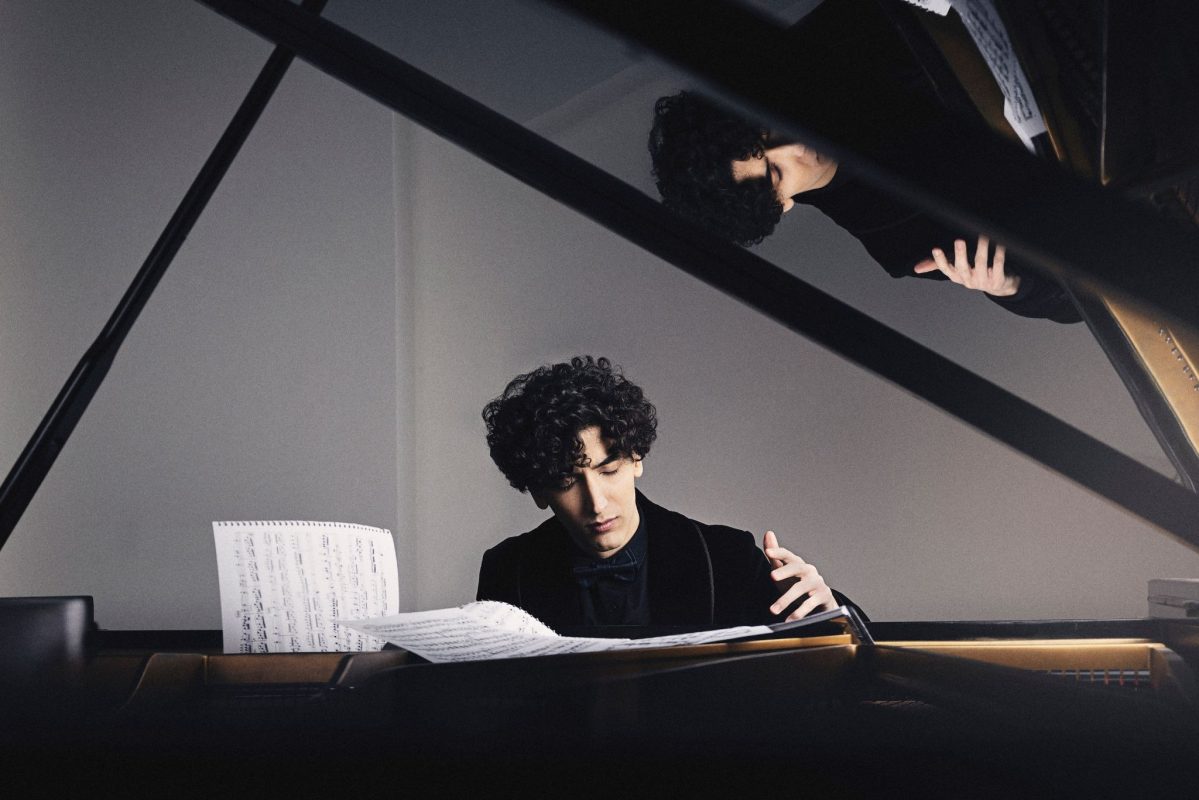
The season concludes with German pianist Julius Asal, a Deutsche Grammophon artist whose work is defined by intellectual curiosity and highly intentional programming. Asal has captivated the international music community with his ability to find hidden, poetic links between disparate composers, often creating a “hauntingly” beautiful atmosphere that invites close, active listening.  

His engagement with the European repertoire is shaped by reflection, emphasizing perspective and texture over mere virtuosity. In an Asal recital, the audience is not just a witness to a performance but a participant in a storytelling experience. His ability to craft a delicate, luminous sound—the “Asal touch”—brings the 2026 season to a close by focusing on music as an intimate, philosophical journey of discovery.  

Tickets: Details will be shared closer to the concert date via True Music Singapore and Bechstein Music World.


The Sound of Europe in Singapore


Across its 2026 season, the 2026 European Sound Piano Concerts serve as a bridge to a living musical legacy. By uniting the distinct artistic lineages of these five performers with the legendary craftsmanship of C. Bechstein and PETROF pianos, the series offers an authentic encounter with the European sound. This is an invitation to experience the depth of a tradition where the heritage of the instrument and the voice of the artist converge, bringing the storied resonance of Europe’s great concert halls to the Victoria Concert Hall stage.  

Be sure to follow Bechstein Music World and True Music Singapore at their socials linked below for updates on this event! Becshtein Music World on Facebook and Instagram  

True Music Singapore on Facebook and Instagram

Read more
Blog

Singapore Welcomes a Legend: Eliso Virsaladze’s Inspiring Chopin Recital

On 18 November 2025, Singapore was graced with a rare Southeast Asia appearance by the legendary Eliso Virsaladze, presenting a full Chopin programme at the Victoria Concert Hall. For any pianist, tackling this demanding repertoire is a feat; to do so at 83, showing no signs of slowing down, underscores her unique and enduring authority. For piano students and listeners who often find interpretations of Chopin divisive—either due to excessive emotionalism or dry technical polish—Virsaladze’s recital offered a profound lesson, delivering a performance grounded in discipline and musical integrity.

Virsaladze’s greatest appeal, in our humble opinion, is as an artist who allows the music’s truth to emerge without adornment.

The Authority of Restraint: A Lesson in Presence

Virsaladze established her unique authority not just through her sound, but through her presence. Students could observe a model of controlled mastery: she approached the instrument with an astounding economy of motion. There were no overly dramatic gestures or extraneous visual cues designed to project feeling. Her stillness reflected absolute command, demanding that the audience’s focus remain entirely on the sound. This profound restraint sharpens the ear, making every colour and structural turn emerge with piercing clarity. Paired with the crystal clear tone of a C. Bechstein D282, this made for a profoundly apt match to the evening’s repertoire.

This philosophy was instantly showcased in the monumental Polonaise-Fantasie, Op. 61. Avoiding the exaggerated rubato (the slight give-and-take of tempo) that often clouds this late work, Virsaladze delivered an interpretation anchored in the score’s structural rhythm rather than surface drama. The complex harmonic landscape and fragmented narrative unfolded with an organic, unmistakable logic, achieving conviction without succumbing to melodrama.

Hard-Won Depth: The Value of Simplicity

The depth of her reading is not a simple talent, but the result of relentless dedication—a crucial lesson for developing musicians. Virsaladze has openly discussed the difficulty she faced internalizing Chopin, noting that true mastery lies in preserving the music’s innate beauty and sophistication—a feat achieved through deceptive simplicity.

This discipline was vital in the Piano Sonata No. 3 in B minor, Op. 58. Virsaladze ensured the vast architecture was coherent, shaping the four movements as a unified narrative. The Allegro maestoso (the fast, majestic first movement) achieved a perfect balance between its turbulent power and moments of pure lyricism. The Scherzo possessed focused precision, while the Largo created a sustained stillness that resonated with profound depth. The Finale built with careful, controlled power toward a gripping, earned close.

Insight and Intimacy: Expression Without Exaggeration

In the program’s second half, a journey through Nocturnes, Mazurkas, and Waltzes, Virsaladze underscored her gift for intimacy. Drawing warm, honest tones from the instrument, she proved that Chopin’s complex emotional world can remain deeply moving without dramatic exaggeration. The Grand Valse, Op. 42 captivated through sheer elegance and focused sound. Her encores—a pensive Mazurka in A minor (Op. 68 No. 2) and a jubilant Waltz in A-flat major (Op. 34 No. 1)—closed the evening with the same sincerity that defined the night.

In a musical landscape saturated with interpretation, Eliso Virsaladze offered something far more compelling: a hard-won, honest, and profoundly insightful realization of the repertoire. She allowed the composer’s voice to speak without flourish, gifting the audience a true Traversal of the life and authentic heart of Frédéric Chopin.

Stay Connected

Follow True Music Singapore and Bechstein Music World for more concert updates and behind-the-scenes news:

True Music Singapore

Bechstein Music World Singapore

Read more
Blog

Takeshi Oi Gives a Heartfelt Recital at His Singapore Debut

Takeshi Oi’s debut recital in Singapore on 9th March 2025 at Victoria Concert Hall was a memorable occasion, drawing both new listeners and dedicated followers of his work. Performing on a C. Bechstein D282 grand piano, he captivated the audience with his warmth and sincerity, guiding them through a thoughtfully selected program that ranged from Baroque to contemporary, including Romantic and Impressionist masterpieces.

The concert opened with Oi’s own Fragments of Lyrics, a brief yet expressive prelude, before he delved into his Bach repertoire. The Prelude from The Well-Tempered Clavier was beautifully smooth and well-proportioned, followed by the Aria from the Goldberg Variations, where the Bechstein’s crystalline high notes sparkled. Jesu, Joy of Man’s Desiring flowed with a steady rhythm, concluding with clarity and poise.

In Chopin’s Nocturne in B-flat minor, Oi created a delicate, dreamlike atmosphere, gradually building the intensity in the development. His rendition of the Nocturne in E-flat major felt refreshingly new, thanks to subtle changes in tempo and phrasing, drawing the listener back into the moment. The Nocturne in C minor, Op. 48 No. 1 began with a commanding presence, the firm block chords striking without being overpowering, while the quieter sections were filled with refined elegance. Liszt’s Consolation No. 3 was another highlight, showcasing Oi’s ability to bring depth and intimacy to reflective pieces.

Following the intermission, Oi turned to Debussy. His Rêverie was played at a brisker pace than usual, but the clarity of his voicing made the piece intriguing. La fille aux cheveux de lin was effortless, flowing naturally without hesitation. In Clair de Lune, a timeless favorite, Oi’s performance was unforced and free from overt sentimentality, yet still full of wonder.

Poulenc’s Improvisation in C minor exuded warmth, though some of the cascading passages felt slightly hurried, yet the richness of the texture was still captivating. In Pavane pour une infante défunte by Ravel, Oi’s phrasing revealed the harmonic depth of the piece, though a bit more space between the notes could have enhanced its meditative character.

The segment featuring Japanese composers was deeply personal. Oi’s rendition of Sakamoto’s Merry Christmas Mr. Lawrence, dedicated to the late composer, was played with great sensitivity, highlighting its quiet beauty and leaving many listeners misty-eyed. VOICES, the piece that first earned him international acclaim, shimmered in the Bechstein’s upper register. His arrangement of Jupiter (Holst), transcribed in 4/4 rather than its original 3/4, gave the melody an expansive, cinematic quality while retaining its intimate, sentimental nature. Oi’s own composition, Piano Love, brought the program to a joyous close with radiant energy and warmth.

The audience’s heartfelt applause was met with three exquisite encores:

  • Kunihiro Nakamura: Yama-Yuri
  • Rachmaninoff: Variation 18 from Rhapsody on a Theme of Paganini
  • Chopin: Aeolian Harp Etude (Op. 25 No. 1)

The evening transcended the typical recital experience, creating a profound sense of shared connection between the performer and the audience. Many had come specifically to witness his Singapore debut, and Oi responded with warmth and sincerity, both through his music and his personal presence, making it an unforgettable evening of music, intimacy, and appreciation.

Be sure to follow Bechstein Music World on Facebook and Instagram for the latest updates on more upcoming concerts and other events for 2025!

Read more
Blog

Alexander Malofeev to Grace the Singapore Stage in May 2025

In May 2025, Singapore will witness the return of a pianist who has captivated audiences worldwide with his electrifying virtuosity and poetic depth—Alexander Malofeev. At just 23, he has already established himself as one of the most compelling voices of his generation, praised for performances that balance breathtaking technical command with a profound emotional sensitivity. Yet Malofeev’s artistic journey encompasses more than just his prodigious talent; it reflects his resilience and ability to navigate the complexities of being a Russian artist in today’s world. Born in Moscow in 2001, he first caught the world’s attention when he won the International Tchaikovsky Competition for Young Musicians in 2014 at the age of 13. Since then, he has collaborated with leading orchestras, from the Mariinsky Theatre Orchestra to the Philharmonia Orchestra, performing under the batons of luminaries like Riccardo Chailly, Mikhail Pletnev, and Myung-Whun Chung. He has graced the world’s most prestigious stages, including Carnegie Hall, Berlin Philharmonie, and the Royal Albert Hall where his interpretations of Rachmaninoff, Prokofiev, and Tchaikovsky have left an indelible mark.

Beyond the accolades, Malofeev’s journey as a Russian artist in today’s world has been marked by his commitment to artistic integrity, even as he faces the challenges of political tensions. In the face of these challenges, he has continued to perform with quiet dignity, letting his music speak where words cannot. His playing carries the weight of history and the struggles of his homeland, while reflecting a universal search for meaning—a testament to the resilience of artistry in uncertain times.

His 2025 recital in Singapore, titled Passion Through the Mist, is a curated exploration of music that grapples with struggle, transformation, and transcendence, as reflected in the works of Schubert, Kabalevsky, Janáček, and Scriabin. The emotional depth of Schubert, the optimism of Kabalevsky, and the mystical qualities of Scriabin. Schubert’s Drei Klavierstücke, D. 946, written in the composer’s final year, offers a deeply personal meditation on life’s fleeting nature. By contrast, Kabalevsky’s Sonata No.3 bursts with post-war optimism, infused with the rhythmic vitality of Russian folk music.

In Janáček’s In the Mists, we are drawn into a world of unresolved emotions—its shifting tonalities and haunting lyricism reflecting the composer’s inner turmoil. The recital culminates in the mystical landscapes of Scriabin’s Préludes, Op. 22, and Fantaisie, Op. 28.; works that push beyond Romanticism into spiritual ecstasy. Through this program, Malofeev channels both fire and fragility, illuminating the endurance of the human spirit through music.


Programme

Franz Schubert – Drei Klavierstücke, D. 946

Dmitry Kabalevsky – Piano Sonata No. 3 in F Major

Leoš Janáček – In the Mists

Alexander Scriabin – 4 Préludes, Op. 22

Alexander Scriabin – Fantaisie, Op. 28


(Programme subject to change at the artist’s discretion.)


Tickets Priority Pre-Sale starts from 17th-28th February 2025 on ticketmaster.sg . All Cristofori Students enjoy a 30% off for CAT 1, 2, 3 and 4 tickets. Get your discount code at your respective outlets by approaching our friendly staff!

Malofeev’s playing stands not only as an expression of technical brilliance, but also as a vessel for storytelling, a bridge between past and present, as he interprets classical compositions with a contemporary sensibility.

From Schubert’s fragile reveries to Scriabin’s mystical fervor, the evening promises to be an unforgettable encounter with a pianist embodying the soul of his generation. Join Alexander Malofeev on an odyssey through passion, poetry, and the power of music to transcend time and borders.

For Concert & Ticketing enquiries, WhatsApp True Music Singapore at 96874480.

Follow True Music Singapore on Facebook and Instagram for the latest updates on tickets and concert news.

Read more
Blog

A Symphony of Legends and Rising Stars Coming to Singapore in 2025

Music enthusiasts, prepare for an extraordinary year of piano recitals in Singapore! A Sound of Europe Extravaganza 2025, brought to you by True Music Singapore, takes center stage this 2025 at the iconic Victoria Concert Hall. Featuring a stellar lineup of world-renowned pianists and rising stars, this series celebrates the artistry of the C. Bechstein D282 Concert Grand Piano and the Petrof P237 Monsoon, from two of Europe’s most iconic piano makers.

Each recital promises an unforgettable journey through the brilliance of classical and contemporary music, performed on the world-class instruments that define the sound of Europe.

2025 Recital Lineup

Takeshi Oi (大井健) – 9 March 2025, Sunday, 7:30 PM
Kicking off the series is the sensational Takeshi Oi, celebrated for his fusion of classical and crossover genres. Performing on the C. Bechstein D282, Oi’s recital will push musical boundaries while showcasing his impeccable technique and emotional depth.


Alexander Malofeev – 14 May 2025, Wednesday, 8:00 PM
Globally acclaimed Alexander Malofeev brings his electrifying interpretations to the stage. His virtuosity and intensity, particularly in Russian and Romantic repertoires, make his performance a must-see for piano enthusiasts.


Jan Schulmeister – 4 July 2025, Friday, 8:00 PM
Representing the legacy of Petrof and the magnificent P237 Monsoon, rising star Jan Schulmeister presents a recital rich in lyricism and tonal beauty. A hallmark of his artistry is his ability to evoke the soulful warmth of the Petrof sound.


Zhang ShengLiang (Niu Niu 牛牛) – 31 August 2025, Sunday, 7:30 PM
Renowned for his prodigious talent, Niu Niu (Zhang ShengLiang) captivates audiences with his breathtaking technique and adventurous programming. His performance on the C. Bechstein D282 promises to be an unforgettable evening.

This image has an empty alt attribute; its file name is AD_4nXcIvQGrWE3Pm1JK6oqctZRfJRotpaNdq9SWw9VPWsI2Ok-bOWEPspzOEnaRd792ACiDt52gjKMIZf-XeeqSQEoBX-UTRNDdcuBsJNfAVXPfnsYnT1w2HAA_AGN7_v7IPXsFQ40L_w

Matyáš Novák – 26 September 2025, Friday, 8:00 PM
Known for his poetic interpretations, Matyáš Novák explores the expressive depth of the Petrof P237 Monsoon. This recital celebrates the warmth and lyrical power of one of Europe’s most cherished piano brands.


Eliso Virsaladze – 18 November 2025, Tuesday, 8:00 PM
Concluding the series is the legendary Eliso Virsaladze, revered for her profound interpretations of Schumann and Mozart. Performing on the C. Bechstein D282, her recital will be a masterclass in depth and artistry.

Experience True Music

In 2025, True Music Singapore brings you a recital series that is more than just a showcase of piano talent—it is a celebration of pianists, iconic instruments, and the rich tradition of European music and craftsmanship. Don’t miss these extraordinary performances at the Victoria Concert Hall, featuring the C. Bechstein D282, Petrof P237 Monsoon, and the artistry of the world’s finest pianists.

Immerse yourself in the sound of Europe!

Follow True Music Singapore on Facebook and Instagram for the latest updates on tickets and concert news.

Read more